An Historic Financial Reset for America: The Leviticus 25 Plan. Societal Benefits – Incalculable

“It is true that the virtues which are less esteemed and practiced now – independence, self-reliance, and the willingness to bear risks, the readiness to back one’s own conviction against a majority, and the willingness to voluntary cooperation with one’s neighbors – are essentially those on which the of an individualist society rests. Collectivism has nothing to put in their place, and in so far as it already has destroyed then it has left a void filled by nothing but the demand for obedience and the compulsion of the individual to what is collectively decided to be good.”   – Friedrich Hayek, The Road to Serfdom

……………………………………………………………..

The Leviticus 25 Plan re-establishes family and societal virtues which have been eroded through unending government encroachment and socialist-driven central planning across America – and elsewhere around the world.

The Leviticus 25 Plan – grants direct liquidity access to American families – the very same access to liquidity which was provided to the likes of Morgan Stanley, Citigroup, Bank of America Corp, Goldman Sachs, JP Morgan Chase, Merrill Lynch, Wells Fargo, Deutsche Bank, UBS AG, Royal Bank of Scotland, Plc, State Street, Barclays, BNP Paribas, and dozens of others.

The two primary goals of The Plan: 1) Resolving America’s fiscal crisis; 2) Eliminating Household Debt and restoring financial health and economic liberty for millions of American families.

  • Imagine the U.S. Department of the Treasury running $37.303 billion budget surpluses 2027-2031 – instead of the CBO-projected $2 trillion annual deficits.
  • Imagine a family of four paying off their mortgage, car loans, credit card debt – and having additional Medical Savings Account (MSA) liquidity for direct allocation toward primary care medical expenses and health care insurance premiums.

The financial security benefits of all qualifying American families would be incalculable:

  • Financial stress relief – massive private debt elimination / extraordinary reductions in monthly debt service obligations, affordability crisis resolved;
  • Quality of life improvements – general living conditions, nutrition security;
  • Financial self-reliance at family level – freedom from dependence on social welfare and charity programs;
  • Working mothers desiring to spend more time with their children would be able scale back outside employment hours or become full-time stay-at-home mothers; reduced dependence on daycare, reduced time-management stress;
  • Re-establishment of normal, positive incentives for work, enterprise, innovation, achievements;
  • Improved credit status for working Americans;
  • Improved access to primary health care;
  • Improved employment opportunities;
  • Significant potential for crime reduction.

……………………………………………………………………………….

There is no government-directed economic strategy that can provide so much as a fraction of these types of benefits, direct to America’s citizens.

The Leviticus 25 Plan is a dynamic economic initiative providing direct liquidity benefits for American families, while at the same time scaling back the role of government in managing and controlling the affairs of citizens.  It is a comprehensive plan with long-term economic and social benefits for citizens and government.

The inspiration for this plan is based upon Biblical principles set forth in the Book of Leviticus, principles tendering direct economic liberties to the people.

The Leviticus 25 Plan – An Economic Acceleration Plan for America

$95,000 per U.S. citizen – Leviticus 25 Plan 2027 (52955 downloads )

Hubbard: “Bailouts Shouldn’t Be Only for Banks.”

Glenn Hubbard, dean of the Columbia Business School and former chairman of the Council of Economic Advisers during the George W. Bush presidency,. recently urged that financial crisis interventions should not be limited to banks.

………………………………………………

*Bailouts Shouldn’t Be Only for Banks – WSJ

Wall Street Journal, 9-14-18 – Excerpts:

“To be sure, recapitalizing financial institutions was an important element of the policy response. The depletion of capital buffers before the crisis reduced loan supply and exacerbated fire sales of distressed assets once the market collapsed. Cash infusions by the Treasury under the Troubled Asset Relief Program, in concert with the Fed’s bold lender-of-last-resort interventions, blunted the impact of the crisis.

That said, the perceived lack of attention to “Main Street” fed public suspicion of the bailouts. The government appeared to be more interested in addressing the decline in bank capital than the decline in home values. Millions of homeowners who were current in their mortgage payments were unable to refinance at lower interest rates because they were underwater. Yet many of these mortgages were already guaranteed by Fannie Mae and Freddie Mac , meaning taxpayers held the credit risk. Banks and investors holding the mortgages would never receive less than par.

The government should have directed a mass refinancing of mortgages for primary homes in which the borrower was current in payments. This would have led to an increase in disposable income and in home prices totaling more than $100 billion, according to a proposal Christopher Mayer and I offered at the time. The Treasury instead offered a tepid version of this with the Home Affordable Modification Program and the Home Affordable Refinance Program. These initiatives lacked the boldness of the bank bailouts, and Americans noticed…”

Hubbard concluded, “Ten years on, the U.S. still lacks a detailed plan for postcrisis intervention…”

____________________________

What America really needs, to restore financial health to working families and ‘power up’ economic vitality throughout Main Street America – is a detailed plan for ‘pre-crisis’ intervention.

America needs a comprehensive economic plan that will insulate Main Street America’s hard-working, tax-paying U.S. citizens from the next financial crisis, shrink government’s massive footprint in controlling the lives of free Americans, and generate massive new tax revenue flows with a powerful, sustainable reduction in government deficits.

America’s new economic plan is currently loaded up and ready to launch…

The Leviticus 25 Plan – An Economic Acceleration Plan for America

$95,000 per U.S. citizen – Leviticus 25 Plan 2027 (52432 downloads )

The Impossible Dream: Federal Budget Surpluses, Citizen-Centered Healthcare, Financial Security for Millions of American Families. The Leviticus 25 Plan.

Washington-based Democrats and Republicans have a long-standing record of growing government, creating greater dependence on government among the citizenry, dreaming up new spending programs riddled with inefficiencies, waste and outright fraud. 

Washington political policy initiatives over the past two decades have impoverished millions of Americans, created record Household Debt burdens, stymied economic growth, and generated soaring, nightmarish federal budget deficits, massive enough to now constitute a national security issue.

Now imagine a future America where millions of U.S. citizens were to be granted equal access to direct liquidity extensions to those which were so generously provided to major Wall Street financial institutions during the great financial crisis (2007-2010) and the Covid economic crisis (2020-2022), including: Morgan Stanley, Citigroup, Bank of America, State Street Corp, Goldman Sachs, Merrill Lynch, JPMorgan Chase, Wachovia, Lehman Brothers, Wells Fargo, Bear Stearns) and major foreign financial institutions (Royal Bank of Scotland, UBS AG, Deutsche Bank AG, Barclays, Credit Suisse. Dexia, BNP Paribas).

Imagine a future America where millions of hard-working, tax-paying U.S. citizens have eliminated massive sums of mortgage debt, paid off auto loans and installment debt, paid off student loans (or were fully reimbursed for previously paid off student loans), and are able to improve their current quality of life and save considerable sums of money toward future plans and dreams. 

Imagine a future America where millions of ‘below-the-poverty-line’ families did not need ongoing government support to cover life’s basic necessities (food, housing, and primary health care expenditures). 

Imagine a future where families did not need two incomes, or additional government assistance to barely cover family-specific expenses like child-care, private education, and federal, state, and local tax burdens.

And now visualize a future America where government spending has dropped precipitously, tax revenues have risen dramatically (without raising taxes), federal (and state) budget surpluses have become an ongoing reality. 

America’s economy – surging into a new, long-term, revitalized, free market growth cycle.

And citizen-centered healthcare largely replacing the current big government / big corporation market-dominating partnerships.

That future is here.

The Leviticus 25 Plan – loaded up and ready to launch.

…………………..

The Leviticus 25 Plan is a dynamic economic initiative providing direct liquidity benefits for American families, while at the same time scaling back the role of government in managing and controlling the affairs of citizens.  It is a comprehensive plan with long-term economic and social benefits for citizens and government.

The inspiration for this plan is based upon Biblical principles set forth in the Book of Leviticus, principles tendering direct economic liberties to the people.

The Leviticus 25 Plan – An Economic Acceleration Plan for America

$95,000 per U.S. citizen – Leviticus 25 Plan 2027 (52104 downloads )

F.A. Hayek – “Individualism”

Individualism, in contrast to socialism and all other forms of totalitarianism, is based on the respect of Christianity for the individual man and the belief that it is desirable that men should be free to develop their own individual gifts and bents. This philosophy, first fully developed during the Renaissance, grew and spread into what we know as Western civilization. The general direction of social development was one of freeing the individual from the ties which bound him in feudal society.”  -F.A. Hayek, Nobel Prize, Economic Sciences

America’s Financial Woes – A Perfect Opening for ‘Quantitative Re-targeting” (QR)…

Headlines…

US Businesses Are Going Bankrupt At An Absolutely Blistering Pace

Our society is changing at a pace that is difficult to comprehend…  DEC 5, 2025

……….

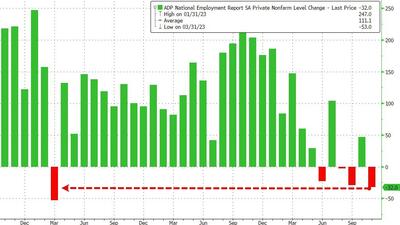
Small Business Job Losses Soar In November; ADP

That is the biggest monthly job loss since March 2023DEC 3, 2023

……………

Food Banks All Over The US Are Being Overwhelmed By A Tsunami Of Hungry People …experiencing a dramatic spike in demand “long before the shutdown ever happened”…  NOV 7, 2025

……………

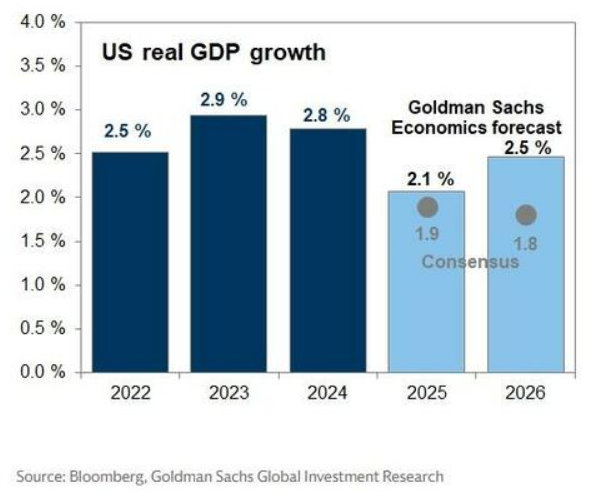
Stagnation …

Also note: lower GDP growth means lower Treasury receipts, lower payroll tax revenues and more stress on the Medicare and Social Security Trust Funds…

………………..

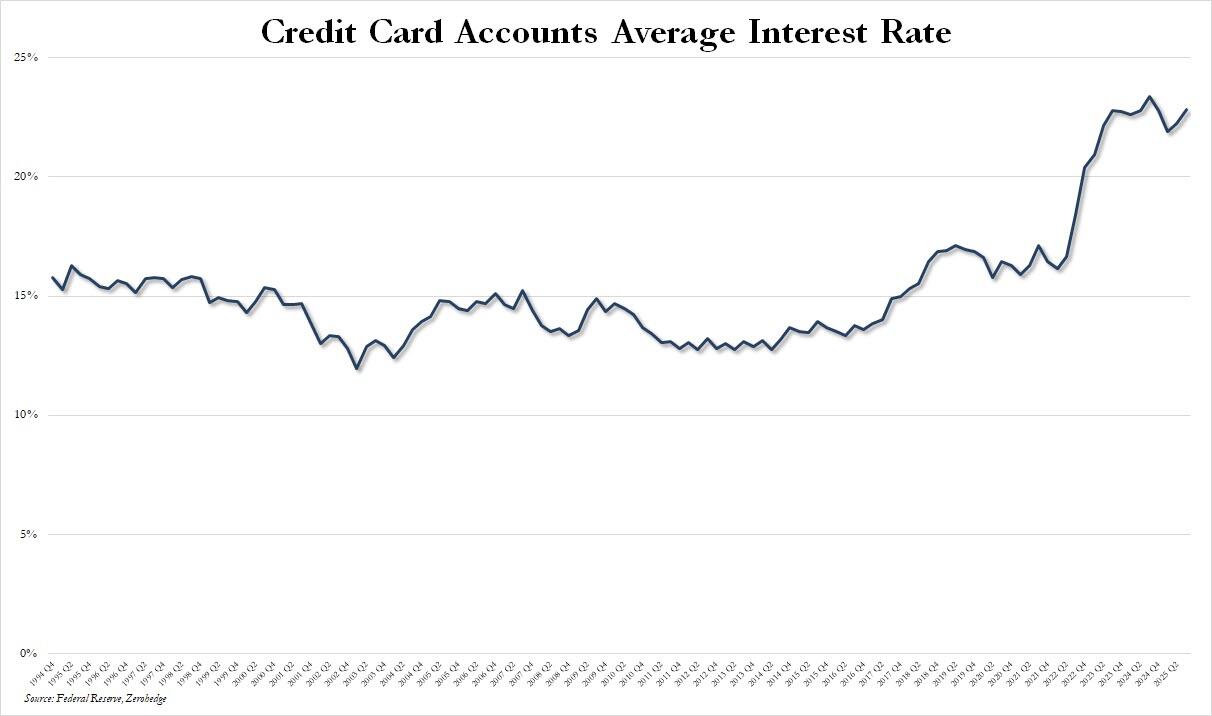
Federal Reserve’s latest consumer credit report (G.19):

Finally… banks continue to bleed US consumers dry: at the start of 2025 the average rate on credit card accounts was 22.80%… and on Sept 30 the number was higher at 22.83%, just barely below the all time high of 23.37% set one year ago.

_____________________________________

The Leviticus 25 Plan solution

Quantitative Easing (QE) is a Fed monetary tool used to restore liquidity in a troubled banking system, as when banks fall below their capital requirements through practices like loading up balance sheets with sewage-grade subprime debt delivered up the line from the mortgage broker casino system, aided and abetted by fake AAA credit ratings on their bundled security packages, topped off with gross incompetence / ignorance in properly assessing counter-party risk in their hedging strategies.

The Great Financial crisis (2007–2009) which followed “created the largest economic upheaval in the United States since the Great Depression of the 1930s… At eighteen months, from December 2007 to June 2009, it exceeded the sixteen-month recessions of 1973–1975 and 1981–1982; the average period from peak to trough of post–World War II recessions was 11.1 months… both GDP and number of jobs declined by about 6 percent and median family incomes declined by about 8 percent. The Great Recession was particularly worthy of its name because of the protracted slump in employment that followed even after the recession was officially over, as assessed on the basis of the dating procedure of the National Bureau of Economic Research.1

By some estimates, over 30 million working Americans lost their jobs; over 3.8 million families lost their homes.

QE has done nothing to reduce public and private debt, or restore financial security for millions of American families or strengthen our country’s economic system.

It is now time for a major reset involving a Fed-Treasury Quantitative Re-targeting (QR) facility – with direct liquidity flows to all of America’s hard-working, tax-paying U.S. citizens who qualify and wish to participate.

The Leviticus 25 Plan is a dynamic economic initiative providing direct liquidity benefits for American families, while at the same time scaling back the role of government in managing and controlling the affairs of citizens.  It is a comprehensive plan with long-term economic and social benefits for citizens and government.

The inspiration for this plan is based upon Biblical principles set forth in the Book of Leviticus, principles tendering direct economic liberties to the people.

The Leviticus 25 Plan – An Economic Acceleration Plan for America

$95,000 per U.S. citizen – Leviticus 25 Plan 2027 (52102 downloads )

Reminder: List of Biden Tax Hikes that Kicked In Jan 1, 2023

A look back…

Here’s A List Of Biden Tax Hikes Which Take Effect Jan. 1

ZeroHedge, Dec 31, 2022 – Excerpts:

When the Democrats finally passed the “Inflation Reduction Act” in 2022 (how’s that going?), they included several tax hikes set to take effect on Jan. 1, 2023.

Americans for Tax reform‘s Mike Palicz has conveniently compiled a list of them, along with his take on their intended effects:

$6.5 Billion Natural Gas Tax Which Will Increase Household Energy Bills   

Think your household energy bills are high now? Just wait until the three major energy taxes in the Inflation Reduction Act hit your wallet. The first is a regressive tax on American oil and gas development. The tax will drive up the cost of household energy bills. The Congressional Budget Office estimates the natural gas tax will increase taxes by $6.5 billion.

And of course, this tax hike violates Biden’s pledge not to raise taxes on Americans making under $400,000 per year. According to the American Gas Association, the methane tax will slap a 17% increase on the average family’s natural gas bill.

$12 Billion Crude Oil Tax Which Will Increase Household Costs

Next up – a .16c/barrel tax on crude oil and imported petroleum products which will end up on the shoulders of consumers in the form of higher tax prices.

The tax hike violates President Biden’s tax pledge to any American making less than $400,000 per year.

As noted above, Biden administration officials have repeatedly admitted taxes that raise consumer energy prices are in violation of President Biden’s $400,000 tax pledge.

As if it weren’t bad enough, Democrats have pegged their oil tax increase to inflation. As inflation increases, so will the level of tax.

$1.2 Billion Coal Tax Which Will Increase Household Energy Bills

This one increases the current tax rate on coal from $0.50 to $1.10 per ton, while coal from surface mining would increase from $0.25 per to to $0.55 per ton, which will raise $1.2 billion per year in taxes that will undoubtedly be passed along to consumers in the form of higher energy bills.

$74 Billion Stock Tax Which Will Hit Your Nest Egg — 401(k)s, IRAs and Pension Plans

Democrats are now imposing a new federal excise tax when Americans sell shares of a stock back to a company.

Raising taxes and restricting stock buybacks harms the retirement savings of any individual with a 401(k), IRA or pension plan.

Union retirement plans will also be hit.

The tax will put U.S. employers at a competitive disadvantage with China, which does not have such a tax.

Stock buybacks help grow retirement accounts. Raising taxes and restricting buybacks would harm the 58 percent of Americans who own stock and more than 60 million workers invested in a 401(k). An additional 14.83 million Americans are invested in 529 education savings accounts.

Retirement accounts hold the largest share of corporate stocks, accounting for roughly 37 percent of the outstanding $22.8 trillion in U.S. corporate stock, according to the Tax Foundation.

In 2017, corporate-sponsored funds made up $4.45 trillion in market value; union-sponsored funds accounted for $409 billion; and public-sponsored funds, which benefit teachers and police officers, added up to $4.25 trillion.

A tax on buybacks could dissuade companies from doing so, and US companies will face significant compliance costs, which will – again, be passed along to consumers.

$225 Billion Corporate Income Tax Hike Which Will Be Passed on to Households

American businesses reporting at least $1 billion in profits over the past three years will now face a 15% corporate alternative minimum tax, which will be passed along in the form of higher prices, fewer jobs and lower wages, according to Americans for Tax Reform.

Tax Foundation report from last December found a 15 percent book tax would reduce GDP by 0.1 percent and kill 27,000 jobs.

Preliminary cost estimates from the Congressional Budget Office found the provision would increase taxes by more than $225 billion.

According to JCT’s analysis, 49.7 percent of the tax would be borne by the manufacturing industry at a time when manufacturers are already struggling with supply-chain disruptions.

Which industry will likely be most affected? According to the Tax Foundation, “the coal industry faces the heaviest burden of the book minimum tax, facing a net tax hike of 7.2 percent of its pretax book income, followed by automobile and truck manufacturing, which faces a 5.1 percent tax hike.”

_________________________________ 

Main Street America Republicans have the one and only plan in America with the power to monumentally shrink the big government footprint that is strangling U.S. economic growth

The Leviticus 25 Plan is a dynamic economic initiative providing direct liquidity benefits for American families, while at the same time scaling back the role of government in managing and controlling the affairs of citizens.  It is a comprehensive plan with long-term economic and social benefits for citizens and government.

The inspiration for this plan is based upon Biblical principles set forth in the Book of Leviticus, principles tendering direct economic liberties to the people.

The Leviticus 25 Plan – An Economic Acceleration Plan for America

$95,000 per U.S. citizen – Leviticus 25 Plan 2027 (52031 downloads )

Property Tax Rebellion Now Boiling Over in America. One Dynamic Plan Provides Everything Needed to Solve This Crisis and Get America Back on Track…

The property tax relief plans named in the story below center around shifting tax burdens and squeezing already strained budgets, but do nothing to alleviate overall tax burdens for citizens and businesses.

They do nothing to reverse overall massive state and local budget deficits.

They do nothing to eliminate federal budget deficits – projected by the Congressional Budget Office (CB) to grow from $1.9 trillion in 2026 to $3.1 trillion by 2036 – and generate a powerful new flow of federal budget surpluses.

Finally, the strategies named below will do nothing to lift people up out of poverty, eliminate massive amounts of Household Debt, and restore financial security for millions of America’s hard-working, tax-paying U.S. citizens.

Meet the one plan in America that will resolve these critical issues: The Leviticus 25 Plan

………………………………………

A Property Tax Rebellion Is Emerging In America

ZeroHedge, May 04, 2026 – Authored by Aaron Gifford via The Epoch Times,

Excerpts:

If 413,000 residents throughout the Buckeye State sign a petition before July 1, a public vote to eliminate local property taxes will appear on the November ballot.

If the signature count falls short, whatever is collected can be applied the following year, or however long it takes, said Blackmarr, media coordinator and a main volunteer for the 3,000-plus member Citizens for Property Tax Reform group.

“We are really hurting in Ohio,” she told The Epoch Times. “People never thought they’d be in this situation.”

Ohio isn’t alone. Forty-six states and the District of Columbia already have limits on annual local property tax levy increases, and leaders in Florida and Texas are pursuing additional legislation to limit government “flexibility” in how it raises revenues, according to a September report from McKinsey and Co., a global management consulting firm whose clients include state and local governments.

Schools, already strapped for cash, hang in the balance. School districts struggle with declining student enrollment, unfunded mandates, state and federal aid loss largely due to skyrocketing Medicaid costs, and spiking employee health insurance costs.

On the local level, mayors and town boards face similar challenges as they try to continue providing public safety, utilities, and infrastructure services.

Fed-up homeowners say it’s high time to try another way to pay their community’s civil servants, perhaps through higher sales tax or state income tax rates, along with slashing administrative bloat in schools and city halls.

“Let the state find a way where 100 percent of the population pays for education,” Ron Shumate, one of Blackmarr’s volunteers from suburban Cincinnati, told The Epoch Times. “They give profit-making businesses a break, but not us.”…

Across States and Communities

In Massachusetts, a citizens group in Great Barrington, near Springfield, wants to shift more of the costs for schools and local infrastructure to part-time residents who own vacation homes. If All Band Together gets its way, the current annual property tax on a full-time residence assessed at $200,000, for example, would decrease by $1,293, while the amount for a seasonal home with the same assessment would increase by $356, according to the group’s website.

In Minnesota and North Dakota, Republican lawmakers have proposed a cap on property tax increases based on the rate of inflation and population growth. If the rate of inflation is 3 percent and the population of a community grows by 1 percent, for example, then the increase cap for the taxing entity would be 3.5 percent. Overriding the cap would require voter approval.

John Phelan, an economist for Minnesota-based Center of the American Experiment, which wrote the model legislation for both states, said the proposal was prompted by property tax hikes last year of between 8 percent and 9.5 percent in some counties. School boards decide on annual district operating budgets and subsequent tax levies; voters only have a say on major expenditures beyond personnel and fixed costs, such as the creation of a multimillion-dollar technology fund.

“The burden shouldn’t be driven by asset values,” Phelan told The Epoch Times. “If [school districts] want to spend more money, they should get permission from the population.”

In Montana, Republican state lawmakers are pursuing a 2 percent cap on property tax hikes for local government funding, but not for schools, which consume about 55 percent of property tax revenues.

Kendall Cotton, president and CEO of the Frontier Institute research and policy center, called the legislation a good start, but said more relief is needed, as home appraisals in growing communities increased by 60 percent this year, resulting in double-digit property tax hikes….

“These big jumps put a lot of pressure on the system, but governments have not been responding in kind,” Cotton told The Epoch Times.

“Misplaced priorities,” he said. “People are really being taxed out of their homes. We are just renting from the government.”

Members of Nebraska’s Epic Option citizen group, like their peers in Ohio, are collecting signatures for a ballot initiative to eliminate property taxes. They paused their efforts to obtain the required 160,000 signatures this year and instead will focus on 2028, according to the group’s website….

Texas Gov. Greg Abbott suggested eliminating school property taxes, and Florida state lawmakers have proposed ending local government property taxes but not school taxes.

A bill in the Georgia state legislature calls for phasing out property taxes and increasing the sales tax. A similar bill was introduced in Pennsylvania. Various property tax reform measures have been proposed in Idaho, Illinois, Indiana, Iowa, Kansas, Oklahoma, South Dakota, and Wyoming, according to their respective state legislature websites.

School Budget Woes

More than one-third of U.S. public school funding comes from local property taxes, while the remainder is provided by state and federal aid, as well as municipal and state sales taxes, according to the National Center for Education Statistics. Some states also apply lottery and gambling revenues.

All told, K–12 spending across the country now exceeds $1 trillion, the Edunomics Lab at Georgetown University reported on April 23.

It also said public per-student spending ranges from about $11,000 in Idaho to more than $31,887 in the District of Columbia. Staffing and school tax rates continue to increase in most districts, while student enrollment decreases.

Typical state and federal aid formulas are based on enrollment, so districts must either cut costs or raise local taxes to offset the decreasing amount of per-student aid. The dependence on $189 billion in federal COVID-19 pandemic relief money, which prompted massive hiring sprees but is now exhausted, has exacerbated the financial crisis in many districts that serve low-income communities with large populations of special needs students…

Nationally, public K–12 enrollment decreased by about 900,500 students in the past decade, while staffing during the same time period increased by about 700,000, or 11.9 percent, according to the Edunomics Lab. The organization also reported planned school layoffs or staff reductions this year in Boston; Cleveland; Milwaukee; Las Vegas; Los Angeles; San Diego; San Francisco; Fresno, California; Richmond, Virginia; Tulsa, Oklahoma; Toledo, Ohio; Anchorage, Alaska; Cedar Rapids, Iowa;  Fort Lauderdale, Florida;  and “countless small and mid-sized districts.”

“This isn’t temporary,” the Edunomics Lab said in an email to The Epoch Times. “It’s a reset.”….

“The American dream is to own a home, work for at least 30 years, pay it off, retire 10 years later, and be comfortable,” … “If you’re relying on Social Security, that won’t happen.”

“People are tired of being taxed to death and seeing the money stolen,”

Full article: https://www.zerohedge.com/personal-finance/property-tax-rebellion-emerging-america

____________________________________

The Leviticus 25 Plan will generate massive new tax revenue flows and reduce budget outlays on a broad scale – for federal, state, and local government agencies.

It does not ‘shift’ tax burdens. It eliminates tax burdens.

The Leviticus 25 Plan will give rise to the type of robust fiscal environment for state and local governments that will allow for property tax reductions beyond anything dreamed of in current, ongoing tax reduction discussions.

Teachers, faculty, administrators, support staff in America’s K-12 public and private schools and America’s higher education institutions who choose to participate will benefit enormously by the direct liquidity benefits of The Plan.

The Leviticus 25 Plan will generate $37.303 billion budget surpluses during each of its first five years of activation (2027-2031) – conservative economic scoring analysis – and pay for itself entirely over the succeeding 10-15 year period.

Finally, it will lift people up out of poverty, eliminate massive amounts of Household Debt, and restore financial security for millions of America’s hard-working, tax-paying U.S. citizens.

The Leviticus 25 Plan is a dynamic economic initiative providing direct liquidity benefits for American families, while at the same time scaling back the role of government in managing and controlling the affairs of citizens.  It is a comprehensive plan with long-term economic and social benefits for citizens and government.

The inspiration for this plan is based upon Biblical principles set forth in the Book of Leviticus, principles tendering direct economic liberties to the people.

The Leviticus 25 Plan – An Economic Acceleration Plan for America

$95,000 per U.S. citizen – Leviticus 25 Plan 2027 (51641 downloads )