Paulson Treasury Market Warning: “We need an emergency break-the-glass plan”

Is A “Vicious” Treasury Market Emergency At Our Doorstep?

ZeroHedge, Apr 19, 2026 –  Submitted by QTR’s Fringe Finance

Excerpts:

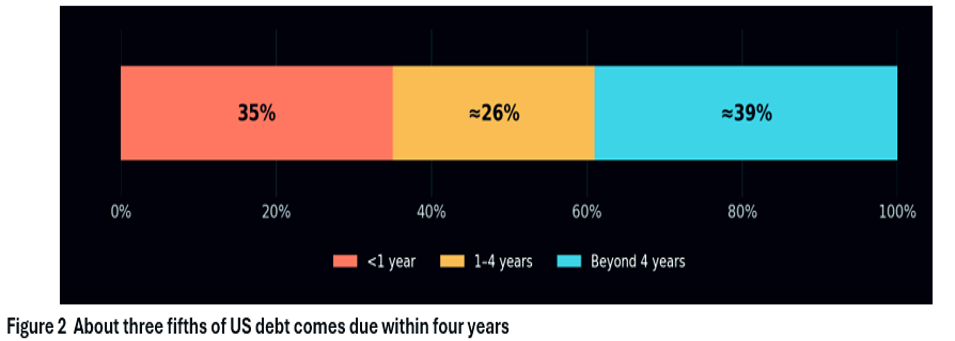
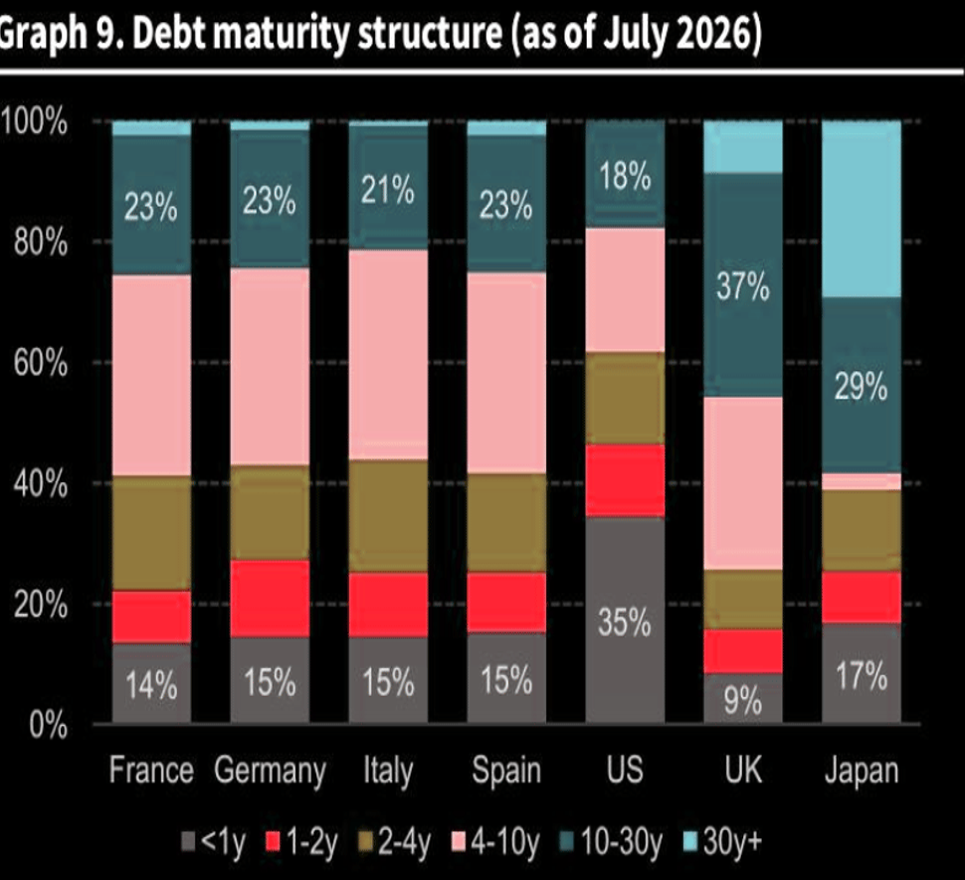
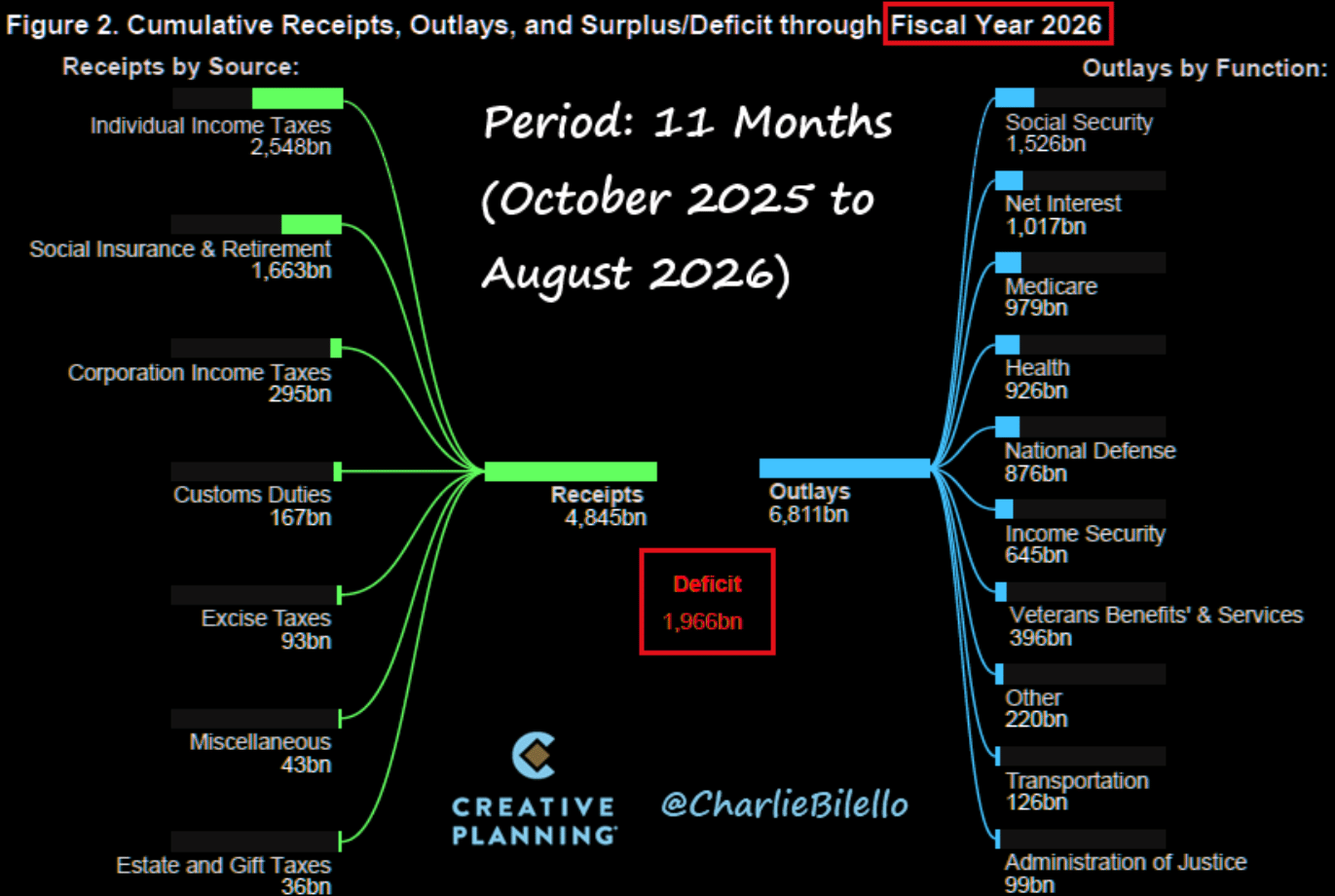
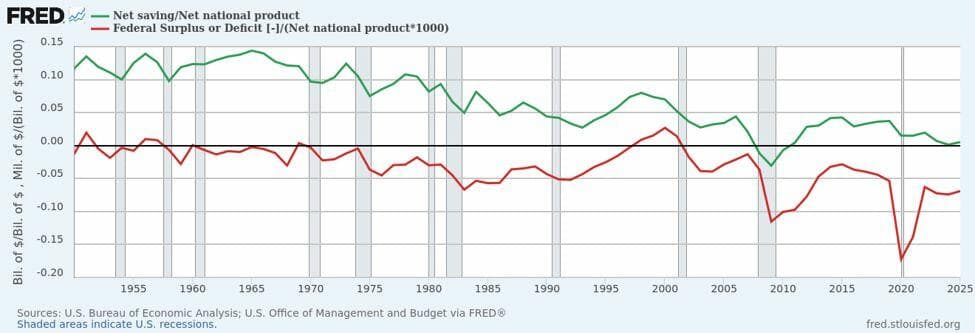
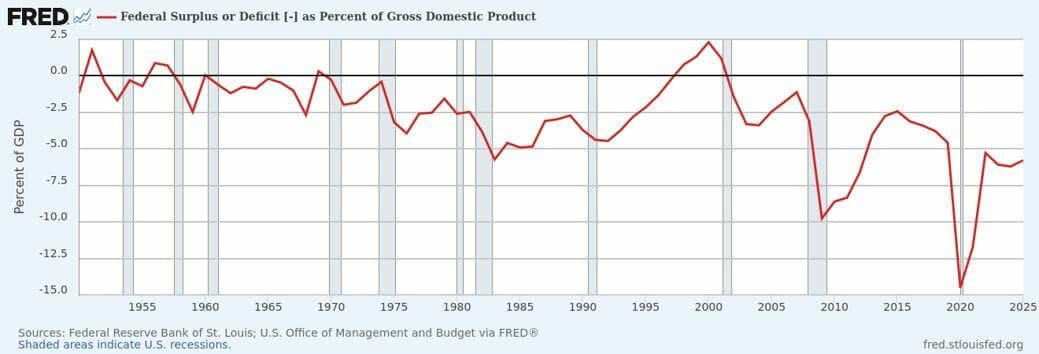
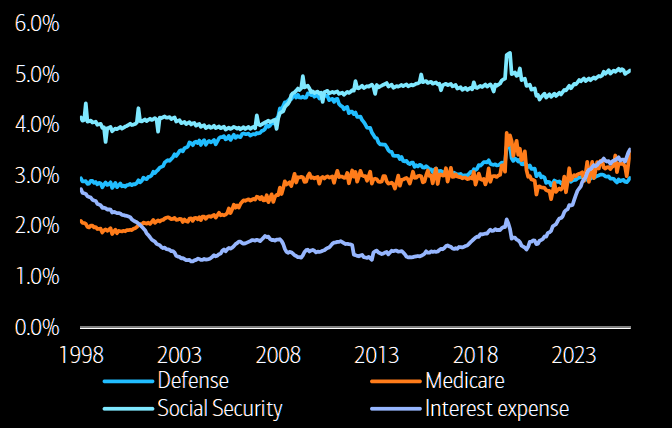
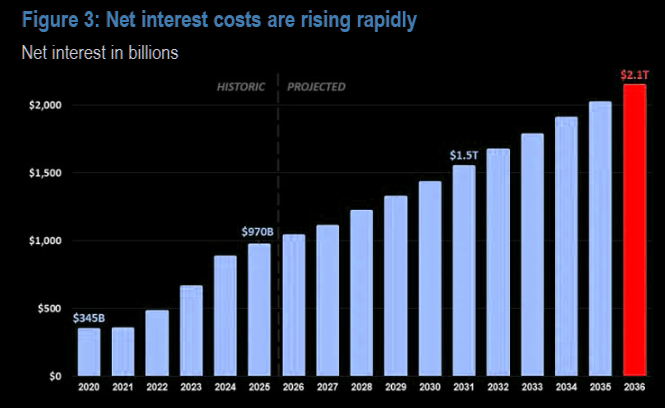
…When Henry Paulson steps back into the public conversation after years of relative silence, it’s not random timing. This is someone who sat at the center of the 2008 financial crisis and understands how quickly confidence can evaporate once stress begins to build in core markets….Paulson is explicitly warning that the scale of U.S. borrowing is now testing confidence in the Treasury market itself. With federal debt approaching $39 trillion, he points to the risk that the long-standing assumption of endless demand for U.S. government debt may no longer hold.

As he put it, “That’s a dangerous thing,” describing a scenario where foreign demand declines and Treasury prices fall. That is not a small shift in tone. The entire global financial system is built on the idea that Treasuries are the ultimate safe asset, and once that perception begins to weaken, the consequences cascade quickly.

What stands out even more is what he says next about how such a situation would resolve: “Should enough investors back out… the Federal Reserve would step in as a buyer of last resort.”

And as we all know, a “buyer of last resort” is simply another way of describing a return to large-scale intervention by the Federal Reserve. Whether policymakers call it stabilization, liquidity support, or something else (like the A.S.S.H.O.L.E.S. plan), the mechanism is the same: the central bank absorbs supply when the market no longer can. In other words, quantitative easing returns.

That leaves two realistic interpretations of why Paulson is speaking now.

  1. Either he sees early signs of stress already forming beneath the surface of the Treasury market—declining foreign participation, weakening liquidity, or rising yields that are no longer being absorbed smoothly.
  2. Or he is helping prepare the narrative for the policy response that will follow when those stresses become undeniable. Those two possibilities are not mutually exclusive. In fact, they often occur together.

His comments about needing an emergency response framework make that even clearer. He said, “We need an emergency break-the-glass plan… ready to go when we hit the wall,” and followed it with “It will be vicious.”

Notice he said when we hit the wall, not if.

That is not the language of a former official casually discussing long-term fiscal challenges. It is the language of someone who expects a disorderly adjustment and understands how quickly conditions can spiral once confidence breaks.

Markets already assume that after the next deleveraging cycle, central banks will return to QE. That part is widely understood. What is not fully appreciated is the implication if the stress originates inside the Treasury market itself. Treasuries are not just another asset class. They underpin global collateral systems, anchor borrowing costs across the economy, and support the U.S. dollar reserve currency status. If confidence in that market begins to erode, the feedback loop is far more severe than a typical recessionary downturn.

In that scenario, the Federal Reserve stepping in as the marginal buyer would not simply stabilize markets. It would fundamentally alter how capital allocates globally. Real yields could compress rapidly, confidence in fiat stability could weaken, and capital could rotate into hard assets at a pace that exceeds even aggressive expectations. The move would not just be cyclical, it would be structural.

The second-order risk is even more significant. If foreign demand for Treasuries fades and the U.S. increasingly relies on its own central bank to finance deficits, the signal to the rest of the world is unmistakable. That is how pressure begins to build on a reserve currency. An FX adjustment tied to the dollar is not the base case today, but neither was a systemic breakdown in mortgage markets prior to 2008. These transitions always look implausible until they are suddenly obvious.

The key point is that Paulson is not someone who reappears without purpose. He understands the plumbing of the system and the fragility that sits beneath it when leverage is high and confidence is stretched. His warning that “We have to prepare for that eventuality” should not be dismissed as generic caution. It suggests that the risks are no longer theoretical.

There is more in his comments than a simple observation about rising debt levels. Either he sees stress forming already, or he is preparing markets for the policy response that will follow when that stress becomes visible. In both cases, the implication is the same: something larger is developing beneath the surface of the Treasury market, and when it breaks into the open, the consequences will extend far beyond bonds.

_____________________________

The Leviticus 25 Plan is a preemptive “emergency break-the-glass plan,” ready to go now — before we “hit the wall.”

The Leviticus 25 Plan re-targets Fed liquidity flows in a way that will preemptively generate substantial ongoing federal budget surpluses, structurally downsize federal, state, and local government outlays, eliminate massive amounts of household debt, and revitalize ‘non-debt-driven’ economic growth.

The most powerful decentralizing economic acceleration plan in the world.

The Leviticus 25 Plan – An Economic Acceleration Plan for America
$95,000 per U.S. citizen – Leviticus 25 Plan 2027 (56784 downloads )

Fall 2008: Wachovia Corp – #14 Recipient of Fed’s “Secret Liquidity Lifelines”

A look back…

Wachovia had grown into a coveted spot of the fourth largest bank holding company in the U.S. when the Mortgage Backed Securities mania imploded and Wachovia melted down and was eventually acquired by Wells Fargo.

……………………………..

Wachovia Corp’s investment portfolio “began to go up in smoke” in the fall of 2008 with the collapse of the “housing boom.”  Depositors got nervous and began “pulling their money out of the bank.” (Griftopia – Matt Taibbi)

Something had to be done. The bank was deemed “systemically important” by a frantic Fed and FDIC.

Wells Fargo was urged to assist, but was naturally reluctant to get involved.  But then some old-fashioned “backroom” prompting by the Fed/Treasury sweetened the deal, and Wells Fargo stepped up to save the day.

Treasury Secretary Hank Paulson “promised” a deal that would work out to “an almost $25 billion tax break for Wells Fargo” going forward.  And then Wells Fargo received their TARP apportionment of $25 billion in cash.  Wells Fargo immediately decided it could “help the government out” and purchase Wachovia – for the fire-sale price of $12.7 billion.

Thank you America’s working taxpayers.

…………………………………..

Bloomberg  Nov 28, 2011Excerpts:

Wachovia Corp., which almost collapsed in September 2008 because of a deposit run, floated itself with Federal Reserve funds the following month after becoming the object of a takeover battle between Citigroup Inc. and Wells Fargo & Co. Fed assistance for Charlotte, North Carolina-based Wachovia included a $29 billion loan on Oct. 6, 2008, from the discount window, the biggest of any U.S. bank during the crisis from the central bank’s 97-year-old lender-of-last-resort program. Wachovia also borrowed from the Term Auction Facility, bringing total Fed liquidity to $50 billion.

Peak amount of debt on 10/9/2008:  $50B

……………………………………………….

U.S. taxpayers to the rescue…

Banks like Wachovia regained their ‘healthy glow’ … while main street America remains buried in debt, and now, increasingly roiled by inflation.

The Leviticus 25 Plan would level the playing field with equal access to liquidity, via a Citizens Credit Facility, for America’s hard-working, tax-paying families. It would restore economic liberty and provide dynamic, long-term benefits for all U.S. citizens.

The Leviticus 25 Plan – An Economic Acceleration Plan for America
$95,000 per U.S. citizen – Leviticus 25 Plan 2027 (56784 downloads )

Fall 2008: Dexia SA – #13 Recipient of Fed’s “Secret Liquidity Lifelines”

A look back…

The Federal Reserve extended hundreds of billions of dollars in emergency lending to foreign banks during the great financial crisis.

Dexia SA, a Franco-Belgian financial institution was one of the big ones.

………………………………………….

Dexia SA – Excerpts from  Bloomberg  Nov 28, 2011:

“The biggest U.S. banks avoided the discount window, the Federal Reserve’s 97-year-old last-resort lending facility, partly out of concern that tapping it might brand them as weak. Dexia SA, a lender to local governments in Belgium, showed no such reservation.

The bank, based in Brussels and Paris, was the discount window’s biggest borrower during the crisis, tapping it for $37 billion in December 2008.

Dexia simultaneously borrowed $21.5 billion from temporary Fed programs that were primary sources of emergency funding for U.S.-based Citigroup Inc., Bank of America Corp. and JPMorgan Chase & Co. In all, Dexia owed about 120 billion euros ($168 billion) to central banks at the end of 2008. As of June 30, 2011, it still had 34 billion euros of central-bank funding.”

Peak amount of debt as of 12/31/2008:  $58.5B              

___________________________________________

Dexia SA suffered massive net losses during 2008 and 2009 from a stream of wild, reckless investments involving Icelandic Banks, Lehman Brothers, Washington Mutual, Greek government bonds, and of all things.. investments involving Bernard Madoff’s revolving Ponzi scheme.

Since Dexia had an office in New York, they qualified for massive liquidity infusions, courtesy of the U.S. Federal Reserve.

___________________________________

There is perfect justification in all of this for U.S. citizens to now be granted the same direct access to liquidity, to mitigate their own financial burdens, that was provided to major foreign banks including Dexia, Barclays, HSBC, UBS, Royal Bank of Scotland, Deutsche Bank and others.

It is now time for U.S. to level the playing field.

The Leviticus 25 Plan is a dynamic economic initiative providing direct liquidity benefits for American families, while at the same time scaling back the role of government in managing and controlling the affairs of citizens.  It is a comprehensive plan with long-term economic and social benefits for citizens and government.

The inspiration for this plan is based upon Biblical principles set forth in the Book of Leviticus, principles tendering direct economic liberties to the people.

The Leviticus 25 Plan – An Economic Acceleration Plan for America
$95,000 per U.S. citizen – Leviticus 25 Plan 2027 (56784 downloads )

Fall 2008: Credit Suisse – #12 Recipient of Fed’s “Secret Liquidity Lifelines”

A look back…

The U.S. Federal Reserve generously infused major Wall Street global financial institutions, including foreign banks, with massive liquidity infusions during the height of the great financial crisis of 2007-2010.

One of the biggest recipients of the Fed’s generosity: Switzerland-based Credit Suisse…

……………………………………………..

Bloomberg  Nov 28, 2011Excerpts:

Credit Suisse Group AG, Switzerland’s second-biggest bank by assets, was the biggest user of the Fed’s single-tranche open market operations, or ST OMO, borrowing $45 billion in August 2008. Under ST OMO, securities firms swapped eligible mortgage bonds for cash.

The Zurich-based bank’s U.S. brokerage also used the Term Securities Lending Facility, which allowed firms to swap certain debt securities for Treasuries that could be loaned out or sold for cash. Credit Suisse took no part in any central bank’s collateralized funding facilities in the crisis, said Steven Vames, a bank spokesman in New York. TSLF doesn’t count because it involved no cash transfers, he said, and the bank borrowed from ST OMO only as a so-called primary dealer. Primary dealers weren’t required to bid in ST OMO.”

Peak Amount of Debt on 8/27/2008:  $60.8B

………………………

What are single-tranche open market operations?

The Fed’s ‘secret liquidity lifelines that ran from 2007 – 2010 generally involved various credit facilities, set up to ‘rescue’ the banking system, and make banks ‘healthy.’

ST OMO’s were another unique form of liquidity infusions that provided “term funding” to the (big bank) Primary Dealers, primarily benefiting major European (Primary Dealer) banks. –  for the purpose of “mitigating heightened stress in funding markets.”

These ST OMO “secretive bailout operation” pumped out $855 billion between “March and December 2008.”

“These operations were conducted by the Federal Reserve Bank of New York with primary dealers as counterparties through an auction process under the standard legal authority for conducting temporary open market operations. In these transactions, primary dealers could deliver any of the types of securities–Treasuries, agency debt, or agency MBS–that are accepted in regular open market operations. By providing term funding to primary dealers, this program helped to address liquidity pressures evident across a number of financing markets and supported the flow of credit to U.S. households and business.”

“Well, not really. As the chart below shows the banks, pardon, primary dealers, that benefited the most from this secret iteration of Fed generosity were once again foreign banks, with the Top 5 borrowers being Credit Suisse, Deutsche Bank, BNP Paribas, RBS and Barclays. Together these five accounted for $593 billion of total borrowings, or 70% of the total.”

Below is a summary of who borrowed how much in total from the Fed’s ST-OMO program.

Source:  https://elischolar.library.yale.edu/cgi/viewcontent.cgi?article=1113&context=journal-of-financial-crises

__________________________________

Another highlight: Credit Suisse’s ‘corporate rap sheet’: https://www.corp-research.org/credit-suisse

__________________________________

And this brings us back again to the main point.

U.S. citizens deserve direct access to the liquidity extensions and credit guarantees that the Fed pumped out to rescue the banking system during the crisis period (2007 – 2010) when high-risk sub-prime debt took on ‘junk’ status, and fairly well ‘froze’ the system.

Certain Fed operations, like single-tranche open market operations, heavily favored major European banks – designed to mitigate “heightened stress.”

It is now time for the Fed to activate a U.S. Citizens Credit Facility to grant direct liquidity access to U.S. citizens – to eliminate debt and help relieve “heightened stress” at the family level in America.

The Leviticus 25 Plan is a dynamic economic initiative providing direct liquidity benefits for American families, while at the same time scaling back the role of government in managing and controlling the affairs of citizens.  It is a comprehensive plan with long-term economic and social benefits for citizens and government.

The inspiration for this plan is based upon Biblical principles set forth in the Book of Leviticus, principles tendering direct economic liberties to the people.

The Leviticus 25 Plan – An Economic Acceleration Plan for America
$95,000 per U.S. citizen – Leviticus 25 Plan 2027 (56472 downloads )

Fall 2008: Merrill Lynch & Co – #11 Recipient of Fed’s “Secret Liquidity Lifelines”

A look back….

Excerpts from Bloomberg  Nov 28, 2011:

“Merrill Lynch & Co.’s stock surged 30 percent after the New York-based securities firm announced an agreement to sell itself to Bank of America Corp. in September 2008. The deal didn’t stop the firm’s liquidity from shrinking by about $27 billion in three days that month, according to internal Federal Reserve Bank of New York documents. In the ensuing weeks, the firm drew as much as $62.1 billion from the Federal Reserve’s Primary Dealer Credit Facility, Term Securities Lending Facility and single-tranche open market operations. After the takeover closed on Jan. 1, 2009, Charlotte, North Carolina-based Bank of America let Merrill’s Fed loans roll off while increasing its own liquidity draws from the central bank.”

Peak amount of debt on 09/26/2008:  $62.1B

Enlightening background information – on some of the investment practices engaged in by Merrill Lynch during the several years immediately preceding the $62.1B secret bailout: 

DealBook-NYTimes reported on January 25, 2011: “Merrill Lynch Settles S.E.C. Fraud Case”                      

Merrill Lynch “ agreed to pay $10 million on Tuesday to settle fraud accusations by securities regulators.”                                                                                           

“The Securities and Exchange Commission had accused Merrill of fraud, saying that the firm misused private information from its customers to place trades on its own behalf and that the firm repeatedly charged its customers trading fees without their knowledge.”

Bank of America – Corporate Rap Sheet – Aug 1, 2020

Bank of America acquired Merrill Lynch on Sep 24, 2001.

BofA / Merrill Lynch – “corporate rap sheet” revelations:

In August 2009 BofA agreed to pay $33 million to settle SEC charges that it misled investors about more than $5 billion in bonuses that were being paid to Merrill employees at the time of the firm’s acquisition. In February 2010 the SEC announced a new $150 million settlement with BofA concerning the bank’s failure to disclose Merrill’s “extraordinary losses.” At the same time, New York Attorney General Andrew Cuomo filed civil fraud charges against Lewis personally, as well as BofA’s former chief financial officer Joseph Price for “duping shareholders and the federal government.”

In May 2011 FINRA fined Merrill $3 million for misrepresenting loan delinquency data when selling residential subprime mortgage securities, and in October 2011 fined it $1 million for failing to properly supervise one of its registered representatives who was operating a Ponzi scheme. More FINRA fines came in 2012: $1 million for failing to arbitrate disputes with employees; $2.8 million (plus $32 million in remediation) for unwarranted fees; and $500,000 for failing to file hundreds of required reports. In December 2011 BofA agreed to pay $315 million to settle a class-action suit alleging that Merrill had deceived investors when selling mortgage-backed securities.  June 2012 court filings in a shareholder lawsuit against BofA provided more documentation that bank executives knew in 2008 that the Merrill acquisition would depress BofA earnings for years to come but failed to provide that information to shareholders. In September 2012 BofA announced that it would pay $2.43 billion to settle the litigation.

The Countrywide acquisition also came back to haunt BofA. In June 2010 it agreed to pay $108 million to settle federal charges that Countrywide’s loan-servicing operations had deceived homeowners who were behind on their payments into paying wildly inflated fees. Four months later, Countrywide founder Angelo Mozilo reached a $67.5 million settlement of civil fraud charges brought by the SEC. As part of an indemnification agreement Mozilo had with Countrywide, BofA paid $20 million of the settlement amount, which consisted of a $22.5 million penalty (a record amount for a case against a public company executive) and $45 million in “disgorgement of ill-gotten gains.” A criminal case against Mozilo was shelved.

In May 2011 BofA reached a $20 million settlement of Justice Department charges that Countrywide had wrongfully foreclosed on active duty members of the armed forces without first obtaining required court orders. And in December 2011 BofA agreed to pay $335 million to settle charges that Countrywide had discriminated against minority customers by charging them higher fees and interest rates during the housing boom. In mid-2012 the Wall Street Journal reported that “people close to the bank” estimated that Countrywide had cost BofA more than $40 billion in real estate losses, legal expenses and settlements with state and federal agencies.

BofA faced its own charges as well. In December 2010 it agreed to pay a total of $137.3 million in restitution to federal and state agencies for the participation of its securities unit in an alleged conspiracy to rig bids in the municipal bond derivatives market. In January 2011 BofA agreed to pay $2.8 billion to Fannie Mae and Freddie Mac to settle charges that it sold faulty loans to the housing finance agencies. In September 2011 the Federal Housing Finance Agency sued BofA and other firms for abuses in the sale of mortgage-backed securities to Fannie Mae and Freddie Mac.

BofA was one of five large mortgage servicers that in February 2012 consented to a $25 billion settlement with the federal government and state attorneys general to resolve allegations of loan servicing and foreclosure abuses. An independent monitor set up to oversee the settlement reported in August 2012 that BofA had not yet completed any modifications of first-lien mortgages or any refinancings. The New York Attorney General later sued BofA for breaching the terms of the foreclosure settlement.

In September 2012 BofA settled federal allegations that it discriminated against recipients of disability income. In January 2013 BofA was one of ten major lenders that agreed to pay a total of $8.5 billion to resolve claims of foreclosure abuses. At the same time, BofA by itself agreed to pay $10.3 billion ($3.6 billion in cash and $6.75 billion in mortgage repurchases) to Fannie Mae to settle a new lawsuit concerning the bank’s sale of faulty mortgages to the agency. BofA also agreed to sell off about 20 percent of its loan servicing business.

In April 2013 the National Credit Union Administration announced that BofA had agreed to pay $165 million to settle claims relating to losses from the purchases of residential mortgage-backed securities.

In May 2013 BoA agreed to pay $1.7 billion to MBIA to settle a long-running lawsuit in which the bond insurer had sued Countrywide for misleading it about the quality of mortgages packaged into securities that MBIA agreed to insure.

In August 2013 the Justice Department filed a civil suit charging BofA and its Merrill Lynch unit of defrauding investors by making  misleading statements about the safety of $850 million in mortgage-backed securities sold in 2008.

In October 2013 a federal jury found BofA’s Countrywide unit liable for the sale of defective mortgages to Fannie Mae and Freddie Mac. A former Countrywide midlevel manager, Rebecca Mairone, was found individually liable in the civil fraud case.

In December 2013 Freddie Mac announced that BofA had agreed to pay $404 million to settle claims by the mortgage agency that the bank had sold it hundreds of thousands of defective home loans.

That same month, the SEC announced that BofA would pay $131.8 million to settle allegations that Merrill Lynch had misled investors about collateralized debt obligations.

In March 2014 the Federal Housing Finance Agency announced that BofA would pay $9.3 billion to settle the case involving the sale of deficient mortgage-backed securities to Fannie Mae and Freddie Mac. The total included $3.2 billion in securities repurchases.

In April 2014 the U.S. Consumer Financial Protection Bureau ordered BofA to pay $727 million to compensate consumers harmed by deceptive marketing of credit card add-on products.

That same month, BofA disclosed that it had mistakenly overstated its capital by $4 billion.

In July 2014 a federal judge ordered BofA to pay $1.27 billion in damages after being found guilty by a jury in a case involving defective mortgages sold by Countrywide. (In May 2016 a federal appeals court overturned that penalty.)

That case paled in comparison to the $16.65 billion settlement BofA reached with the Justice Department the following month to resolve federal and state claims relating to the practices of Merrill Lynch and Countrywide in the runup to the financial meltdown. The amount was made up of about $10 billion in cash  payments and $7 billion in so-called mortgaged relief to consumers.

In December 2014 FINRA fined Merrill Lynch $4 million as part of a case against ten investment banks for allowing their stock analysts to solicit business and offer favorable research coverage in connection with a planned initial public offering of Toys R Us in 2010.

In May 2015 the Federal Reserve fined BofA $205 million for “unsafe and unsound” practices relating to foreign exchange markets.

In June 2016 the SEC announced that Merrill Lynch would pay $415 million to settle allegations that it misused client cash to engage in trading for the company’s benefit.

In September 2016 the SEC announced that Merrill would pay a $12.5 million penalty for maintaining ineffective trading controls that failed to prevent erroneous orders from being sent to the markets and causing mini-flash crashes.

In 2019 Merrill Lynch Commodities entered into a non-prosecution agreement and agreed to pay $25 million to resolve criminal charges of manipulating the market for precious metals futures contracts. 

___________________________________

The Leviticus 25 Plan provides U.S. citizens with the same direct access to liquidity that was provided to the likes of Wall Street ‘rap sheet’ behemoths Merrill Lynch and Bank of America at the height of the great financial crisis.

The Leviticus 25 Plan is a dynamic economic initiative providing direct liquidity benefits for American families, while at the same time scaling back the role of government in managing and controlling the affairs of citizens.  It is a comprehensive plan with long-term economic and social benefits for citizens and government.

The inspiration for this plan is based upon Biblical principles set forth in the Book of Leviticus, principles tendering direct economic liberties to the people.

The Leviticus 25 Plan – An Economic Acceleration Plan for America
$95,000 per U.S. citizen – Leviticus 25 Plan 2027 (56472 downloads )

Fall 2008: Barclays Plc – #10 Recipient of Fed’s “Secret Liquidity Lifelines.”

A Look back…

Barclays Plc is a major multinational banking and financial services company headquartered in London.

Barclays is also a bank with an impressive rap sheet of scandals, from violating the Foreign Corrupt Practices Act, to the LIBOR fiasco, to Food Speculation

Excerpts from  Bloomberg  Nov 28, 2011:

“There was not a direct subsidy to Barclays” from governments during the financial crisis, Chief Executive Officer Robert Diamond told a U.K. House of Commons hearing in London on June 8, 2011. While the company avoided taking government capital, it was more accepting of emergency cash from the U.S. Federal Reserve.

Data show that the London-based bank borrowed $64.9 billion from the Fed on Dec. 4, 2008, more than two months after it agreed to buy the North American unit of Lehman Brothers Holdings Inc. in a bankruptcy auction. The London-based bank was still borrowing more than $40 billion from the Fed as late as June 2009, nine months after the Lehman deal closed. Sarah MacDonald, a Barclays spokeswoman, declined to say whether the bank also got liquidity from the Bank of England.

Peak amount of debt on 12/4/2008:  $64.9B                

____________________________

U.S. citizens deserve nothing less than to be granted the same direct access to liquidity that the Federal Reserve so generously provided to global banking titans, like Barclays Plc, during the great financial crisis.

The Leviticus 25 Plan – An Economic Acceleration Plan for America
$95,000 per U.S. citizen – Leviticus 25 Plan 2027 (56472 downloads )

Fall 2008: Deutsche Bank AG: #9 Recipient of Fed’s “Secret Liquidity Lifelines.”

A look back….

Even foreign banking interests, with U.S. subsidiaries, enjoyed massive liquidity infusions to help them deal with their faltering financial conditions and debt burdens.

Deutsche Bank has a long list of scandalous practices: Money laundering in Russia; U.S. mortgage transactions (selling top-rated complex financial products that instantly became worthless; Interest rate manipulation; Violations of U.S. – Iran embargo.

…………………………………………………

Excerpts from:  Bloomberg  Nov 28, 2011:  “Deutsche Bank AG, Germany’s biggest bank, navigated the financial crisis without capital injections from the German government. The Frankfurt-based bank, which in 2008 reported its first annual loss since World War II, wasn’t so shy about getting liquidity in secret from the U.S. Federal Reserve. The lender tapped the Fed for $66 billion on Nov. 6, 2008 — $28.2 billion from the Term Securities Lending Facility, $21.8 billion from single-tranche open market operations and $16 billion from the Term Auction Facility. John Gallagher, a Deutsche Bank spokesman, declined to say whether the bank took emergency loans during the crisis from other central banks, such as Germany’s Bundesbank.”     

Peak amount of debt held on 11-6-2008:  $66B                                     

……………………………………    

U.S. citizens deserve nothing less than to be granted the same direct access to liquidity that was provided to multi-national financial institutions, like Deutsche Bank, during the financial crisis..

Deutsche Bank tapped billions from the Term Securities Lending Facility (TSLF), single-tranche open market operations (STOMO), and the Term Auction Facility (TAF).

It is now time to activate a U.S. Citizens Credit Facility to advance a ‘direct access’ liquidity extension conduit for U.S. citizens – to successfully manage their own financial affairs and expedite massive debt reduction for the millions of working families across America who remain heavily burdened by the inflationary aftereffects of the great Wall Street bailout.

The Leviticus 25 Plan – An Economic Acceleration Plan for America

$95,000 per U.S. citizen – Leviticus 25 Plan 2027 (56168 downloads )

Fall 2008 – JPMorgan Chase: #8 Recipient of Fed’s “Secret Liquidity Lifelines”

Bloomberg Uncovers the Fed’s Secret Liquidity Lifelines | Bloomberg LP

Aug 22, 2011Excerpt:

“The U.S. Federal Reserve mounted an unprecedented campaign to head off a depression by providing as much as $1.2 trillion in public money to banks and other companies from August 2007 through April 2010.  The emergency loans were intended to help recipients cope with cash shortfalls and keep credit markets from grinding to a halt.  Bloomberg News sorted through more than 29,000 pages of previously secret documents and Fed spreadsheets detailing more than 21,000 loans to compile a database showing which companies got the emergency liquidity, and when.”

………………………………………..

Bloomberg Aug 22, 2011 – The #8 Recipient:

JPMorgan Chase & Co. Chief Executive Officer Jamie Dimon has touted a “fortress balance sheet” that helped his bank survive the crisis better than rivals. “The markets were always open to us,” Dimon wrote in a letter to shareholders in March 2010.

Data show the New York-based bank got Federal Reserve liquidity after its March 2008 acquisition of Bear Stearns Cos. and in early 2009 as debt markets froze. In February and March 2009, JPMorgan borrowed $48 billion from the Fed’s Term Auction Facility, as executives said liquidity was “strong.” In the March 2010 letter, Dimon said JPMorgan loaned as much as $70 billion to other banks after Lehman Brother’s failure and bought “a net $250 billion of securities” to help facilitate market liquidity. The Fed loans became public in late 2010.”

Peak amount of debt on 10/1/2008:  $68.6 billion

________________________

Wall Street’s financial institutions engaged in a high-risk leveraged speculation gambling spree during 2004-2007 – precipitating the Great Financial Crisis which directly followed.

The U.S. Federal Reserve quietly marched in and orchestrated a massive ‘public money’ bailout scheme – to literally rescue major U.S. and foreign financial behemoths and put them back on the road to ‘financial health.’

It is now time to put Main Street America back on the road to ‘financial health’ by granting U.S. citizens access to the same direct liquidity extensions that were so generously provided to Wall Street titans like JPMorgan, Goldman Sachs, State Street, Citigroup, Bank of America, Morgan Stanley, State Street, Deutsche Bank, Barclays, UBS … and dozens of others.

It is time to level the playing field – with the most powerful economic acceleration platform in the world.

The Leviticus 25 Plan – An Economic Acceleration Plan for America

$95,000 per U.S. citizen – Leviticus 25 Plan 2027 (56121 downloads )

Fall 2008: Goldman Sachs – #7 Recipient of Fed’s “Secret Liquidity Lifelines”

The Federal Reserve’s gargantuan emergency lending programs transfused dozens of global financial heavyweights in the banking world with hundred of billions of dollars during the great financial crisis 2008-2012.

A look back: Matt Taibbi, Rolling Stone Feb 17, 2010

Excerpts:

“At the height of the housing boom, Goldman was selling billions in bundled mortgage-backed securities — often toxic crap of the no-money-down, no-identification-needed variety of home loan — to various institutional suckers like pensions and insurance companies, who frequently thought they were buying investment-grade instruments. At the same time, in a glaring example of the perverse incentives that existed and still exist, Goldman was also betting against those same sorts of securities — a practice that one government investigator compared to “selling a car with faulty brakes and then buying an insurance policy on the buyer of those cars.”

Goldman hedged its massive blind bet by purchasing from AIG a “virtually unregulated form of pseudo-insurance called credit-default swaps”  Goldman did not apparently concern itself with the fact that “AIG wasn’t required to [and didn’t] actually have the capital to pay off the deals.”

AIG had sold $440 billion of this ‘worthless crap’ to various banks (like Goldman and the French multinational investment bank, Société Générale)… a large portion of which the “taxpayer ended up having to eat.”

AIG was taken over by the government in September 2008, and instead of the normal course of bankruptcy-arbitration, the government saw to it that “Goldman was paid 100 cents on the dollar on an additional $12.9 billion it was owed by AIG…”

Less than one week after the massive AIG bailout, Goldman Sachs and Morgan Stanley were granted permission to become bank holding companies – will full access to borrowing funds, at very low interest rates, at the Fed Discount Window.

“Borrowing at zero percent interest, banks like Goldman now had virtually infinite ways to make money. In one of the most common maneuvers, they simply took the money they borrowed from the government at zero percent and lent it back to the government by buying Treasury bills that paid interest of three or four percent. It was basically a license to print money — no different than attaching an ATM to the side of the Federal Reserve.”

“You’re borrowing at zero, putting it out there at two or three percent, with hundreds of billions of dollars — man, you can make a lot of money that way,” according to one prominent hedge fund manager.

Goldman then tapped into “a new federal operation called the Temporary Liquidity Guarantee Program [which] let insolvent and near-insolvent banks dispense with their deservedly ruined credit profiles and borrow on a clean slate, with FDIC backing. Goldman borrowed $29 billion on the government’s good name, J.P. Morgan Chase $38 billion, and Bank of America $44 billion. “TLGP,” says Prins, the former Goldman manager, “was a big one.”

……………………………………..

Bloomberg  Nov 28, 2011: “On Sept. 21, 2008, a week after Lehman Brothers Holdings Inc. went bankrupt, Goldman Sachs Group Inc. converted to a bank holding company, gaining access to the Federal Reserve’s last-resort lending program for banks, the discount window. While it took only $50 million from the window, New York-based Goldman Sachs had been borrowing from the central bank for six months from two temporary programs for broker-dealers: the Term Securities Lending Facility and the single-tranche open market operations, or ST OMO. On Dec. 31, 2008, Goldman Sachs had $34.5 billion of loans from ST OMO, some of it at an interest rate of 0.01 percent.”

Peak Amount of debt as of 12-31-2008:  $69 billion

……………………………………………

That hardly tells the full story, however.

Epilogue:  Goldman had also received a $10 billion TARP loan, but quickly paid it back, proudly exclaiming that “the firm does not require further capital” and the $10 billion can now be “used by the government to revitalize the economy, a priority in which we all have a common stake.”

“During the three months following Goldman’s re-payment of its $10 billion TARP loan, the Fed purchased $27 billion of MBS from Goldman.”

“In all, the Fed would purchase more than $100 billion of MBS from Goldman during the 12 months that followed Goldman’s TARP re-payment,” according to a Dec 15, 2010 Business Insider report.

_____________________________

It is now time to re-balance the severely out-of-whack financial equation in America with a new credit facility, The Citizens Credit Facility, which grants U.S. citizens the same direct access to liquidity that was so generously provided to the likes of Goldman Sachs, Morgan Stanley, Citigroup, Bank of America, State Street, UBS, and many other domestic and foreign financial institutions.

Meet the most powerful economic resuscitation plan in the world…:

The Leviticus 25 Plan – An Economic Acceleration Plan for America

$95,000 per U.S. citizen – Leviticus 25 Plan 2027 (55730 downloads )

Fall 2008: UBS AG – #6 Recipient of Fed’s “Secret Liquidity Lifelines”

UBS Ag is Switzerland’s largest bank.  Headquartered in Basal and Zurich, this global financial services company also specializes in investment banking, asset management and wealth management.  UBS existed as Union Bank of Switzerland prior to 1998 – at which time it merged with Swiss Bank Corporation.

This foreign banking titan received massive Fed liquidity injections during the early months of the Great Financial Crisis.

Bloomberg  Nov 28, 2011 – Excerpts:
“UBS AG, Switzerland’s biggest bank by assets, received a capital injection of 6 billion Swiss francs ($7.12 billion) from the Swiss government in October 2008. The next month, the Zurich-based lender borrowed $77.2 billion from the Federal Reserve after customers removed a net 83.6 billion francs from its money-management units in the three months through September. At the peak, UBS got $37.2 billion from the Commercial Paper Funding Facility, $20.5 billion from the single-tranche open market operations, $12.5 billion from the Term Auction Facility and $6.9 billion from the Term Securities Lending Facility. A UBS spokeswoman declined to comment on whether the bank also tapped the Swiss National Bank or other central banks for liquidity.”

$77.2 billion – Peak Amount of Debt on 11/28/2008

“The Fed’s Secret Liquidity Lifelines: The U.S. Federal Reserve mounted an unprecedented campaign to head off a depression by providing as much as $1.2 trillion in public money to banks and other companies from August 2007 through April 2010.  The emergency loans were intended to help recipients cope with cash shortfalls and keep credit from grinding to a halt.  Bloomberg News sorted through more than 29,000 pages of previously secret documents and Fed spreadsheets detailing more than 21,000 loans to compile a database showing which companies got the emergency liquidity, and when.”
___________________________________________

If a major foreign banking colossus like UBS is to be ‘lathered up’ with massive financial transfusions from the U.S. Federal Reserve’s emergency lending programs… to “help recipients cope with cash shortfalls” … then U.S. citizens deserve nothing less than to be granted that same direct access to liquidity to help shore up their own balance sheets — and restore financial stability for millions of working families across our great country.

The Leviticus 25 Plan – An Economic Acceleration Plan for America

$95,000 per U.S. citizen – Leviticus 25 Plan 2027 (55729 downloads )