Paulson Treasury Market Warning: “We need an emergency break-the-glass plan”

Is A “Vicious” Treasury Market Emergency At Our Doorstep?

ZeroHedge, Apr 19, 2026 –  Submitted by QTR’s Fringe Finance

Excerpts:

…When Henry Paulson steps back into the public conversation after years of relative silence, it’s not random timing. This is someone who sat at the center of the 2008 financial crisis and understands how quickly confidence can evaporate once stress begins to build in core markets….Paulson is explicitly warning that the scale of U.S. borrowing is now testing confidence in the Treasury market itself. With federal debt approaching $39 trillion, he points to the risk that the long-standing assumption of endless demand for U.S. government debt may no longer hold.

As he put it, “That’s a dangerous thing,” describing a scenario where foreign demand declines and Treasury prices fall. That is not a small shift in tone. The entire global financial system is built on the idea that Treasuries are the ultimate safe asset, and once that perception begins to weaken, the consequences cascade quickly.

What stands out even more is what he says next about how such a situation would resolve: “Should enough investors back out… the Federal Reserve would step in as a buyer of last resort.”

And as we all know, a “buyer of last resort” is simply another way of describing a return to large-scale intervention by the Federal Reserve. Whether policymakers call it stabilization, liquidity support, or something else (like the A.S.S.H.O.L.E.S. plan), the mechanism is the same: the central bank absorbs supply when the market no longer can. In other words, quantitative easing returns.

That leaves two realistic interpretations of why Paulson is speaking now.

  1. Either he sees early signs of stress already forming beneath the surface of the Treasury market—declining foreign participation, weakening liquidity, or rising yields that are no longer being absorbed smoothly.
  2. Or he is helping prepare the narrative for the policy response that will follow when those stresses become undeniable. Those two possibilities are not mutually exclusive. In fact, they often occur together.

His comments about needing an emergency response framework make that even clearer. He said, “We need an emergency break-the-glass plan… ready to go when we hit the wall,” and followed it with “It will be vicious.”

Notice he said when we hit the wall, not if.

That is not the language of a former official casually discussing long-term fiscal challenges. It is the language of someone who expects a disorderly adjustment and understands how quickly conditions can spiral once confidence breaks.

Markets already assume that after the next deleveraging cycle, central banks will return to QE. That part is widely understood. What is not fully appreciated is the implication if the stress originates inside the Treasury market itself. Treasuries are not just another asset class. They underpin global collateral systems, anchor borrowing costs across the economy, and support the U.S. dollar reserve currency status. If confidence in that market begins to erode, the feedback loop is far more severe than a typical recessionary downturn.

In that scenario, the Federal Reserve stepping in as the marginal buyer would not simply stabilize markets. It would fundamentally alter how capital allocates globally. Real yields could compress rapidly, confidence in fiat stability could weaken, and capital could rotate into hard assets at a pace that exceeds even aggressive expectations. The move would not just be cyclical, it would be structural.

The second-order risk is even more significant. If foreign demand for Treasuries fades and the U.S. increasingly relies on its own central bank to finance deficits, the signal to the rest of the world is unmistakable. That is how pressure begins to build on a reserve currency. An FX adjustment tied to the dollar is not the base case today, but neither was a systemic breakdown in mortgage markets prior to 2008. These transitions always look implausible until they are suddenly obvious.

The key point is that Paulson is not someone who reappears without purpose. He understands the plumbing of the system and the fragility that sits beneath it when leverage is high and confidence is stretched. His warning that “We have to prepare for that eventuality” should not be dismissed as generic caution. It suggests that the risks are no longer theoretical.

There is more in his comments than a simple observation about rising debt levels. Either he sees stress forming already, or he is preparing markets for the policy response that will follow when that stress becomes visible. In both cases, the implication is the same: something larger is developing beneath the surface of the Treasury market, and when it breaks into the open, the consequences will extend far beyond bonds.

_____________________________

The Leviticus 25 Plan is a preemptive “emergency break-the-glass plan,” ready to go now — before we “hit the wall.”

The Leviticus 25 Plan re-targets Fed liquidity flows in a way that will preemptively generate substantial ongoing federal budget surpluses, structurally downsize federal, state, and local government outlays, eliminate massive amounts of household debt, and revitalize ‘non-debt-driven’ economic growth.

The most powerful decentralizing economic acceleration plan in the world.

The Leviticus 25 Plan – An Economic Acceleration Plan for America

$95,000 per U.S. citizen – Leviticus 25 Plan 2027 (50728 downloads )

Dijsselbloem (2017): “We used taxpayer money to bail out the banks.”

Jeroen Dijsselbloem – a major player in European financial circles.  A Dutch politician, Dijsselbloem became President of the Eurogroup, comprised of the finance ministers of the Eurozone, in January 2013 and served in that capacity until just recently. He offered a frank admission just last month about the naked, taxpayer-financed bailout of major banks.

…………………………………………..

A look back…

Dijsselbloem Admits “We Used Taxpayers’ Money To Bailout The Banks”

ZeroHedge, Nov 10, 2017:  Excerpts:

“We had a banking crisis, a fiscal crisis and we spent lot of the tax-payers’ money – in the wrong way, in my opinion – to save the banks” outgoing Eurogroup head Jeroen Dijsselbloem said adding “so that the people criticizing us and saying that everything was being done for the benefit of the banks were to some extent right.”

“This is valid for the banks of all our countries. Everywhere in Europe banks were saved at taxpayers’ cost,” he underlined.

“This was the reason for banking union and the introduction of higher standards, better supervision and a reform and rescue framework when banks have losses,” he said stressing  “precisely so that we don’t find ourselves in that situation again.”

__________________________

Again…:  “This is valid for the banks of all our countries. Everywhere in Europe banks were saved at taxpayers’ cost.”

Exactly the same in the U.S. – The Fed did what it had to do to prevent a credit crisis meltdown.

Now it is time to level the playing field by granting U.S. citizens the same direct access to liquidity that was provided to Wall Street’s financial sector.

Taxpayers bailed out the very institutions which precipitated a financial crisis which hit Main Street America long and hard, and in many ways, lingers on. The time is now at hand for The Leviticus 25 Plan Citizens Credit Facility activation – to restore the financial health and well being of Main Street America and U.S. taxpayers.

The Leviticus 25 Plan – An Economic Acceleration Plan for America

$95,000 per U.S. citizen – Leviticus 25 Plan 2027 (50383 downloads )

Nov 2008: Deutsche Bank AG received $66 billion in ‘secret liquidity’ funding from Fed. In retrospect – a total waste.

A look back…

Deutsche Bank, AG, along with numerous foreign banking interests with U.S. subsidiaries, enjoyed massive liquidity infusions, courtesy of the U.S. Federal Reserve, to help them deal with their faltering financial conditions and mounting debt burdens during the great financial crisis 2007-2010.

Excerpts from:  Bloomberg  Nov 28, 2011:    

Deutsche Bank AG, Germany’s biggest bank, navigated the financial crisis without capital injections from the German government. The Frankfurt-based bank, which in 2008 reported its first annual loss since World War II, wasn’t so shy about getting liquidity in secret from the U.S. Federal Reserve. The lender tapped the Fed for $66 billion on Nov. 6, 2008 — $28.2 billion from the Term Securities Lending Facility, $21.8 billion from single-tranche open market operations and $16 billion from the Term Auction Facility. John Gallagher, a Deutsche Bank spokesman, declined to say whether the bank took emergency loans during the crisis from other central banks, such as Germany’s Bundesbank.”

Peak amount of debt held on 11-6-2008:  $66B  

……………………………………………………………………….

During the two years leading into Deutsche Bank’s financial windfall from the U.S. Fed, it was also engaged in the “Sale of toxic securities leading up to the financial crisis” and a Libor Interest Rate Scam” which defrauded U.S. tax-paying citizens via excessive interest charges on municipal loans. Source: Deutsche Bank’s Five Biggest Scandals

“Deutsche Bank was one of a series of lenders guilty of selling and pooling toxic financial products in the lead-up to the 2007 and 2008 financial crisis.”

The bank signed a $7.2 billion settlement with the US Department of Justice in 2017, after being accused of having sold investors bad mortgage-backed securities between 2005 and 2007…”

Deutsche Bank’s charges involved “espionage, money laundering and interest rate scams,” including:

1. Laundering Russian money – In 2017, Deutsche Bank was fined a total of $630 million (€553.5 million) by US and UK financial authorities over accusations of having laundered money out of Russia.

2. Libor interest rate scam – Deutsche Bank had already been fined a record $2.5 billion dollars bv US and British authorities for its role in an interest scam between 2003 and 2007.

The bank’s London subsidiary pleaded guilty to counts of criminal wire fraud, after it was accused of fixing interest rates like the London Interbank Offered Rate (Libor), used to price a hefty amount of loans and contracts across the world. 

3. “Violating U.S. economic sanctions” involving countries like Iran, Libya, Sudan

___________________________________________

Meanwhile, during the great financial crisis, a Bureau of Labor statistics report showed that between 2008 and 2010, the U.S. economy suffered the worst employment crisis since the Great Depression, losing roughly 8.4 to 8.6 million jobs. Job losses accelerated rapidly in late 2008, peaking with an average of 700,000+ monthly losses from October 2008 to March 2009. Unemployment peaked at 10% in October 2009, with employment not hitting its lowest point until February 2010.

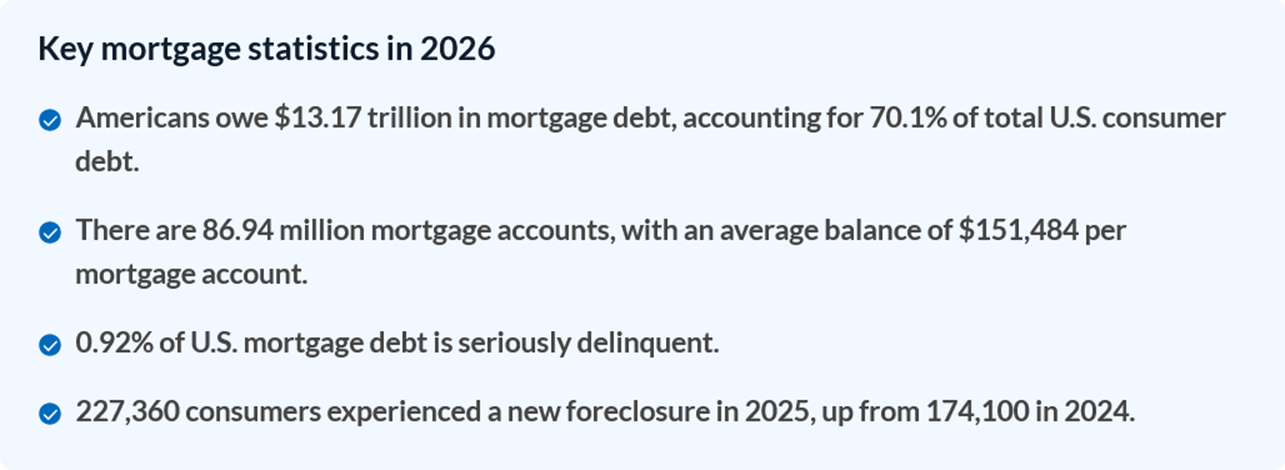
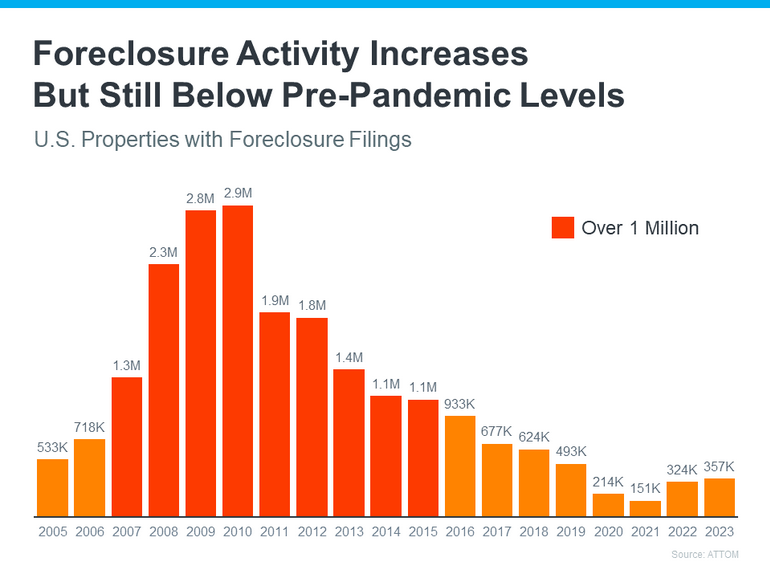
Subprime mortgage lending exploded during 2004-2006, creating the infamous housing market bubble, precipitating the housing market crash, followed by millions of Americans losing their jobs during the fallout… and then losing their homes as millions of foreclosures swamped the housing market.

If the U.S. Federal Reserve can transfuse the likes of Deutsche Bank with $66 billion in ‘secret liquidity funding’…

Then U.S. citizens deserve nothing less than to be granted that same direct access to liquidity to deal with their own “mounting debt burdens.”

The Leviticus 25 Plan generates $37.303 billion federal budget surpluses annually during its first five years of activation (2027-2031) – and pays for itself entirely over the succeeding 10-15 year period.

The Leviticus 25 Plan is a dynamic economic initiative providing direct liquidity benefits for American families, while at the same time scaling back the role of government in managing and controlling the affairs of citizens.  It is a comprehensive plan with long-term economic and social benefits for citizens and government.

The inspiration for this plan is based upon Biblical principles set forth in the Book of Leviticus, principles tendering direct economic liberties to the people.

The Leviticus 25 Plan – An Economic Acceleration Plan for America

$95,000 per U.S. citizen – Leviticus 25 Plan 2027 (50315 downloads )

Andrew Huszar, Federal Reserve Official: QE was “the greatest backdoor Wall Street bailout of all time”

A look back…

………………………………..

Andrew Huszar: Confessions of a Quantitative Easer – WSJ

Nov 11, 2013: Andrew Huszar directed the Federal Reserve’s [QE1] $1.25 trillion agency mortgage-backed security purchase program which kicked off during March 2009.

Here are his after-thoughts…or “confessions”  (Andrew Huszar: “Confessions of a Quantitative Easer”) excerpts: 

“We went on a bond-buying spree that was supposed to help Main Street. Instead, it was a feast for Wall Street

I can only say: I’m sorry, America. As a former Federal Reserve official, I was responsible for executing the centerpiece program of the Fed’s first plunge into the bond-buying experiment known as quantitative easing. The central bank continues to spin QE as a tool for helping Main Street. But I’ve come to recognize the program for what it really is: the greatest backdoor Wall Street bailout of all time. 

Five years ago this month, on Black Friday, the Fed launched an unprecedented shopping spree. By that point in the financial crisis, Congress had already passed legislation, the Troubled Asset Relief Program, to halt the U.S. banking system’s free fall. Beyond Wall Street, though, the economic pain was still soaring. In the last three months of 2008 alone, almost two million Americans would lose their jobs.

The Fed said it wanted to help—through a new program of massive bond purchases. There were secondary goals, but Chairman Ben Bernanke made clear that the Fed’s central motivation was to “affect credit conditions for households and businesses”: to drive down the cost of credit so that more Americans hurting from the tanking economy could use it to weather the downturn. For this reason, he originally called the initiative “credit easing.”

In its almost 100-year history, the Fed had never bought one mortgage bond. Now my program was buying so many each day through active, unscripted trading that we constantly risked driving bond prices too high and crashing global confidence in key financial markets. We were working feverishly to preserve the impression that the Fed knew what it was doing. 

It wasn’t long before my old doubts resurfaced. Despite the Fed’s rhetoric, my program wasn’t helping to make credit any more accessible for the average American. The banks were only issuing fewer and fewer loans. More insidiously, whatever credit they were extending wasn’t getting much cheaper. QE may have been driving down the wholesale cost for banks to make loans, but Wall Street was pocketing most of the extra cash.

Trading for the first round of QE ended on March 31, 2010. The final results confirmed that, while there had been only trivial relief for Main Street, the U.S. central bank’s bond purchases had been an absolute coup for Wall Street. The banks hadn’t just benefited from the lower cost of making loans. They’d also enjoyed huge capital gains on the rising values of their securities holdings and fat commissions from brokering most of the Fed’s QE transactions. Wall Street had experienced its most profitable year ever in 2009, and 2010 was starting off in much the same way.

That was when I realized the Fed had lost any remaining ability to think independently from Wall Street. Demoralized, I returned to the private sector.

Where are we today [2013]? The Fed keeps buying roughly $85 billion in bonds a month, chronically delaying so much as a minor QE taper. Over five years, its bond purchases have come to more than $4 trillion. Amazingly, in a supposedly free-market nation, QE has become the largest financial-markets intervention by any government in world history. 

And the impact? Even by the Fed’s sunniest calculations, aggressive QE over five years has generated only a few percentage points of U.S. growth. By contrast, experts outside the Fed, such as Mohammed El Erian at the Pimco investment firm, suggest that the Fed may have created and spent over $4 trillion for a total return of as little as 0.25% of GDP (i.e., a mere $40 billion bump in U.S. economic output). Both of those estimates indicate that QE isn’t really working.

Having racked up hundreds of billions of dollars in opaque Fed subsidies, U.S. banks have seen their collective stock price triple since March 2009. The biggest ones have only become more of a cartel: 0.2% of them now control more than 70% of the U.S. bank assets.”

_____________________________

Again…

Andrew Huszar – Federal Reserve QE1: “The final results confirmed that, while there had been only trivial relief for Main Street, the U.S. central bank’s bond purchases had been an absolute coup for Wall Street. The banks hadn’t just benefited from the lower cost of making loans. They’d also enjoyed huge capital gains on the rising values of their securities holdings and fat commissions from brokering most of the Fed’s QE transactions.”

The Leviticus 25 Plan redresses Wall Street’s “absolute coup” from the Fed’s 2008-2010 QE1 bond purchases by granting direct liquidity extensions to qualifying U.S. citizens, to achieve massive debt elimination and restored financial health for millions of hard-working, tax-paying families

The Leviticus 25 plan will generate dynamic growth in the U.S. economy and prosperity for the 36.2 million small businesses spread out across Main Street America. 

The Leviticus 25 Plan is a dynamic economic initiative providing direct liquidity benefits for American families, while at the same time scaling back the role of government in managing and controlling the affairs of citizens.  It is a comprehensive plan with long-term economic and social benefits for citizens and government.

The inspiration for this plan is based upon Biblical principles set forth in the Book of Leviticus, principles tendering direct economic liberties to the people.

The Leviticus 25 Plan – An Economic Acceleration Plan for America

$95,000 per U.S. citizen – Leviticus 25 Plan 2027 (50096 downloads )

Doom and Gloom: “Debt Spiral Ends in Dollar Destruction.” Countermand: The Leviticus 25 Plan

“You never change things by fighting the existing reality. To change something, build a new model that makes the existing model obsolete. –R. Buckminster Fuller

The new model for economic revitalization in America: The Leviticus 25 Plan

___________________________

The Debt Spiral Ends In Dollar Destruction: 6 Hard Truths America Can No Longer Ignore

ZeroHedge, Apr 06, 2026 – Authored by Nick Giambruno via Doug Casey’s International Man,

Excerpts:

Observation #1: It’s Politically Impossible To Cut Spending
“Among the biggest expenditures for the US government are so-called entitlements like Social Security and Medicare. It’s unlikely any politician will cut entitlements. On the contrary, I expect them to continue growing….
Here’s the bottom line. The government cannot even slow the spending growth rate, let alone cut it. Expenditures have nowhere to go but up—way up.”

Countermand: The Leviticus 25 Plan will achieve a massive, wide-ranging draw-down in federal and state entitlement spending outlays, to include: Social Security (SSDI), Medicare, Medicaid, Supplemental Nutrition Assistance Program (SNAP), Unemployment Compensation, Supplemental Security Income (SSI), Veterans’ Compensation and Pensions (specifically related to low income benefits), TANF (Temporary Assistance for Needy Families)

………………………..

Observation #2: Ever-Increasing Debt Is the Only Way To Finance Deficits
“When faced with a choice, politicians always choose the most expedient option. In this case, that means issuing more debt rather than making tough budget decisions or explicitly defaulting….In any case, don’t count on increased tax revenue to offset these increases in federal expenditures.
Here’s the bottom line: increasing taxes, even to extreme levels, isn’t going to change the trajectory of this unstoppable trend—even slightly…. no matter what happens, the deficits will not stop growing, nor will the debt needed to finance them. The growth rate is not even going to slow down. It’s going to increase. That means interest expense on the federal debt will continue exploding higher.”

Countermand: The Leviticus 25 Plan will achieve:

  • Immediate $37.303 billion federal budget surpluses annually 2027-2031; self-financed over the succeeding 10-15 years.
  • Immediate, massive budget gains for state and local governments;
  • Immediate, massive debt elimination and restored financial security for millions of hard-working, tax-paying American families;
  • Citizen-centered health care;
  • Revitalized, long-term economic growth, robust growth in payroll taxes (Social Security, Medicare).

……………………………..

Observation #3: Over Half of US Treasury Debt Matures by 2028
“This year, nearly $10 trillion of US Treasuries will mature.
And every bond that comes due has to be refinanced at today’s much higher rates—locking in substantially larger interest costs for years. What used to roll over quietly can now only be rolled over at roughly double the interest cost seen in 2022…”

Countermand: The Leviticus 25 Plan, in concert with the coming change in the enhanced Supplementary Leverage Ratio (eSLR) for banks will be a “bullish catalyst” for treasuries, powering u “lower interest rates across the curve, credit market stability.”

……………………….

Observation #4: An Ever-Growing Interest Expense Fuels the Debt Spiral
“Annualized interest on the federal debt exceeds $1.2 trillion and is surging higher. That means more than 23% of federal tax revenue is going just to service interest on the existing debt.
…the US government is now borrowing money to pay the interest on the money it has already borrowed… It’s creating a self-perpetuating doom loop…. In short, the skyrocketing interest expense has become an urgent threat to the US government’s solvency.”

Countermand: The Leviticus 25 Plan generates $37.303 billion annual federal budget surpluses each of the first five years of activation (2027-2031), large-scale tax revenue and payroll tax receipts, and credit market stability and long-term federal and state budget item interest cost reductions
The Leviticus 25 Plan will pay for itself entirely over the succeeding 10-15 years.
“Urgent threat to U.S. government solvency” – resolved.

……………………..

Observation #5: Surging Interest Expense Forces Fed To Ease Monetary Policy
“The soaring interest expense threatens the solvency of the US government and forces the Fed to cut interest rates, buy Treasuries, and implement other monetary easing measures to try to control interest costs….The only entity capable is the Federal Reserve, which buys Treasuries with dollars it creates out of thin air.”

Countermand: The Leviticus 25 Plan will restore positive dynamics to the treasury market and counterbalance the looming pressures driving driving the Federal Reserve toward future asset purchases.

………………………..

Observation #6: Ever-Increasing Currency Debasement Is Inevitable
“The skyrocketing interest expense forces the Fed to implement interest cost control policies, which inflate the money supply and debase the currency. As that happens, prices rise. That causes the US government to spend even more on Social Security and welfare to keep up with the cost-of-living increases. The same is true of defense and other government spending, which adjusts upward for rising prices.
This compounds the problem because, as government spending rises to account for rising prices, that increased spending can only be financed with more currency debasement.
That’s why ever-increasing currency debasement is the inevitable outcome of the US government’s debt spiral. It’s a self-perpetuating doom loop from which they cannot escape….”

Countermand: The Leviticus 25 Plan, the most powerful economic acceleration plan in the world, will effectively neutralize, once and for all, currency debasement pressures, and the U.S. economy’s “inevitable… self-perpetuating doom loop”

………………………………………..

The Leviticus 25 Plan is a dynamic economic initiative providing direct liquidity benefits for American families, while at the same time scaling back the role of government in managing and controlling the affairs of citizens.  It is a comprehensive plan with long-term economic and social benefits for citizens and government.

The inspiration for this plan is based upon Biblical principles set forth in the Book of Leviticus, principles tendering direct economic liberties to the people.

The Leviticus 25 Plan – An Economic Acceleration Plan for America
$95,000 per U.S. citizen
Leviticus 25 Plan 2027 (49564 downloads )

Website: https://leviticus25plan.org/