The Leviticus 25 Plan – the most powerful economic acceleration plan in the world: economic scoring summary.
3. Federal Income Tax Recapture
The scoring model assumes that 80% of U.S. citizens will participate in The Leviticus 25 Plan.
Participants must give up their tax refunds through the Plan’s recapture provisions for the 5-year target period (2025-2029).
According to 2023 IRS Filing season statistics, through Dec 29, 2023:
105,734,000 total refunds were paid out for a total of $334.861 billion.
Refund totals have increased by ~$31.2 billion over the past six years, from $303.761 billion (2018) to a current (estimated) $334.861 billion (2023), representing an average increase of $5.2 billion per year.
A conservative estimated average of $5 billion per year (2025-2029) will be used for this recapture calculation.
2023: $334.9 billion
2024: $339.9 billion
2025: $344.9 billion
2026: $349.9 billion
2027: $354.9 billion
2028: $359.9 billion
2029: $364.9 billion
Total: $1.775 trillion
Total recapture X 80%: $1.775 trillion X .8 = $1.420 trillion
Total recapture per annum (2025-2029): $1.42 / 5 = $284.0 billion
Participants in the Plan will forego Economic Security Program benefits and select means-tested welfare benefits for the period 2025-2029.
Economic security programs: About 8 percent (or $522 billion) of the federal budget in 2023 supported programs that provide aid (other than health insurance or Social Security benefits) to individuals and families facing hardship. Economic security programs include: the refundable portions of the Earned Income Tax Credit and Child Tax Credit, which assist low- and moderate-income working families; programs that provide cash payments to eligible individuals or households, including unemployment insurance and Supplemental Security Income for low-income people who are elderly or disabled; various forms of in-kind assistance for low-income people, including the Supplemental Nutrition Assistance Program (formerly known as food stamps), school meals, low-income housing assistance, child care assistance, and help meeting home energy bills; and other programs such as those that aid abused or neglected children.1
The Leviticus 25 Plan – the most powerful economic acceleration plan in the world: economic scoring summary.
5. Medicaid/CHIP Recapture
Each U.S. citizen participating in The Plan will receive a $30,000 deposit, funded through a Federal Reserve-based Citizens Credit Facility, into a personal Medical Savings Account (MSA).
The Leviticus 25 Plan assumes 80% participation by Medicaid / CHIP enrollees.
Within this comprehensive economic plan, The U.S. Health Care Freedom Plan provides
Medical Savings Account (MSA) funding of $30,000 to cover the $6,000 deductible for Medicaid and CHIP eligible primary care events and select out-patient care services – primarily related to routine medical appointments, Medicaid prescription events, disease state monitoring clinics, and other desired primary care services.
September 2023 Medicaid & CHIP Enrollment – 88,414,773 individuals were enrolled in Medicaid and CHIP in the 50 states and the District of Columbia that reported enrollment data for September 2023. 81,408,432 individuals were enrolled in Medicaid. 7,006,341 individuals were enrolled in CHIP.
The 88,414,773 enrollment level represents a decrease of 2,518,996 (2.77%) from the Sep 2022 ‘Covid-period’ enrollment of 90,933,769. It represents an increase of 4,799,996 (5.74%) from the July 2021 ‘pre-Covid’ enrollment of 83,614,777 individuals.
Using a conservative estimate of 90.0 million for 2024, with a projected 2% annual growth rate:
2024: 90.0 million
2025: 91.8 million
2026: 93.6 million
2027: 95.5 million
2028: 97.4 million
2029: 99.3 million
Total: 477.6 million receiving benefits 2025-2029
Average annual enrollment (2025-2029): 95.52 million
95.52 million X .8 = 76.42 million X $6,000/year X 5 years = $2.293 trillion
Total Medicaid/CHIP recapture during the 5-year target period (2025-2029): $2.293 trillion
Note 1: The potential savings of $2.296 trillion do not take into account the additional savings to state government outlays, which range from 15% to 35% of total Medicaid-CHIP spending.
Note 2: The potential savings of $2.296 trillion does not take into account the likelihood of additional savings from individuals no longer being eligible for Medicaid-CHIP, due to their improving financial status.
______________________
6. Medicare Recapture
Each U.S. citizen participating in The Plan will receive a $30,000 deposit, funded through a Federal Reserve-based Citizens Credit Facility, into a personal Medical Savings Account (MSA).
The Leviticus 25 Plan assumes 80% participation by Medicare enrollees.
Within this comprehensive economic plan, The U.S. Health Care Freedom Plan provides
Medical Savings Account (MSA) funding of $30,000 to cover the $6,000 deductible for Medicare-eligible primary care events and select out-patient services – primarily related to routine medical appointments, Medicare Part D prescription events, disease state monitoring clinics, and other desired primary care services.
There were 65,954,976 people are enrolled in Medicare as of May 2023.
Projection: Medicare spending growth is projected to average 7.2% over 2021-2030, the fastest rate among the major payers. Projected spending growth of 11.3% in 2021 is expected to be mainly influenced by an assumed acceleration in utilization growth, while growth in 2022 of 7.5% is expected to reflect more moderate growth in use, as well as lower fee-for-service payment rate updates and the phasing in of sequestration cuts. Spending is projected to exceed $1 trillion for the first time in 2023. By 2030, Medicare spending growth is expected to slow to 4.3% as the Baby Boomers are no longer enrolling and as further increases in sequestration cuts occur.
Medicare – As of May 2023, 65,954,976 people are enrolled in Medicare. This is an increase of 118,238 since the last report.
*33,945,540 are enrolled in Original Medicare.
*32,009,436 are enrolled in Medicare Advantage or other health plans. This includes enrollment in Medicare Advantage plans with and without prescription drug coverage.
*51,742,496 are enrolled in Medicare Part D. This includes enrollment in stand-alone prescription drug plans as well as Medicare Advantage plans that offer prescription drug coverage.
The Leviticus 25 Plan assumes 80% participation by Veterans Administration healthcare enrollees. Within this comprehensive structure, The U.S. Health Care Freedom Plan provides Medical Savings Account (MSA) funding of $30,000, through a Federal Reserve-based Citizens Credit Facility, to cover annual $6,000 deductibles over the course of the 5-year target period (2025-2029).
FY 2022 – 9.07 million enrollees in the VA health care system.
The plan assumes a conservative 1% growth rate in VA Health Care enrollment (2025-2029).
The Leviticus 25 Plan assumes 80% participation by TRICARE enrollees.
Through The U.S. Health Care Freedom Plan, participating members will receive a Medical Savings Account (MSA) funding injection of $30,000, through a Federal Reserve-based Citizens Credit Facility, to cover annual $6,000 deductibles for desired primary care and out-patient services over the course of the 5-year target period (2025-2029).
There are currently ~9.5 million U.S. citizen beneficiaries in various locations around the world.
Recapture – total (2025-2029): 9.5 million X 0.8 X $6,000 X 5 years: $228.0 billion
The Leviticus 25 Plan assumes 80% participation by FEHB enrollees.
Participating members will receive a Medical Savings Account (MSA) funding injection of $30,000, through a Federal Reserve-based Citizens Credit Facility, to cover annual $6,000 deductibles for desired primary care and out-patient services over the course of the 5-year target period (2024-2028).
There are currently 9.0 million U.S. citizen FEHB beneficiaries. Note – the Federal government also pays approximately 72% of premium costs per enrollee.
Recapture – total (2025-2029): 9.0 million X 0.8 X $6,000 X 5 = $216.0 billion
The FEHB Program is the largest employer-sponsored group health insurance program in the world, covering over 9 million people including employees, annuitants …
________________________
9. Social Security Disability Income (SSDI)
The Leviticus 25 Plan specifies that participants will not be eligible for SSDI benefits.
The Plan assumes 80% participation.
Number, average, and total monthly benefits, December 2023: 8,414,000 recipients
Total annual SSDI payments, December 2023: ~$142.572 billion.
SSDI received an 8.7% Cost of Living Adjustment (COLA) for 2023.
This projection assumes a conservative 2% growth per year for 2025-2029.
2023: $142.572 billion
2024: $145.423 billion
2025: $148.331 billion
2026: $151.298 billion
2027: $154.324 billion
2028: $157.410 billion
2029:$160.558 billion
Total: $771.921 billion / Average per year: $154.384 billion
Total for 5-year target period 2025-2029:
Plan assumes 80% participation – recapture: $771.921 billion X 0.8 = $617.537 billion
Source(s): Social Security Benefits Dec 2023 – Disability Insurance https://www.ssa.gov/policy/docs/quickfacts/stat_snapshot/
Recipients: 8,414,000 | Total monthly benefits $11.881 billion;
The Leviticus 25 Plan – the most powerful economic acceleration plan in the world: economic scoring summary.
Interest expense recapture on projected deficits 2025-2029
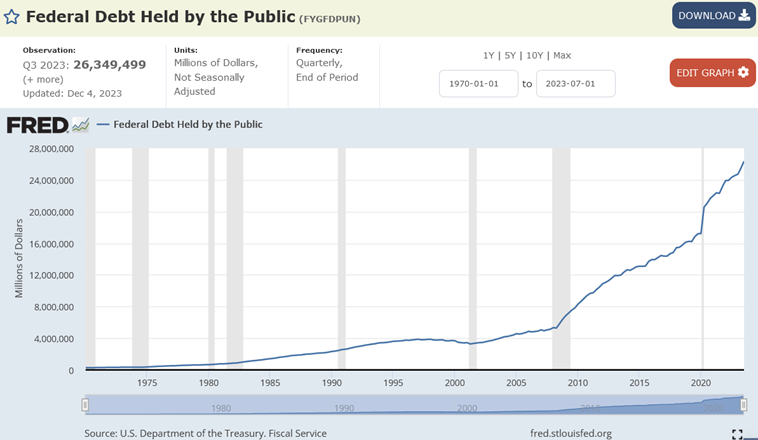
Federal debt has increased from $22.1 trillion in 2020 to $34.0 trillion as of December, 2023. Federal debt held by the public is reported to be $27.783 trillion, with the remainder, $6.216 trillion of intra-governmental debt outstanding, which arises when one part of the government borrows from another. This intra-governmental debt interest expense will be omitted from this calculation, since those dollars are not expensed directly.
U.S. monthly interest rate on interest-bearing debt 2018-2023
As of December 2023, the United States government has a monthly interest rate of 3.11 percent on its debt, continuing an upward trend in interest rates that began at the beginning of 2022. In March of 2023, U.S. debt reached 31.46 trillion U.S. dollars.
Interest expense on the public debt during FY 2024 is currently being expensed at a monthly interest rate of 3.11%. Projections estimate monthly rate will decline to an approximate average of 2.3% – 2.4% over the next 5-6 years.
This projection will assume an average monthly interest rate of 3.10% for 2024, and an average monthly interest rate of 2.75% in calculating the interest expense to be eliminated during the budget surplus years of 2025-2029.
This projection also assumes that annual federal budget deficits will be funded through Treasury Issuance at an average of 79.0% rate fir Debt Held by the Public.
Year Annual Deficit/2 X %Debt Held by Public X Interest Rate
2024: $1.571 trillion/2 X .79 X .0310 = $19.237 billion
2025: $1.761 trillion/2 X .79 X .0280 = $19.477 billion
2026: $1.718 trillion/2 X .79 X .0270 = $18.322 billion
2027: $1.709 trillion/2 X .79 X .0260 = $17.551 billion
2028: $1.934 trillion/2 X .79 X .0250 = $19.098 billion
2029: $1.855 trillion/2 X .79 X .0240 = $17.585 billion
Recapture: Total interest expense eliminated by projected operating surpluses: $92.033 billion
Average annual budget surplus (projected) 2025-2029: $563.033 billion / 5 years; $112.6 billion per year
___________________________________
Note 1: Projected budget surpluses for 2025-2029 do not factor in the additional government tax revenue gains that would accrue from the massive shift in capital away from debt service and into productive economic activity.
Note 2: Projected budget surpluses for 2025-2029 do not factor in the additional government tax revenue gains that would accrue from significantly lower levels of debt deduction on individual income tax filings.
Note 3: Projected budget surpluses from the Medicaid / CHIP recapture do not take into account the likelihood of fewer citizens actually qualifying for Medicaid / CHIP benefits.
Note 4: The Plan’s funding of individual Medical Savings Accounts (MSAs) with the $6,000 deductible provision per year would result in an enormous drop in the number of claims each year for Medicare reimbursement. Medicare payroll taxes would generate a growing revenue stream, due to stronger economic growth, while outlays would drop significantly from the reduced claims numbers – thereby providing the Fed with a powerful tool to recapitalize the Medicare Trust Fund, via the Citizen’s Credit Facility.
The Leviticus 25 Plan – Projection limitations
There can be no question that The Leviticus 25 Plan would generate healthy, broad-based economic growth from broad-based debt reduction and improved financial stability at the family level, the restoration of free market dynamics in commerce, and scaling back social program work disincentives.
The Leviticus 25 Plan does not attempt to project how much additional tax revenue and reduced cost of government will be realized, above and beyond the Recapture Provisions, over the course of the initial five years of the plan. In that sense, The Plan understates the effect of additional dynamic economic benefits.
Robust funding of Medical Savings Accounts and the elimination of millions of insurance claims and claims resolutions for basic primary care and everyday healthcare purchases swill save millions of man-hours of health care cost on an annual basis. Scaling back government involvement in basic primary care and everyday healthcare purchases for millions of Americans will also generate massive cost savings.
The Plan makes no attempt to project the positive effects of the streamlined, consumer-driven efficiencies that will emerge, and the cost reduction and improvement in services.
The Plan therefore understates the benefits.
The Plan projects an 80 percent participation rate by U.S. citizens. It is assumed that a large number of wealthy Americans will not participate, because their tax refunds are larger than the annual Plan benefits. And it is assumed that a large number of Americans receiving significant government benefits for extraordinary health or economic issues will also not participate.
Cost savings from the reductions in massive social welfare spending and other programs, like unemployment insurance, workman’s compensation, SSI and SSDI can be difficult to quantity, since state and federal funding mechanisms may both be involved in various ways. In that regard, The Plan may understate, or it may overstate, the benefits.
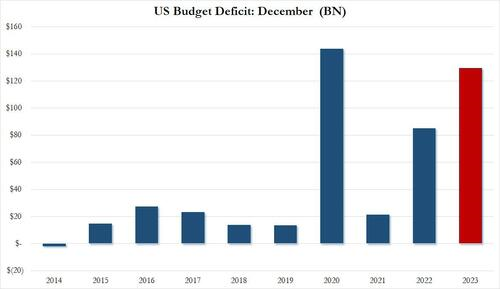
As for the final, and most shocking, data point, the December budget deficit of $129.4 billion was more than $40BN higher than the $87.5BN median estimate, and was more than 50% higher compared to the $85BN December deficit in fiscal 2022.
By Diccon Hyatt | Investopedia | Published January 08, 2024
Key Takeaways
Consumer debt surged $23.8 billion in November, most of that due to a $19.1 billion increase in revolving debt, mainly credit cards.
The debt is increasingly burdensome for households, with interest rates on credit card debt averaging more than 21%, the highest in decades.
Some households are under increasing financial pressure and falling behind on their bills, with delinquencies for credit cards and car loans having recently surpassed pre-pandemic levels
____________________________
Washington Democrats’ Plan: Expand federal and state government-based social programs, expand federal bureaucracy. No plans of record to constrain spending, bring budget deficits back under control.
Washington Republicans’ Plan: No credible, politically feasible economic strategy to constrain spending enough to have any material effect on budget deficits. No plan to protect the purchasing power of the U.S. Dollar and maintain its status as the world’s reserve currency. No plan to address America’s long-term public and private debt leverage issues.
Washington Republicans have the opportunity of a lifetime to present a master plan to dig America out of its cavernous debt hole and restore the American dream – and they have nothing.
Main Street America Republicans do have a plan – an economic acceleration masterpiece that will: 1) Generate massive new tax revenue flows, cost savings, and multi-billion dollar budget surpluses each of the first five years of activation; 2) Set the U.S. Dollar back on track for long-term strength and stability; 3) Eliminate trillions of dollars in Household Debt and restore financial security for millions of American families; 4) Revitalize economic growth, strengthen the U.S. banking system; and 4) Restore economic liberty and free market economics in the United States.
The Leviticus 25 Plan is a dynamic economic initiative providing direct liquidity benefits for American families, while at the same time scaling back the role of government in managing and controlling the affairs of citizens. It is a comprehensive plan with long-term economic and social benefits for citizens and government.
The inspiration for this plan is based upon Biblical principles set forth in the Book of Leviticus, principles tendering direct economic liberties to the people.
The Leviticus 25 Plan – An Economic Acceleration Plan for America
America needs a new plan – one that offers a helping hand ‘up out of poverty,’ rather than the perpetuating the current system that “severely punish work effort,” promote continual dependence on government, and stifle the human spirit.
Phil Gramm and John Early’s “Another Wrong Way to Measure Poverty” (op-ed, Dec. 6) is notable for revealing how poverty rates are artificially inflated by the Census Bureau by excluding most social-welfare benefits. When all the benefits are counted, the authors contend, “the percentage of Americans living in poverty falls to only 2.5%.”
…. While Americans may be more comfortable than census numbers suggest, the authors miss the poverty of opportunity that occurs once people become ensnared in the social-welfare system.
Consider a 2022 study by economist Ed Dolan. He gives the case of a hypothetical Boston family with one adult, two young children and an income of $22,000, which is at that group’s official poverty level. The family qualifies for around $66,000 in social-welfare benefits, which certainly brings it out of poverty.
But here’s the rub: Even if the family’s income doubles to $44,000, the social-welfare benefits collectively roll back $1.03 for every marginal dollar earned over this range, leaving the family worse off in total wages and benefits. Our research calls this phenomenon a “disincentive desert,” (as opposed to the much-studied “benefits cliff”), since this is equivalent to an extremely high and persistent tax on work effort, ranging from 90% to 110%, across long spans of income.
As a result, many low-income Americans are left comfortably numb in a social-welfare state that severely punishes work effort and stifles the imagination for what life might be. I contend that rather than focusing on living standards at a point in time, we should see that life without hope of economic progress is the ultimate definition of poverty. Policies that address this issue are the key to reviving downward trends in labor-force participation. –Prof. Craig J. Richardson, Winston-Salem State University
____________________________
The Leviticus 25 Plan is a dynamic economic initiative providing direct liquidity benefits for American families, while at the same time scaling back the role of government in managing and controlling the affairs of citizens. It is a comprehensive plan with long-term economic and social benefits for citizens and government.
The inspiration for this plan is based upon Biblical principles set forth in the Book of Leviticus, principles tendering direct economic liberties to the people.
The Leviticus 25 Plan – An Economic Acceleration Plan for America
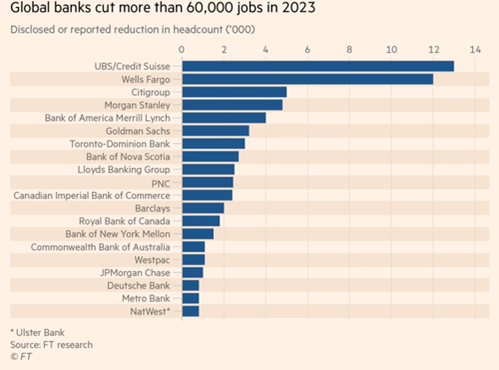
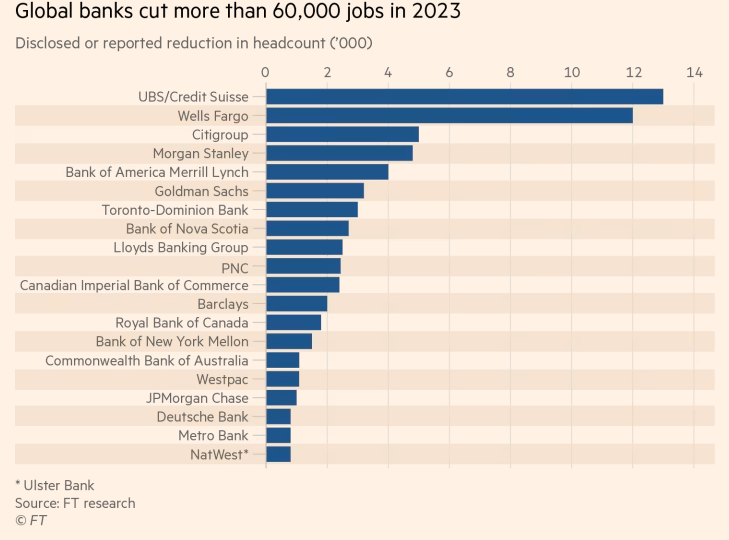
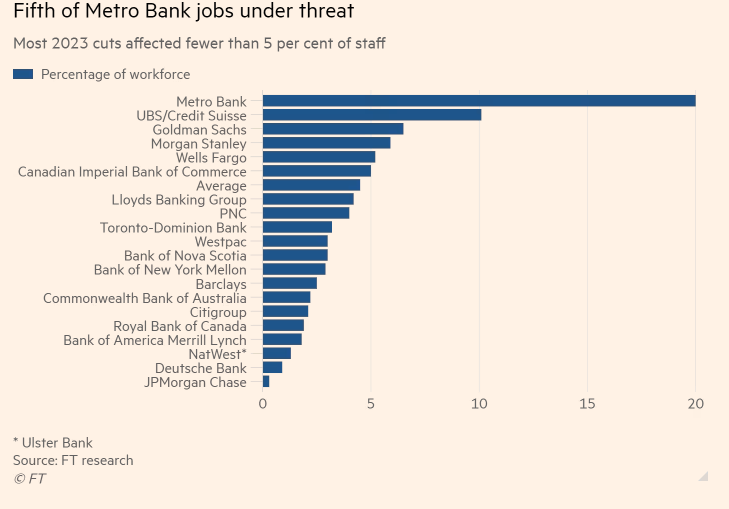
The collapse of three US regional banks – First Republic Bank, Silicon Valley Bank, and Signature Bank – marked some of the largest failures in the banking system since 2008. Central banks contained the “mini-crisis” earlier this year with forced interventions and the mega-merger of Credit Suisse and UBS. Despite the interventions, global banks still axed the most jobs since the global financial crisis.
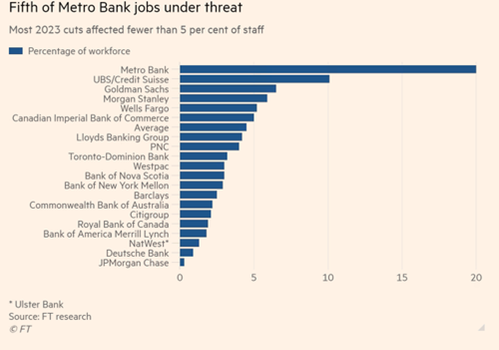
A new report from the Financial Times shows twenty of the world’s largest banks slashed 61,905 jobs in 2023, a move to protect profit margins in a period of high interest rates amid a slump in dealmaking and equity and debt sales. This compared with the 140,000 lost during the GFC of 2007-08.
“There is no stability, no investment, no growth in most banks — and there are likely to be more job cuts,” said Lee Thacker, owner of financial services headhunting firm Silvermine Partners.
FT noted that corporate disclosure data and its independent reporting did not include smaller regional bank cuts, indicating total job loss could be much higher.
At least half of the job cuts came from Wall Street lenders struggling with Western central banks’ most aggressive interest rate hikes in a generation.
The most significant cut of any single bank was at Switzerland’s UBS.
Morgan Stanley reduced jobs by 4,800, Bank of America by 4,000, Goldman Sachs by 3,200, and JPMorgan Chase by 1,000. As a whole, Wall Street cut 30,000 workers this year.
“The revenues aren’t there, so this is partly a response to overexpansion. But there is also a simpler explanation: political cost-cutting,” said Thacker.
Gaurav Arora, global head of competitor analytics at Coalition, warned: “We expect full-year 2024 to be a continuation of the story of 2023.”
Wilmington Trust, Mar 16, 2023 – The macro picture for distress
Many loan market analysts have taken a dim view of the distressed space in the next two years. Fitch, for example, sees a band of 2023 institutional leveraged loan default rates between 2.5%–3.0%. They project $47 billion of defaults in 2023 at the midpoint of their forecast.1
Deutsche Bank is more pessimistic, expecting a 5.6% default rate in the United States and a 3.7% rate in the euro market in 2023. Per their estimates, default rates on U.S. leveraged loans will hit a near-record high of 11.3% in 2024, while defaults on euro-leveraged loans will hit 7.1%.2
Undoubtedly, the economic climate is harsh for borrowers. A complex economic cycle continues to spin. Wilmington Trust’s 2023 Capital Markets Forecast highlights an inflationary vortex driven by labor, China, and energy, which creates structural stress.3 This vortex and the resulting monetary policy are exerting its pull across companies’ capital structures.
Mortgage delinquencies – “About five million U.S. households were estimated to be behind on their last month’s mortgage repayment in June 2023. Homeowners between 40 and 54 years made up over 1.8 million households late on their payment. Second in rank were roughly 1.5 million homeowners between 25 and 39 years” -Statista, Jul 23, 2023
According to Kipplinger, “the delinquency rate for conventional loans increased 21 basis points to 2.5%, while the rate for FHA loans increased 55 basis points to 9.5%. The delinquency rate for VA loans increased 6 basis points to 3.76%.”
__________________________________
The Leviticus 25 Plan provides direct liquidity extensions to qualifying U.S. citizens, through a Fed-based Citizens Credit Facility, for the express purpose of massive ‘ground-level’ debt elimination.
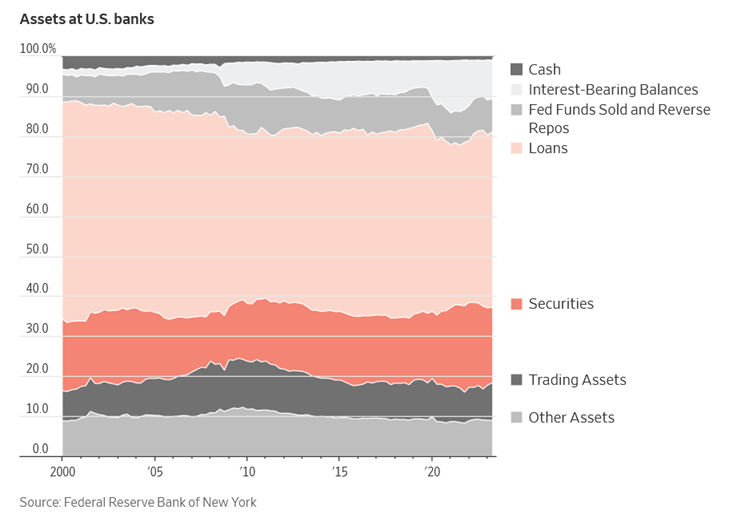
This process will provide the banking system with massive new inflows of liquidity to strengthen cash reserves, solve a majority of banks’ distressed debt and delinquent mortgage issues, allow banks to rectify a significant proportion of their ‘maturity mismatch’ issues with fresh purchase of Treasuries and other high-grade credit instruments yielding significantly higher yields.
The Leviticus 25 Plan will generate federal budget surpluses of $619.5 billion each of the first five years following activation, and pay for itself over a 10-15 year period.
It will generate long-term economic growth – not dependent upon debt issuance.
It will restore financial security for millions of American families – and reduce dependence on government programs.
The Leviticus 25 Plan is a dynamic economic initiative providing direct liquidity benefits for American families, while at the same time scaling back the role of government in managing and controlling the affairs of citizens. It is a comprehensive plan with long-term economic and social benefits for citizens and government.
The inspiration for this plan is based upon Biblical principles set forth in the Book of Leviticus, principles tendering direct economic liberties to the people.
The Leviticus 25 Plan – An Economic Acceleration Plan for America
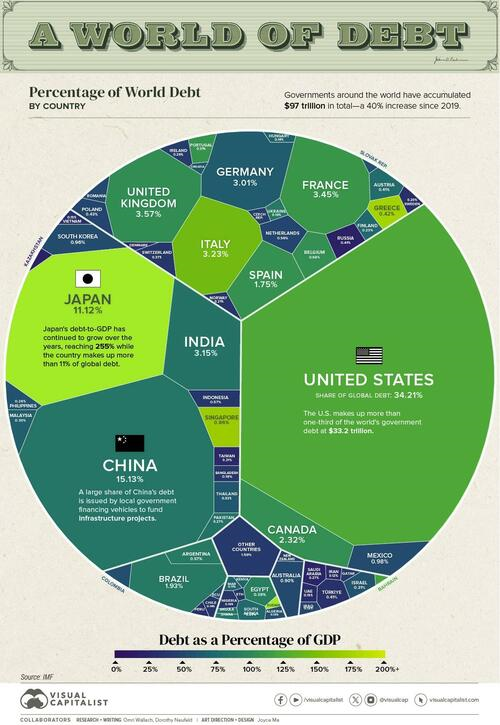
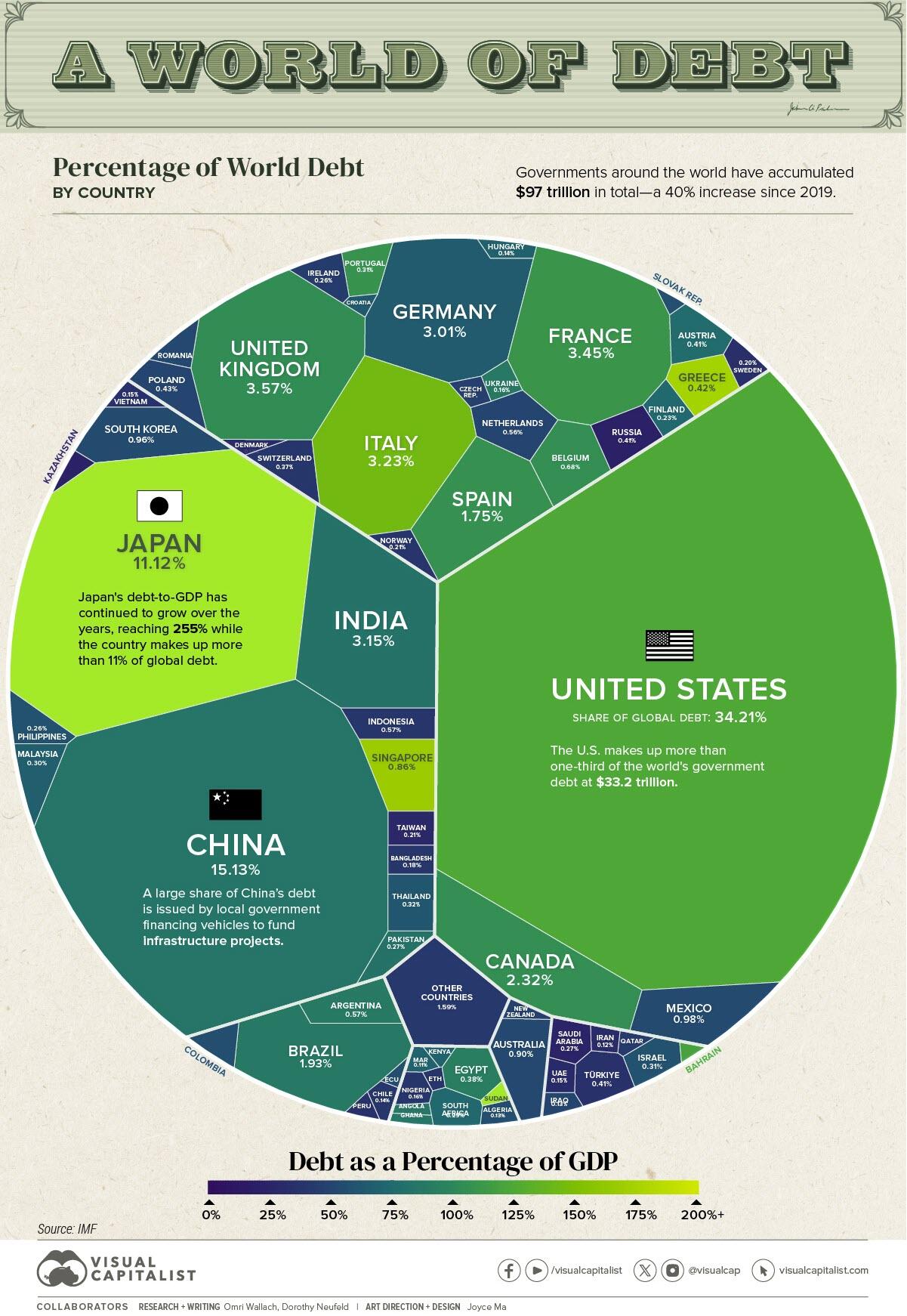
Global government debt is projected to hit $97.1 trillion this year, a 40% increase since 2019.
During the COVID-19 pandemic, governments introduced sweeping financial measures to support the job market and prevent a wave of bankruptcies. However, this has exposed vulnerabilities as higher interest rates are amplifying borrowing costs.
Below, we rank countries by their general government gross debt, or the financial liabilities owed by each country:
Country
Gross Debt (B)
% of World Total
Debt to GDP
🇺🇸 U.S.
$33,228.9
34.2%
123.3%
🇨🇳 China
$14,691.7
15.1%
83.0%
🇯🇵 Japan
$10,797.2
11.1%
255.2%
🇬🇧 UK
$3,468.7
3.6%
104.1%
🇫🇷 France
$3,353.9
3.5%
110.0%
🇮🇹 Italy
$3,141.4
3.2%
143.7%
🇮🇳 India
$3,056.7
3.1%
81.9%
🇩🇪 Germany
$2,919.3
3.0%
65.9%
🇨🇦 Canada
$2,253.3
2.3%
106.4%
🇧🇷 Brazil
$1,873.7
1.9%
88.1%
🇪🇸 Spain
$1,697.5
1.7%
107.3%
🇲🇽 Mexico
$954.6
1.0%
52.7%
🇰🇷 South Korea
$928.1
1.0%
54.3%
🇦🇺 Australia
$875.9
0.9%
51.9%
🇸🇬 Singapore
$835.0
0.9%
167.9%
🇧🇪 Belgium
$665.2
0.7%
106.0%
🇦🇷 Argentina
$556.5
0.6%
89.5%
🇮🇩 Indonesia
$552.8
0.6%
39.0%
🇳🇱 Netherlands
$540.9
0.6%
49.5%
🇵🇱 Poland
$419.4
0.4%
49.8%
🇬🇷 Greece
$407.2
0.4%
168.0%
🇹🇷 Türkiye
$397.2
0.4%
34.4%
🇷🇺 Russia
$394.8
0.4%
21.2%
🇦🇹 Austria
$393.6
0.4%
74.8%
🇪🇬 Egypt
$369.3
0.4%
92.7%
🇨🇭 Switzerland
$357.7
0.4%
39.5%
🇹🇭 Thailand
$314.5
0.3%
61.4%
🇮🇱 Israel
$303.6
0.3%
58.2%
🇵🇹 Portugal
$299.4
0.3%
108.3%
🇲🇾 Malaysia
$288.3
0.3%
66.9%
🇿🇦 South Africa
$280.7
0.3%
73.7%
🇵🇰 Pakistan
$260.9
0.3%
76.6%
🇸🇦 Saudi Arabia
$257.7
0.3%
24.1%
🇮🇪 Ireland
$251.7
0.3%
42.7%
🇵🇭 Philippines
$250.9
0.3%
57.6%
🇫🇮 Finland
$225.0
0.2%
73.6%
🇳🇴 Norway
$204.5
0.2%
37.4%
🇨🇴 Colombia
$200.1
0.2%
55.0%
🇹🇼 Taiwan
$200.0
0.2%
26.6%
🇸🇪 Sweden
$192.9
0.2%
32.3%
🇷🇴 Romania
$178.7
0.2%
51.0%
🇧🇩 Bangladesh
$175.9
0.2%
39.4%
🇺🇦 Ukraine
$152.8
0.2%
88.1%
🇨🇿 Czech Republic
$152.2
0.2%
45.4%
🇳🇬 Nigeria
$151.3
0.2%
38.8%
🇦🇪 UAE
$149.7
0.2%
29.4%
🇻🇳 Vietnam
$147.3
0.2%
34.0%
🇭🇺 Hungary
$140.0
0.1%
68.7%
🇨🇱 Chile
$132.2
0.1%
38.4%
🇩🇰 Denmark
$126.7
0.1%
30.1%
🇮🇶 Iraq
$125.5
0.1%
49.2%
🇩🇿 Algeria
$123.5
0.1%
55.1%
🇳🇿 New Zealand
$115.0
0.1%
46.1%
🇮🇷 Iran
$112.1
0.1%
30.6%
🇲🇦 Morocco
$102.7
0.1%
69.7%
🇶🇦 Qatar
$97.5
0.1%
41.4%
🇵🇪 Peru
$89.7
0.1%
33.9%
🇦🇴 Angola
$79.6
0.1%
84.9%
🇰🇪 Kenya
$79.1
0.1%
70.2%
🇸🇰 Slovakia
$75.4
0.1%
56.7%
🇩🇴 Dominican Republic
$72.1
0.1%
59.8%
🇪🇨 Ecuador
$65.9
0.1%
55.5%
🇸🇩 Sudan
$65.5
0.1%
256.0%
🇬🇭 Ghana
$65.1
0.1%
84.9%
🇰🇿 Kazakhstan
$60.7
0.1%
23.4%
🇪🇹 Ethiopia
$59.0
0.1%
37.9%
🇧🇭 Bahrain
$54.5
0.1%
121.2%
🇨🇷 Costa Rica
$53.9
0.1%
63.0%
🇭🇷 Croatia
$51.2
0.1%
63.8%
🇺🇾 Uruguay
$47.0
0.0%
61.6%
🇯🇴 Jordan
$46.9
0.0%
93.8%
🇸🇮 Slovenia
$46.8
0.0%
68.5%
🇨🇮 Côte d’Ivoire
$45.1
0.0%
56.8%
🇵🇦 Panama
$43.5
0.0%
52.8%
🇲🇲 Myanmar
$43.0
0.0%
57.5%
🇴🇲 Oman
$41.4
0.0%
38.2%
🇹🇳 Tunisia
$39.9
0.0%
77.8%
🇷🇸 Serbia
$38.5
0.0%
51.3%
🇧🇴 Bolivia
$37.8
0.0%
80.8%
🇹🇿 Tanzania
$35.8
0.0%
42.6%
🇺🇿 Uzbekistan
$31.7
0.0%
35.1%
🇿🇼 Zimbabwe
$30.9
0.0%
95.4%
🇧🇾 Belarus
$30.4
0.0%
44.1%
🇬🇹 Guatemala
$29.1
0.0%
28.3%
🇱🇹 Lithuania
$28.7
0.0%
36.1%
🇸🇻 El Salvador
$25.8
0.0%
73.0%
🇺🇬 Uganda
$25.3
0.0%
48.3%
🇸🇳 Senegal
$25.2
0.0%
81.0%
🇨🇾 Cyprus
$25.2
0.0%
78.6%
🇱🇺 Luxembourg
$24.6
0.0%
27.6%
🇭🇰 Hong Kong SAR
$23.5
0.0%
6.1%
🇧🇬 Bulgaria
$21.7
0.0%
21.0%
🇨🇲 Cameroon
$20.6
0.0%
41.9%
🇲🇿 Mozambique
$19.7
0.0%
89.7%
🇵🇷 Puerto Rico
$19.6
0.0%
16.7%
🇳🇵 Nepal
$19.3
0.0%
46.7%
🇱🇻 Latvia
$18.9
0.0%
40.6%
🇮🇸 Iceland
$18.7
0.0%
61.2%
🇵🇾 Paraguay
$18.1
0.0%
40.9%
🇱🇦 Lao P.D.R.
$17.3
0.0%
121.7%
🇭🇳 Honduras
$15.7
0.0%
46.3%
🇵🇬 Papua New Guinea
$15.7
0.0%
49.5%
🇹🇹 Trinidad and Tobago
$14.6
0.0%
52.5%
🇦🇱 Albania
$14.5
0.0%
62.9%
🇨🇬 Republic of Congo
$14.1
0.0%
97.8%
🇦🇿 Azerbaijan
$14.1
0.0%
18.2%
🇾🇪 Yemen
$14.0
0.0%
66.4%
🇯🇲 Jamaica
$13.6
0.0%
72.3%
🇲🇳 Mongolia
$13.1
0.0%
69.9%
🇧🇫 Burkina Faso
$12.7
0.0%
61.2%
🇬🇦 Gabon
$12.5
0.0%
64.9%
🇬🇪 Georgia
$11.9
0.0%
39.6%
🇲🇺 Mauritius
$11.8
0.0%
79.7%
🇦🇲 Armenia
$11.8
0.0%
47.9%
🇧🇸 Bahamas
$11.7
0.0%
84.2%
🇲🇱 Mali
$11.0
0.0%
51.8%
🇲🇹 Malta
$11.0
0.0%
54.1%
🇰🇭 Cambodia
$10.9
0.0%
35.3%
🇧🇯 Benin
$10.6
0.0%
53.0%
🇲🇼 Malawi
$10.4
0.0%
78.6%
🇪🇪 Estonia
$9.0
0.0%
21.6%
🇨🇩 Democratic Republic of Congo
$9.0
0.0%
13.3%
🇷🇼 Rwanda
$8.8
0.0%
63.3%
🇳🇦 Namibia
$8.5
0.0%
67.6%
🇲🇬 Madagascar
$8.5
0.0%
54.0%
🇳🇪 Niger
$8.3
0.0%
48.7%
🇲🇰 North Macedonia
$8.2
0.0%
51.6%
🇧🇦 Bosnia and Herzegovina
$7.7
0.0%
28.6%
🇲🇻 Maldives
$7.7
0.0%
110.3%
🇬🇳 Guinea
$7.3
0.0%
31.6%
🇳🇮 Nicaragua
$7.2
0.0%
41.5%
🇧🇧 Barbados
$7.2
0.0%
115.0%
🇹🇬 Togo
$6.1
0.0%
67.2%
🇰🇬 Kyrgyz Republic
$6.0
0.0%
47.0%
🇲🇩 Moldova
$5.6
0.0%
35.1%
🇹🇩 Chad
$5.4
0.0%
43.2%
🇰🇼 Kuwait
$5.4
0.0%
3.4%
🇲🇷 Mauritania
$5.1
0.0%
49.5%
🇭🇹 Haiti
$5.1
0.0%
19.6%
🇬🇾 Guyana
$4.9
0.0%
29.9%
🇲🇪 Montenegro
$4.6
0.0%
65.8%
🇫🇯 Fiji
$4.6
0.0%
83.6%
🇹🇲 Turkmenistan
$4.2
0.0%
5.1%
🇹🇯 Tajikistan
$4.0
0.0%
33.5%
🇧🇼 Botswana
$3.9
0.0%
18.7%
🇬🇶 Equatorial Guinea
$3.8
0.0%
38.3%
🇸🇷 Suriname
$3.8
0.0%
107.0%
🇸🇸 South Sudan
$3.8
0.0%
60.4%
🇧🇹 Bhutan
$3.3
0.0%
123.4%
🇦🇼 Aruba
$3.2
0.0%
82.9%
🇸🇱 Sierra Leone
$3.1
0.0%
88.9%
🇨🇻 Cabo Verde
$2.9
0.0%
113.1%
🇧🇮 Burundi
$2.3
0.0%
72.7%
🇱🇷 Liberia
$2.3
0.0%
52.3%
🇽🇰 Kosovo
$2.2
0.0%
21.3%
🇸🇿 Eswatini
$2.0
0.0%
42.4%
🇧🇿 Belize
$1.9
0.0%
59.3%
🇱🇨 Saint Lucia
$1.8
0.0%
74.2%
🇬🇲 Gambia
$1.7
0.0%
72.3%
🇩🇯 Djibouti
$1.6
0.0%
41.8%
🇦🇬 Antigua and Barbuda
$1.6
0.0%
80.5%
🇸🇲 San Marino
$1.5
0.0%
74.0%
🇬🇼 Guinea-Bissau
$1.5
0.0%
73.9%
🇱🇸 Lesotho
$1.5
0.0%
61.3%
🇦🇩 Andorra
$1.4
0.0%
37.7%
🇨🇫 Central African Republic
$1.4
0.0%
50.1%
🇸🇨 Seychelles
$1.3
0.0%
60.8%
🇻🇨 Saint Vincent and the Grenadines
$0.9
0.0%
86.2%
🇬🇩 Grenada
$0.8
0.0%
60.2%
🇩🇲 Dominica
$0.7
0.0%
93.9%
🇰🇳 Saint Kitts and Nevis
$0.6
0.0%
53.2%
🇻🇺 Vanuatu
$0.5
0.0%
46.8%
🇰🇲 Comoros
$0.5
0.0%
33.3%
🇸🇹 São Tomé and Príncipe
$0.4
0.0%
58.5%
🇸🇧 Solomon Islands
$0.4
0.0%
22.2%
🇧🇳 Brunei Darussalam
$0.3
0.0%
2.3%
🇼🇸 Samoa
$0.3
0.0%
36.2%
🇹🇱 Timor-Leste
$0.3
0.0%
16.4%
🇵🇼 Palau
$0.2
0.0%
85.4%
🇹🇴 Tonga
$0.2
0.0%
41.1%
🇫🇲 Micronesia
$0.1
0.0%
12.5%
🇲🇭 Marshall Islands
$0.1
0.0%
18.1%
🇳🇷 Nauru
<$0.1
0.0%
29.1%
🇰🇮 Kiribati
<$0.1
0.0%
13.1%
🇹🇻 Tuvalu
<$0.1
0.0%
8.0%
🇲🇴 Macao SAR
<$0.1
0.0%
0.0%
🌐 World
$97,129.8
100%
93.0%
With $33.2 trillion in government debt, the U.S. makes up over a third of the world total.
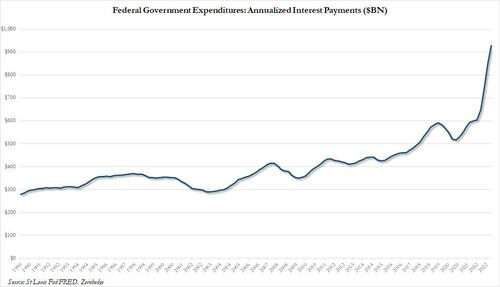
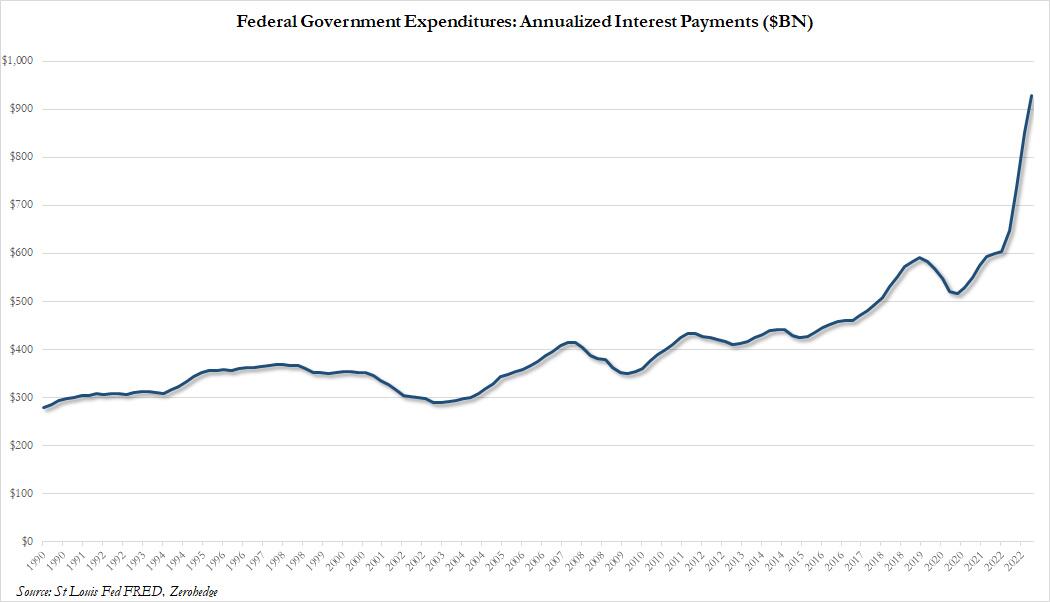
Given the increasing debt load, the cost of servicing this debt now accounts for 20% of government spending. It is projected to reach $1 trillion by 2028, surpassing the total spent on defense.
The world’s third-biggest economy, Japan, has one of the highest debt to GDP ratios, at 255%. Over the last two decades, its national debt has far exceeded 100% of its GDP, driven by an aging population and social security expenses.
In 2023, Egypt faces steep borrowing costs, with 40% of revenues going towards debt repayments. It has the highest debt on the continent.
Like Egypt, several emerging economies are facing strain. Lebanon has been in default since 2020, and Ghana defaulted on the majority of its external debt—debt owed to foreign lenders—in 2022 amid a deepening economic crisis.
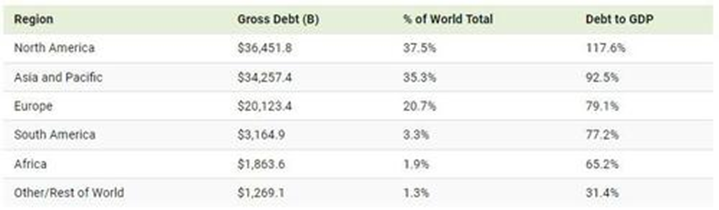
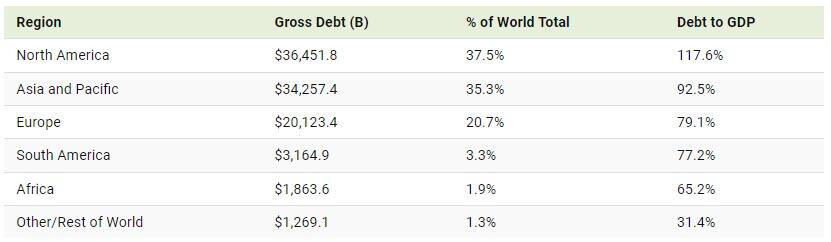
Global Debt: A Regional Perspective
How does debt compare on a regional level in 2023?
We can see that North America has both the highest debt and debt to GDP compared to other regions. Just as U.S. debt has ballooned, so has Canada’s—ranking as the 10th-highest globally in government debt outstanding.
Across Asia and the Pacific, debt levels hover close to North America.
At 3.3% of the global total, South America has $3.2 trillion in debt. As inflation has trended downwards, a handful of governments have already begun cutting interest rates. Overall, public debt levels are projected to stay elevated across the region.
Debt levels have also risen rapidly in Africa, with an average 40% of public debt held in foreign currencies—leaving it exposed to exchange rate fluctuations. Another challenge is that interest rates are also higher across the region compared to advanced economies, increasing debt-servicing costs.
By 2028, the IMF projects that global public debt will exceed 100% of GDP, hitting levels only seen during the pandemic.
__________________________________
Accelerating debt loads, fueled by growing debt-service obligations will inevitably destroy ‘confidence’ in fiat currencies, world-wide.
America needs a powerful new economic strategy to counteract these perilous trends which will, in all likelihood, drive the global economic system into the preserve of Central Bank Digital Currencies (CBDCs).
Main Street America Republicans have that PLAN – ready to launch.
The Leviticus 25 Plan is a dynamic economic initiative providing direct liquidity benefits for American families, while at the same time scaling back the role of government in managing and controlling the affairs of citizens. It is a comprehensive plan with long-term economic and social benefits for citizens and government.
The inspiration for this plan is based upon Biblical principles set forth in the Book of Leviticus, principles tendering direct economic liberties to the people.
The Leviticus 25 Plan – An Economic Acceleration Plan for America
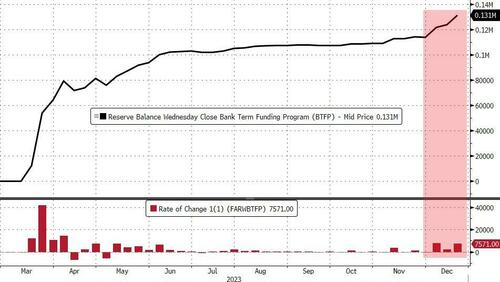
The BTFP has been running hot for the past 10 months, and is now surging up to new record highs. Banks with accounts at the Fed are also able, in the process, to engage in an arbitrage play by ‘borrowing’ funds and then immediately redepositing them with the Fed to earn ”free interest in the process.
America’s hard-working, tax-paying U.S. citizens should be so fortunate.
Usage of The Fed’s BTFP bank bailout facility soared again last week, jumping $7.5BN to $131BN…
Source: Bloomberg
……An arbitrage for banks is growing more attractive thanks to traders who are betting the Fed will aggressively cut interest rates in 2024.
The rate on the Fed’s Bank Term Funding Program – which allows banks and credit unions to borrow funds for up to one year, pledging US Treasuries and agency debt as collateral valued at par – is the one-year overnight index swap rate plus 10 basis points.
That figure is currently 4.88%, down from 5.17% on Dec. 13.
For institutions that have an account at the Fed, they can borrow from the BTFP at 4.88% and park that at the central bank to earn 5.40% – the interest on reserve balances.
The 52bp spread matches the widest level since the Fed introduced the facility to support a struggling banking system after the collapse of California’s Silicon Valley Bank and Signature Bank in New York.
The Bank Term Funding Program (BTFP) is an emergency lending program created by the Federal Reserve in March 2023 to provide emergency liquidity to U.S. depository institutions. It was established in response to the sudden bank failures of Signature Bank and Silicon Valley Bank, which were the largest such collapses since the 2008 financial crisis.
The program was created to support depositors, such as American businesses and households, by making additional funding available to eligible institutions to help assure that banks have the ability to meet the needs of all their depositors.
The BTFP offers loans of up to one year in length to U.S. banks, savings associations, credit unions, and other eligible depository institutions that pledge U.S. Treasuries, agency debt, mortgage-backed securities (MBS), and other qualifying assets as collateral.
The BTFP is intended as a temporary emergency measure and is set to wind down on March 11, 2024, unless renewed by the Federal Reserve.
_____________________________
Depository institutions remain in serious need of emergency funding.
Main Street America is also in serious need of liquidity – and, neither the Fed or the U.S. Congress has any plan to address those growing needs.
“According to CNBC, while three-quarters of individuals earning $50,000 or less are living paycheck to paycheck, 65% of those earning $50,000 to $100,000 are in the same predicament. Of those earning $100,000 or more, 45% reported living paycheck to paycheck” (Yahoo Finance).
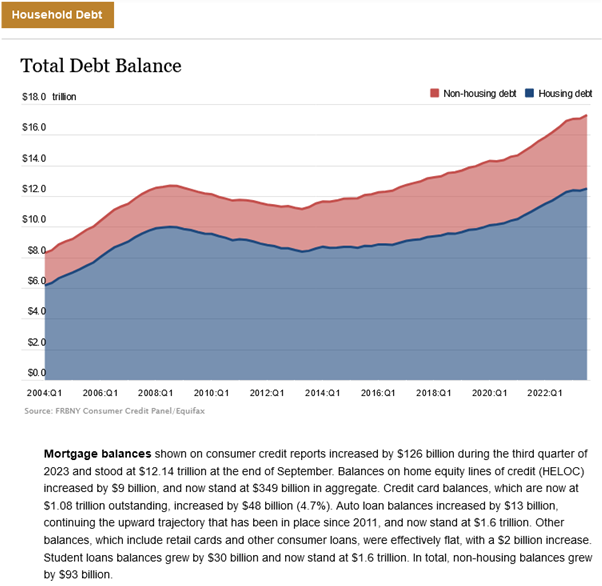
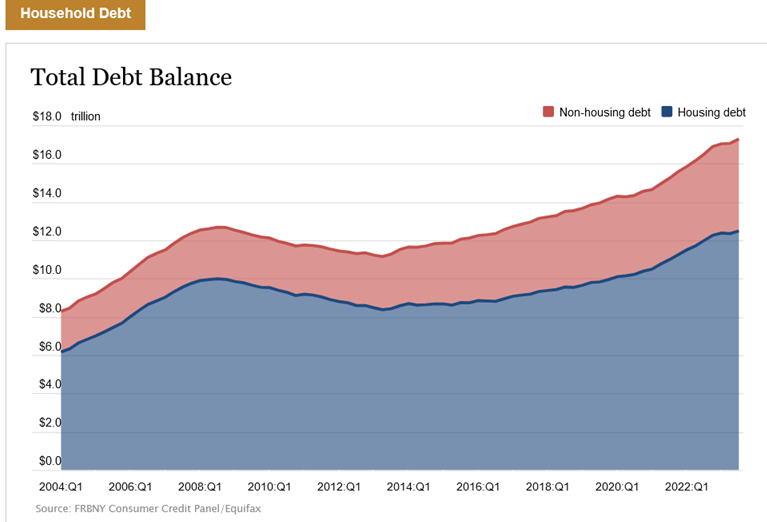
Total Household Debt rose to $17.29 trillion in Q3 2023; Driven by mortgages, credit cards, and student loan balances.
Small business bankruptcies in 2023 have been accelerating.
The Leviticus 25 Plan offers a dynamic economic reset for America – with direct liquidity extensions to qualifying U.S. citizens to eliminate vast expanses of ground-level debt across America, mortgage debt, installment debt, credit card debt, and student loan debt.
Depository institutions will, in the process, receive their much needed liquidity – after it has passed through the hands of U.S. citizens.
The Leviticus 25 Plan is a dynamic economic initiative providing direct liquidity benefits for American families, while at the same time scaling back the role of government in managing and controlling the affairs of citizens. It is a comprehensive plan with long-term economic and social benefits for citizens and government.
The inspiration for this plan is based upon Biblical principles set forth in the Book of Leviticus, principles tendering direct economic liberties to the people.
The Leviticus 25 Plan – An Economic Acceleration Plan for America
With the November quarterly refunding announcement now in the rearview mirror, we look to the Treasury’s borrowing outlook in historical context. As a reminder, we already gave our verdict last week…
US To Borrow $1.5 Trillion In Debt This & Next Quarter, After Borrowing A Massive $1 Trillion Last Quarter https://t.co/DYyMGKi5RJ — zerohedge (@zerohedge) October 30, 2023
… Deutsche Bank rate strategist Steven Zeng who on Friday published a chart that takes the numbers from the Treasury’s sources and uses table with adjustments to remove the fluctuations in the TGA. This provides a cleaner comparison of quarter-by-quarter borrowing. For example, the Treasury borrowed $1.01 trillion during Q2’23, with $756bn used for financing the deficit and QT, and $254bn was “saved” in the form of a higher cash balance.
In this light, Zeng notes that the Treasury’s expected borrowing for the current and the next quarter is actually larger than Q3’s, growing by about $10 billion per month. In fact, Treasury borrowing is now on par with levels during the 2020-2021 pandemic with both weaker fiscal positions and Fed QT are contributing factors.…
As Zeng puts it, “with a growing view that the Fed may lengthen the duration of QT, and annual deficits projected at around $1.7- $1.8 trillion over the next few years, these issues are unlikely to go away soon.” At the same time, the widening mismatch between supply and demand for Treasuries could exacerbate the issue through increased debt interest expenses.
Goldman has some even more disturbing numbers: according to the bank’s rates strategist Praveen Korapaty, his outlook for Treasury supply in 2024 shows net notional issuance of $2.4 tr, which is inclusive of both bills and coupons. Gross coupon issuance would be much larger, roughly $4.2 tr, which includes issuance to cover maturing debt.
These concerns will remain in the forefront in 2024, with the TBAC highlighting this week the linkage between term premium and fiscal sustainability…
The thing about Wall Street is that if everyone agrees to stick their head in the sand and ignore the elephant in the room, it’s easy to do.
Net effect of the Earmarks inclusion: $16,012,272,565 of your tax dollars to be spent on 7,509 earmarks.
In the fiscal year 2024 spending bills being debated this fall, the top 63 earmarkers in the U.S. House are Republicans. Eight of the top ten earmarkers in the U.S. Senate are Republican
…….Unfortunately, the first thing the GOP did after they took control of the U.S. House – before the new Congress was even sworn in – they held a secret vote on earmarks. Last December, 158 GOP members of Congress voted to include earmarks in the year-end omnibus spending bill.
House Republicans “opened the bar” for the spendaholics.
Those 158 secret-voting members caused $16,012,272,565 of your tax dollars to be spent on 7,509 earmarks.
Not only did those 158 members adopt earmarks, the Republicans spent more of your tax dollars than their Democratic earmarking colleagues.
In the fiscal year 2024 spending bills being debated this fall, the top 63 earmarkers in the U.S. House are Republicans. Eight of the top ten earmarkers in the U.S. Senate are Republicans.
The U.S. House has a bartender at the spendaholics earmark bar – Rep. Kay Granger (R-Texas). She chairs the Appropriations Committee that approves every one of those earmarks. When she was elected to Congress in 1997, the federal debt was $5.4 trillion.
Here are a few examples of what these big spending members of Congress – in both parties – think is more important than the exploding federal debt.
Senator Susan Collins (R-Maine) earmarked $302 million last December and $556 million stuffed inside the 2024 bills. Maine’s population is only about 1.3 million and Collins earmarked $2,640 per family of four. When Collins was first elected in 1997, the federal debt was $5.4 trillion….
Last December, Senator Patrick Leahy (D-Vermont) earmarked $30 million to the University of Vermont Honors College. In May, the trustees renamed the college after Leahy. Leahy earmarked $34 million into the international airport at Burlington. In April, the city council renamed the airport after Leahy. Senator Leahy got his name on buildings after earmarking your tax dollars and every dime of it was borrowed against our national
…………………..
SUMMARY – By embracing earmarks, Republicans fumbled the first opportunity to distinguish themselves from big-spending Democrats.
Speaker Kevin McCarthy doesn’t request earmarks himself but allowed a secret caucus vote to bring them back.
It’s time for a public, on-the-record, up or down vote on earmarks in the United States House of Representatives. Would all 158 earmark-loving Republicans stick with their secret vote?
…………………..
THE REBIRTH OF EARMARKS IS A STATEMENT FAR MORE DEVASTATING THAN THE NUMBERS:
It is a statement of the culture within Congress.
A culture that shows no respect for your tax dollars.
No respect for the lurking danger the exploding federal debt poses for our country.
IF OUR GREAT COUNTRY IS TO SURVIVE, THE CULTURE WILL HAVE TO CHANGE.…
THOMAS W. SMITH – Chairman, OpenTheBooks.com
ADAM ANDRZEJEWSKI – CEO & Founder – OpenTheBooks.com
___________________________________
To Washington Republicans: The federal debt is a national security issue. It is discouraging enough to see you joining in with Democrats to indiscriminately run up the national debt another $16 billion round of earmarks…
But what is far worse – you have no politically-feasible strategic plan to get America’s exploding debt load back under control.
You could get your credibility back and give voters a reason to support you if you did have a credible solution to America’s debt crisis.
Main Street America Republicans have that very solution.
The Leviticus 25 Plan – An Economic Acceleration Plan for America 2024
The Governmental Accountability Office has stated that America’s ongoing debt crisis is unsustainable.
It is time for America to initiate a bold, new plan. Our future depends upon it.
The Leviticus 25 Plan – loaded up and ready to launch.
The Leviticus 25 Plan is a dynamic economic initiative providing direct liquidity benefits for American families, while at the same time scaling back the role of government in managing and controlling the affairs of citizens. It is a comprehensive plan with long-term economic and social benefits for citizens and government.
The inspiration for this plan is based upon Biblical principles set forth in the Book of Leviticus, principles tendering direct economic liberties to the people.
The Leviticus 25 Plan – An Economic Acceleration Plan for America