2022 Labor Shortages, Teacher Pay, Student Loans – Solved: The Leviticus 25 Plan

Labor Shortages – Recent BLS reports indicate that the 11.3 million job opening in the U.S. is approximately 5 million more than the number of unemployed workers (~6 million).

Heritage Foundation, Feb 24, 2022: Evidence from past studies of welfare -without-work benefits find that they tend to reduce the supply of work, and a recent National Bureau of Economic Research study on the effects of the pandemic unemployment insurance benefits found that they significantly restricted employment.

One of the unintended consequences of social welfare benefits is that they disincentivize work.

The Leviticus 25 Plan avoids that consequence by not penalizing work, and by giving participating U.S. citizens a more powerful ‘boost’ up out of poverty than current anti-poverty programs are providing.

………………………………….

Education – Teacher Benefits

The Leviticus 25 Plan would extend direct liquidity benefits for millions of public and private school teachers across America, sufficient to eliminate vast amounts of mortgage and consumer debt balances – saving teachers and their families enormous amounts of debt service obligations each year.

Example: A participating family of four, receiving $240,000 ($60,000 per family member) in their Family Account and $120,000 ($30,000 per family member) in their Medical Savings Account) would be able to eliminate, or significantly reduce, a mortgage balance – which would then save them $700 – $1,000 per month in principal and interest payments…. for possibly the next 15-20 years, depending on the number of years to maturity.

And they might be able to pay off other forms of installment debt, saving hundreds of dollars per month.

Participating teachers’ families would also have significant additional funds available for primary health care needs.

The Leviticus 25 Plan would be far and away more effective at improving financial security for teachers than any tax-and-spend teacher pay mandates imposed by government.

………………………………..

Education – Student Loans

Wall Street Journal, Apr 6, 2022: “The Committee for a Responsible Federal Budget (CRFB) estimates the loan pause [college loan forbearance] has cost taxpayers more than $100 billion, and the latest four-month extension will add another $15 billion to $20 billion.”

The Leviticus 25 Plan, with each participating college student receiving a deposit of $60,000 into a Family Account and $30,000 into a Medical Savings Account, offers benefits which are far superior to government ‘forbearance’ or ‘forgiveness’ programs – which apply only to government-backed student loans, not private loans.

1. Participating students would be able to pay off or significantly reduce loan balances of both government and private student loans

2. Students would also have additional available funds for primary health care needs.

3. Government-backed forbearance / forgiveness plans are unfair to all of the hundreds of thousands of students from the past who have worked hard and budgeted to pay off their student loans.

4. The Leviticus 25 Plan would eliminate U.S. taxpayer losses of hundreds of billions of dollars in forbearance costs and/or trillions of dollars in loan forgiveness.

____________________________________

The Leviticus 25 Plan grants U.S. citizens the same direct access to liquidity that was provided, courtesy of the Fed, to major Wall Street financial institutions like Moran Stanley, JP Morgan, Goldman Sachs, Bank of America, Citigroup, Wells Fargo, AIG, Merrill Lynch, State Street, Deutsche Bank, UBS AG, Barclays, BNP Paribas, Royal Bank of Scotland, and many others.

The Leviticus 25 Plan would conservatively generate a federal budget surplus of $583 billion per year for each of the first five years of activation (2023-2027) – and would pay for itself entirely over the following 10-15 years.

“He who will not apply new remedies must expect new evils.” – Sir Francis Bacon

The Leviticus 25 Plan is a dynamic economic initiative providing direct liquidity benefits for American families, while at the same time scaling back the role of government in managing and controlling the affairs of citizens.  It is a comprehensive plan with long-term economic and social benefits for citizens and government.

The inspiration for this plan is based upon Biblical principles set forth in the Book of Leviticus, principles tendering direct economic liberties to the people.

The Leviticus 25 Plan – An Economic Acceleration Plan for America

$90,000 per U.S. citizen – Leviticus 25 Plan 2023 (4051 downloads)

Fed Liquidity Transfusions Fueled America’s Eye-popping Wealth Disparities. Solution: The Leviticus 25 Plan

The Fed, over the course of the last 15 years, has spawned America’s current and enormous wealth disparity … in more direct ways than most people realize…

……………………………………………………..

Bailouts for Billionaires – Matt Taibbi, Sep 21, 2010 – Excerpts:

Warren Buffet and Berkshire-Hathaway made a $5 billion equity investment in Goldman Sachs at the height of the financial crisis. If Goldman doesn’t get $13 billion via the AIG bailout, that investment vanishes. If Goldman doesn’t get handed a federal bank charter overnight (allowing them to borrow huge amounts of cheap cash from the Fed) and doesn’t get a ban on short-selling and doesn’t get $10 billion from the TARP, again, B-H loses that $5 billion.

Moreover Berkshire-Hathaway is the largest shareholder in Wells Fargo, which got $25 billion from the TARP and also had government help in acquiring Wachovia in a shotgun wedding for $12.7 billion (W-F balked at buying Wachovia until it was given about $25 billion in tax breaks by the government).

So that’s just two of Berkshire-Hathaway’s biggest investments that collectively received at least $70 billion in government aid during the bailouts, by my count (this doesn’t even include the various Fed facilities and lesser-known bailout programs that  helped banks like Goldman and Wells-Fargo stay afloat)…..

[Note: Forbes Billionaires list: #5 Warren Buffet, $124.4 Billion]

______________________________

Barrons: BlackRock Is Biggest Beneficiary of Fed Purchases of Corporate Bond ETFs

By Leslie P. Norton | une 1, 2020 2:05 pm ET – Excerpts:

As the Federal Reserve began its historic purchases of corporate bonds exchange-traded funds, almost half of the Fed’s purchases went into BlackRock funds, according to ETFGI, an ETF research and consulting firm.

The Fed is not the first central bank to buy ETFs as part of a stimulus package, but it is buying both ETFs and corporate bonds for the first time in its 107-year history. The Bank of Japan has been buying equity ETFs since 2012 as part of quantitative easing, says Deborah Fuhr, managing partner of ETFGI.

Between May 12 and May 19, the Fed bought $1.58 billion in investment grade and high-yield ETFs with a current market value of $1.31 billion. Six were high-yield ETFs and 11 were investment grade. Some 83% of the purchase went into investment grade ETFs; the rest into high-yield ETFs.

BlackRock’s iShares has 38.1% of the exchange-traded product market; Vanguard has 26.5%, and State Street ’s SPDR ETFs has 16.5%, says ETFGI.

[Note: 2022 Forbes, Black Rock Chairman and CEO Larry Fink – net worth: $1 Billion]

_______________________________

And then we have all of the CEOs, officers, board of directors members of the major Wall Street Banks that received hundreds of billions in bailout money and TARP funds during the 2007-2010 great financial crisis, the likes of: JPMorgan, Morgan Stanley, Citigroup, Bank of America, Goldman Sachs, Wells Fargo, State Street, Merrill Lynch, AIG… and foreign banks, including: Barclays, RBS, Deutsche Bank, BNP Paribas, UBS AG, and others..

_______________________________

WOLFSTREET – The Major U.S. Wealth Gap:

“The Fed’s wealth distribution data divides the US population into four groups by wealth: The “Top 1%,” the “Next 9%” (2% to 10%),” the “next 40%,” and the “bottom 50%.” My Wealth Effect Monitor divides this data by the number of households in each category, to obtain the average wealth per household in each category. Note the immense increase in the wealth for the 1% households after the Fed’s money-printing scheme and interest rate repression started in March 2020″:

“As you can see from the steep curve of the red line, the “Top 1%” households were the primary beneficiaries of the Fed’s policies since March 2020. These policies were designed to inflate asset prices, and only asset holders benefited from that. The more assets they held, the more they benefited.”

_______________________________

The ‘Big Money’ flows freely to the ‘Big Players’ of the financial world when the Fed feels the need to ‘goose the economy.’ And the economy is no better for it. America is drowning in debt, U.S. Dollar stability is at risk, businesses are plagued by a skilled labor shortage, and the economy is now teetering on the edge of recession,

It is time for the Fed to ‘re-target’ its liquidity flows. It is time for U.S. citizens and their families to be granted the same direct access to Fed-generated liquidity extensions.

The Leviticus 25 Plan – An Economic Acceleration Plan for America

$90,000 per U.S. citizen – Leviticus 25 Plan 2023 (4048 downloads)

Democrats Funding $2.6 Billion Foreign Aid – Gender Equity, ACA Expansion, Student Loan Forbearance; Republicans Mute – With No Plan…

Democrats are out to win votes with plans to expand the Affordable Care Act, extend student loan forbearance, and… funnel $2.6 billion out through the foreign aid pipelines to fund global gender equity programs.

Republicans should have a counter-plan to set America back on track for massive deficit reductions, financial security for American families (independent of government programs), and wean people off entitlement programs — but they don’t.

The U.S. Congress has set America on track for an eventual U.S. Dollar collapse.

Here we go with the latest…

…………………………………………

Foreign Aid – Gender Equity

Biden Wants $2.6 Billion For Gender Equity Worldwide

ZeroHedge, Apr 5, 2022 | Authored by Adam Andrzejewski via RealClear Policy,Excerpts:

On International Women’s Day, President Joe Biden announced that his FY 2023 budget will include $2.6 billion for foreign assistance programs to promote gender equity, more than double than what he set aside the previous year….

Last summer, our auditors at OpenTheBooks.com released a report showing that U.S. taxpayers already pay approximately $50 billion a year in foreign aid – an amount more than the federal money flowing to 48 out of 50 state governments.

Much of the new worldwide gender funding will likely go to individual missions and embassies in foreign countries, which will have broad discretion in the programs they choose to sponsor.

With few guidelines and little oversight, there’s no telling where these funds will end up.

The budget request will soon be sent to Congress, which ultimately decides what funding to approve, but the Democratic majority in the House of Representatives will likely try to incorporate the president’s priorities into its bill. It’s likely that $2.6 billion for gender equity for foreign assistance programs will make its way into the final bill.  

The #WasteOfTheDay is brought to you by the forensic auditors at OpenTheBooks.com.

………………………………….

ACA Expansion

WSJ: Biden Proposes Change to Affordable Care Act to Extend Subsidies for Families. The change would close a gap that prevents some people with employer-based insurance from getting ACA subsidies

By Stephanie Armour and Andrew Restuccia | Updated Apr. 5, 2022 – Excerpts:

Some people unable to afford health insurance for their families would be able to get Affordable Care Act subsidies under a proposal by the Biden administration aimed at shoring up the Obama-era law.

The proposed change, which President Biden announced on Tuesday, would recalculate what is considered affordable for a family with employer-based health insurance.

…………………………………

Student Loan Extensions

WSJ, Mar 18, 2022 – Here we go again. The March 2020 Cares Act provided a temporary pause on loan payments and interest accrual through September 2020. Presidents Trump and Biden used emergency executive power to extend the forbearance, which has cost taxpayers about $5 billion a month….

WSJ: Biden Administration to Extend Student-Loan Payment Pause Through End of August.

By Gabriel T. Rubin and Andrew Restuccia | Updated Apr. 5, 2022 – Excerpts:

WASHINGTON—The Biden administration is planning to extend until the end of August a pause on federal student-loan payments, according to people familiar with the matter.

Payments and interest accrual have been paused for borrowers with federal student loans since March 13, 2020, at the start of the pandemic. The pause is currently scheduled to expire on May 1, following a 90-day extension that was announced as cases of the Omicron variant of Covid-19 surged last December. Politico and The Hill earlier reported the planned extension. About 40 million people owe around $1.6 trillion in federal student debt, a sum bigger than credit-card or auto debt. The pause on student-loan payments has lasted longer than most other economic relief measures instituted in the early days of the pandemic by Congress and the White House, such as a ban on evictions and enhanced unemployment benefits, both of which expired last year….

__________________________________

Washington Republicans don’t have a plan, or a clue, about how to clean up America’s debt monstrosity, or how to properly reinvigorate the U.S. economy, or how to restore financial security (independent of government programs) for millions of families, or recreate a citizen-centered health care system, or set the U.S. Dollar back on track for long-term stability.

America’s hard-working, tax-paying, God-fearing Republicans, the back-bone of our country, do have a plan.

The Leviticus 25 Plan is a dynamic economic initiative providing direct liquidity benefits for American families, while at the same time scaling back the role of government in managing and controlling the affairs of citizens.  It is a comprehensive plan with long-term economic and social benefits for citizens and government.

The inspiration for this plan is based upon Biblical principles set forth in the Book of Leviticus, principles tendering direct economic liberties to the people.

The Leviticus 25 Plan – An Economic Acceleration Plan for America

$90,000 per U.S. citizen – Leviticus 25 Plan 2023 (4047 downloads)

“Debt and Inflation Threaten U.S. Security.” Solution: The Leviticus 25 Plan.

WSJ: Debt and Inflation Threaten U.S. SecurityServicing costs could soon reach $1 trillion a year, which would crowd out spending on defense.

By Jeb Hensarling

The Wall Street Journal. Feb. 22, 2022 – Excerpts:

The national debt this month reached $30 trillion. Not only is this the largest debt in U.S. history in dollar terms, but the ratio of debt to gross domestic product is 119%—the largest it’s ever been. And things are only getting worse. The Congressional Budget Office predicts that the mammoth debt-to-GDP ratio will double over the next three decades. The Highway Trust Fund will likely become insolvent in 2027. Medicare Part A will run out of money in fiscal year 2026 and Social Security will go bust in fiscal 2033.

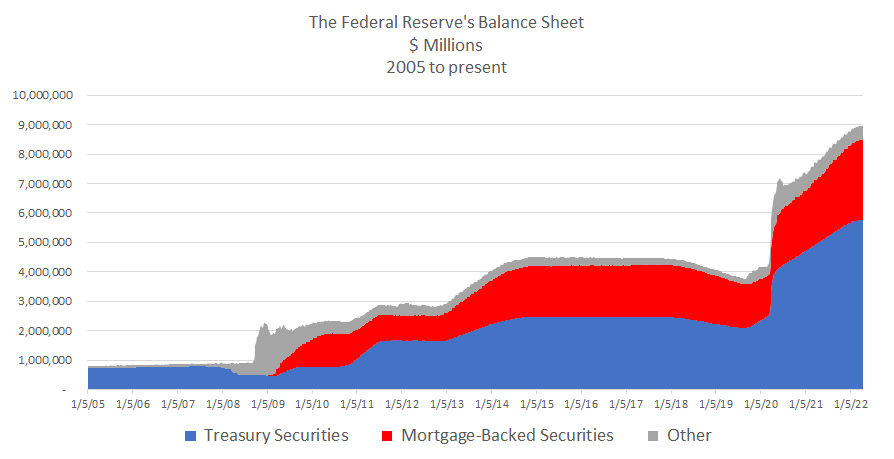
Now Americans are beginning to experience inflation, one of the primary costs of rapidly growing levels of national debt… To help finance $5.9 trillion of Covid relief, the Federal Reserve purchased Treasury debt from third parties, typically large banks known as primary dealers, and then with a few keystrokes the Fed simply created a new set of credits on its books for the sellers. Because of the additions of these credits, in two years the Fed’s balance sheet has doubled to almost $9 trillion, creating a risk of significant and sustained inflation.

Some policy makers and economists maintain that sustained harmful inflation can never happen here. They argue that because the dollar is the world’s reserve currency, investors will always want U.S. debt and the Treasury will always be able to roll that debt over as it matures. But “always” is a long time.

[snip]

Those who believe there can never be a debt crisis should look no further than the last financial crisis. For years, policy makers told us that Fannie Mae and Freddie Mac, the largest players in the housing market, would always remain solvent and strong. They were wrong. Fannie and Freddie failed, the housing market crashed, and the economy was brought to its knees. Fannie and Freddie weren’t problems until they were. Just as the national debt may never be a problem until it is.

We’ve had years of denial, delay and neglect in confronting the unsustainable national debt. Today’s high rate of inflation is simply a foreshadowing of what could come if the U.S. is forced to monetize the bulk of its national debt. Reduced economic growth, a diminished national defense, insolvent social safety-net programs and recession loom as well. The 9/11 Commission concluded the national security establishment suffered from a “failure of imagination.” Let’s hope the same doesn’t prove to be true when it comes to fiscal security.

Mr. Hensarling served as a U.S. representative from Texas (2003-19) and chairman of the House Financial Services Committee (2013-19).

__________________________________________

Mr. Hensarling – Meet the most powerful economic acceleration plan on the face of the earth….

The Leviticus 25 Plan will generate $583 billion federal budget surpluses for the initial 5 years of activation (2023-2027), and completely pay for itself over the next 10-15 years.

The Leviticus 25 Plan is a dynamic economic initiative providing direct liquidity benefits for American families, while at the same time scaling back the role of government in managing and controlling the affairs of citizens.  It is a comprehensive plan with long-term economic and social benefits for citizens and government.

The inspiration for this plan is based upon Biblical principles set forth in the Book of Leviticus, principles tendering direct economic liberties to the people.

The Leviticus 25 Plan – An Economic Acceleration Plan for America 2023

Economic Scoring links:

·  The Leviticus 25 Plan 2023 – $583 billion Federal Budget Surpluses (2023-2027), Part 1: Overview, Deficit Projection

·  The Leviticus 25 Plan 2023 – $583 Billion Federal Budget Surpluses Annually (2023-2027), Part 2: Federal Income Tax and Means-Tested Welfare Recapture Benefits.

·  The Leviticus 25 Plan 2023 – $583 Billion Federal Budget Surpluses Annually (2023-2027), Part 3: Medicaid/CHIP and Medicare Recapture Benefits

·  The Leviticus 25 Plan 2023 – $583 Billion Federal Budget Surpluses Annually (2023-2027), Part 4: VA, TRICARE, FEHB, SSDI Recapture Benefits

·  The Leviticus 25 Plan 2023 – $583 Billion Federal Budget Surpluses Annually (2023-2027), Part 5: Subtotals, Interest Expense Savings, Summary

Full Plan: Leviticus 25 Plan 2023 (3958 downloads)  

__________________________________________ 

Preview 1:

The Leviticus 25 Plan provides a $90,000 credit extension, direct from the Federal Reserve, to every participating U.S. citizen:  $60,000 into a Family Account (FA) and $30,000 into a Medical Savings Account (MSA).

Example:  Qualifying family of four would receive $240,000 in their FA, and $120,000 in their MSA.

Primary goals:  Massive debt elimination at family level: mortgage debt, consumer debt, student loan debt.  Federal budget surpluses.

Eligibility:  U.S. Citizen.  Job history, credit history requirement (similar to traditional credit checks for bank loans).  Clean recent drug history.  Clean crime history.

Requirements:  Forego all federal and state tax refunds for 5-year period.

Forego selected means-tested welfare benefits – for minimum 5-year period.

Forego all income security program benefits – for minimum 5-year period.

Forego new federally-subsidized ‘Family Medical Leave’ benefits – for minimum 5-year period.

Forego Child Tax Credit benefits – for minimum 5-year period.

Forego enhanced federal rental forbearance/assistance – for minimum 5-year period.

Forego SSI and SSDI for minimum 5-year period.

New $6,000 deductible on primary care access to: Medicare, Medicaid, VA, TRICARE, FEHB – for minimum 5-year period.

The Plan assumes that the elite-wealthy will not participate, because their refunds are too valuable to give up over the requisite 5-year period.

The Plan also assumes that many who heavily depend on social welfare benefits will also choose not to participate, because the overriding value of those benefits, vs foregoing them, over the 5-year period.

The Leviticus 25 Plan – An Economic Acceleration Plan for America

$90,000 per U.S. citizen – Leviticus 25 Plan 2023 (4000 downloads)

To the honorable members of the U.S. Congress: Meet America’s most powerful, debt-busting economic acceleration plan on the face of the earth: The Leviticus 25 Plan

March 22, 2022

U.S. Senate and U.S. House of Representatives, Washington, D.C.

Dear U.S Congress –

I am a life-long Republican – with concerns about the lack of any long-term strategy by Republican — to reverse the growth of government and intrusion into the daily affairs of hard-working, tax-paying U.S. citizens -and get America’s massive deficits back under control.

In that regard, I am writing to you today to update you on the ‘Main Street America Republican’ economic acceleration plan that will provide a dynamic ‘recharge’ to the U.S. economy and restore economic liberty in America – and a powerful leverage to reduce America’s debt and protect the long-term viability of the U.S. Dollar.

The Leviticus 25 Plan will generate $583 billion federal budget surpluses for the initial 5 years of activation (2023-2027), and completely pay for itself over the next 10-15 years.

The Leviticus 25 Plan is a dynamic economic initiative providing direct liquidity benefits for American families, while at the same time scaling back the role of government in managing and controlling the affairs of citizens.  It is a comprehensive plan with long-term economic and social benefits for citizens and government.

The inspiration for this plan is based upon Biblical principles set forth in the Book of Leviticus, principles tendering direct economic liberties to the people.

The Leviticus 25 Plan – An Economic Acceleration Plan for America 2023

Economic Scoring links:

·  The Leviticus 25 Plan 2023 – $583 billion Federal Budget Surpluses (2023-2027), Part 1: Overview, Deficit Projection

·  The Leviticus 25 Plan 2023 – $583 Billion Federal Budget Surpluses Annually (2023-2027), Part 2: Federal Income Tax and Means-Tested Welfare Recapture Benefits.

·  The Leviticus 25 Plan 2023 – $583 Billion Federal Budget Surpluses Annually (2023-2027), Part 3: Medicaid/CHIP and Medicare Recapture Benefits

·  The Leviticus 25 Plan 2023 – $583 Billion Federal Budget Surpluses Annually (2023-2027), Part 4: VA, TRICARE, FEHB, SSDI Recapture Benefits

·  The Leviticus 25 Plan 2023 – $583 Billion Federal Budget Surpluses Annually (2023-2027), Part 5: Subtotals, Interest Expense Savings, Summary

Full Plan: Leviticus 25 Plan 2023 (3958 downloads)  

Website:   https://Leviticus25Plan.org

__________________________________________ 

Preview 1:

The Leviticus 25 Plan provides a $90,000 credit extension, direct from the Federal Reserve, to every participating U.S. citizen:  $60,000 into a Family Account (FA) and $30,000 into a Medical Savings Account (MSA).

Example:  Qualifying family of four would receive $240,000 in their FA, and $120,000 in their MSA.

Primary goals:  Massive debt elimination at family level: mortgage debt, consumer debt, student loan debt.  Federal budget surpluses.

Eligibility:  U.S. Citizen.  Job history, credit history requirement (similar to traditional credit checks for bank loans).  Clean recent drug history.  Clean crime history.

Requirements:  Forego all federal and state tax refunds for 5-year period.

Forego selected means-tested welfare benefits – for minimum 5-year period.

Forego all income security program benefits – for minimum 5-year period.

Forego new federally-subsidized ‘Family Medical Leave’ benefits – for minimum 5-year period.

Forego Child Tax Credit benefits – for minimum 5-year period.

Forego enhanced federal rental forbearance/assistance – for minimum 5-year period.

Forego SSI and SSDI for minimum 5-year period.

New $6,000 deductible on primary care access to: Medicare, Medicaid, VA, TRICARE, FEHB – for minimum 5-year period.

The Plan assumes that the elite-wealthy will not participate, because their refunds are too valuable to give up over the requisite 5-year period.

The Plan also assumes that many who heavily depend on social welfare benefits will also choose not to participate, because the overriding value of those benefits, vs foregoing them, over the 5-year period.

Preview 2:

The Leviticus 25 Plan grants the same direct access to liquidity, through a Fed-based Citizens Credit Facility, similar to the credit facilities that were created by the Fed to transfuse trillions of dollars in direct transfers and credit extensions to Wall Street’s major banks, credit agencies and insurers during the great financial crisis. 

The following facilities were created and activated by the Fed for this massive Wall Street bail out operation: Term Auction Facility (TAF), Primary Dealer Credit Facility (PDCF), Term Securities Lending Facility (TSLF), currency swap agreements with several foreign central banks,  Commercial Paper Funding Facility (CPFF), Asset-Backed Commercial Paper Money Market Mutual Fund Liquidity Facility (AMLF), Money Market Investor Funding Facility (MMIFF), and the Term Asset-Backed Securities Loan Facility (TALF), and access to the Fed’s Discount Window.

Additional perspective:  SIGTARP, the oversight agency of the Troubled Asset Relief Program (TARP), in its July 2009 report, vetted by Treasury, noted that the U.S. Government’s “Total Potential Support Related to Crisis” (page 138) amounted to $23.7 trillion. While this figure represents a backstop commitment, not a measure of total potential loss, it is nonetheless an astounding degree of support, in the form of liquidity infusions, credit extensions and guarantees, various other forms of assistance for financial institutions and other business entities affected by the financial crisis.

Preview 3:

The Leviticus 25 Plan website has been accessed on one or more occasions by the following financial enterprises/agencies: 

JP Morgan

Goldman Sachs

Morgan Stanley

Bank of America

Citigroup

Wells Fargo

State Street

Merrill Lynch

AIG

Barclays Plc

Royal Bank of Scotland

Deutsche Bank

Société Générale S.A

UBS AG

Credit Suisse

BNP Paribas

The U.S. Department of Treasury

General Accountability Office (GAO)

The European Central Bank (ECB)

Bank of England (BOE)

Swiss National Bank (SNB)

Bank of Canada

Bank of Montreal

Bank for International Settlements (BIS)

………………………………………………………..

The General Accountability Office has stated that America’s ongoing debt crisis is unsustainable.

It is time for America to initiate a bold, new plan.

The Leviticus 25 Plan is loaded up and ready to launch.

Sincerely,

Bernie Hendricks, Brookings, SD | Author, The Leviticus 25 Plan

The Leviticus 25 Plan: America’s Powerful Counter Force to Serfdom and ‘The Great Utopia’

F.A. Hayek is regarded by many as the greatest economist in the history of the Western world.  In his famous work, “The Road to Serfdom,” Hayek warned about the dangers of national centralization.

_____________________________

F.A. Hayek On “The Great Utopia” | Zero Hedge                    

Excerpts:

The Great Utopia

There can be no doubt that most of those in the democracies who demand a central direction of all economic activity still believe that socialism and individual freedom can be combined. Yet socialism was early recognized by many thinkers as the gravest threat to freedom.

It is rarely remembered now that socialism in its beginnings was frankly authoritarian. It began quite openly as a reaction against the liberalism of the French Revolution. The French writers who laid its foundation had no doubt that their ideas could be put into practice only by a strong dictatorial government. The first of modern planners, Saint-Simon, predicted that those who did not obey his proposed planning boards would be “treated as cattle.”

Nobody saw more clearly than the great political thinker de Tocqueville that democracy stands in an irreconcilable conflict with socialism: “Democracy extends the sphere of individual freedom,” he said. “Democracy attaches all possible value to each man,” he said in 1848, “while socialism makes each man a mere agent, a mere number. Democracy and socialism have nothing in common but one word: equality. But notice the difference: while democracy seeks equality in liberty, socialism seeks equality in restraint and servitude.”

To allay these suspicions and to harness to its cart the strongest of all political motives—the craving for freedom — socialists began increasingly to make use of the promise of a “new freedom.” Socialism was to bring “economic freedom,” without which political freedom was “not worth having.”

[snip]

Individual freedom cannot be reconciled with the supremacy of one single purpose to which the whole of society is permanently subordinated. To a limited extent we ourselves experience this fact in wartime, when subordination of almost everything to the immediate and pressing need is the price at which we preserve our freedom in the long run. The fashionable phrases about doing for the purposes of peace what we have learned.to do for the purposes of war are completely misleading, for it is sensible temporarily to sacrifice freedom in order to make it more secure in the future, but it is quite a different thing to sacrifice liberty permanently in the interests of a planned economy.

To those who have watched the transition from socialism to fascism at close quarters, the connection between the two systems is obvious. The realization of the socialist program means the destruction of freedom. Democratic socialism, the great utopia of the last few generations, is simply not achievable.

___________________________________

There is one economic plan with the raw power to counter the false utopian promises of security and equality.

The Leviticus 25 Plan is the one and only economic dynamic in today’s world with the power to advance the cause of financial security for U.S. citizens and economic liberty for the whole of America.

The Leviticus 25 Plan provides direct liquidity access for participating American families, while at the same time scaling back the role of government in managing and controlling the affairs of citizens.  It is a comprehensive plan with long-term economic and social benefits for citizens and government.

The inspiration for this plan is based upon Biblical principles set forth in the Book of Leviticus, principles tendering direct economic liberties to the people.

The Leviticus 25 Plan – An Economic Acceleration Plan for America

$90,000 per U.S. citizen – Leviticus 25 Plan 2023 (3986 downloads)

Act 1: Billions in taxpayer dollars landed in the financial coffers of none other than Warren Buffett during the 2007-10 Wall Street bailouts. Act 2: Buffett, the slumlord.

A Look Back: Thank you Hank Paulson, Tim Geithner, and Ben Bernanke – from the bottom of Warren Buffett’s heart…

The U.S. government responded to critical liquidity shortages within Wall Street’s financial sector and a crumbling U.S. economy during the 2008-09 financial crisis, by funneling trillions of dollars in direct cash transfers, emergency loans, credit guarantees, and balance-sheet-clearing toxic mortgage debt purchases – to many of America’s premier financial corporations.

Billionaire Warren Buffett lobbied hard for the massive bailouts…. and with good reason. At least eight of these companies receiving billions of dollars of taxpayer bailouts were owned by Mr. Buffett’s Berkshire Hathaway.

Buffett’s Betrayal: Rolfe Winkler | Reuters / Aug 4, 2009 – Excerpts:
A good chunk of his [Warren Buffett’s] fortune is dependent on taxpayer largess. Were it not for government bailouts, for which Buffett lobbied hard, many of his company’s stock holdings would have been wiped out.

Berkshire Hathaway, in which Buffett owns 27 percent, according to a recent proxy filing, has more than $26 billion invested in eight financial companies that have received bailout money. The TARP at one point had nearly $100 billion invested in these companies and, according to new data released by Thomson Reuters, FDIC backs more than $130 billion of their debt.

To put that in perspective, 75 percent of the debt these companies have issued since late November has come with a federal guarantee.

Without FDIC’s debt guarantee program, even impregnable Goldman would have collapsed.And this excludes the emergency, opaque lending facilities from the Federal Reserve that also helped rescue the big banks. Without all these bailouts, the financial system would have been forced to recapitalize itself.

Banks that couldn’t finance their balance sheets would have sold toxic assets at market prices, and the losses would have wiped out their shareholder’s equity. With $7 billion at stake, Buffett is one of the biggest of these shareholders.

…………………………………………………………………………………

Fast-forward to 2015… the country’s second richest man was back, ‘sticking it to’ the very people whose billions of dollars bailed him out seven short years ago – U.S. taxpayers.

Warren Buffett, Slumlord – Predatory Loans, Kickbacks & Preying On The Poor  

ZeroHedge, Apr 6, 2015 – Excerpts:                                                                  

Buffett’s mobile-home empire promises low-income Americans the dream of homeownership. But Clayton [controlled by America’s second richest man, billionaire Warren Buffet], relied on predatory sales practices, exorbitant fees, and interest rates that can exceed 15 percent, trapping many buyers in loans they can’t afford and in homes that are almost impossible to sell or refinance, an investigation by The Seattle Times and Center for Public Integrity has found.

  _____________________________________

America does not need ‘wealth redistribution,’ as many socialist-minded politicians are demanding.

What America does need is equal access by the citizenry to the types of Federal Reserve monetary credit flows that were so generously provided to Mr. Buffett and his well-heeled, well-connected Wall Street cronies received during the stupendous financial sector bailouts.

U.S. citizens deserve nothing less than to be granted that same direct access to liquidity that the U.S. Federal Reserve showered on Wall Street’s wealthy elites over what ended up being a 5-year flow from 2007-2012.

The Leviticus 25 Plan is a dynamic economic initiative providing direct liquidity benefits for American families, while at the same time scaling back the role of government in managing and controlling the affairs of citizens.  It is a comprehensive plan with long-term economic and social benefits for citizens and government.

The inspiration for this plan is based upon Biblical principles set forth in the Book of Leviticus, principles tendering direct economic liberties to the people.

The Leviticus 25 Plan – An Economic Acceleration Plan for America

$90,000 per U.S. citizen – Leviticus 25 Plan 2023 (3986 downloads)

PGP: U.S. Health Care System inefficiency “creates enormous challenges for the U.S. economy and federal government.” Solution: The Leviticus 25 Plan

U.S. Health Care – massive costs with under-performing outcomes….

……………………………………………………

Peter G. Peterson Foundation

Key Drivers of the National Debt – Health Care Costs

Excerpts:

One of the primary drivers of America’s long-term fiscal challenges is our inefficient healthcare system. Combined with the demographic realities of an aging population, America’s healthcare system leaves us with an unsustainable fiscal future. Not only will more Americans qualify for federal healthcare programs like Medicare in the coming years, but older people, on average, need more healthcare. Consequently, without reform, the federal budget will bear the cost of rapidly growing healthcare bills.

United States per capita healthcare spending is nearly three times the average of other developed countries

In 2020, the United States spent $4.1 trillion — or 20 percent of the national economy — on healthcare. On a per capita basis, our healthcare system is the most expensive among advanced nations. Yet, America’s health outcomes are generally no better than those of our peers, and in some cases are worse, including in areas like life expectancy, infant mortality, asthma, and diabetes.

Although the United States spends more on healthcare than other developed countries, its health outcomes are generally not any better

Put simply, we are paying more than other countries, but we aren’t seeing better results. Healthcare experts have estimated that 25 percent of our total healthcare spending goes to unnecessary and wasteful services. Furthermore, healthcare spending is projected to keep rising — faster than inflation, wages, and the overall economy. Not only does the system result in health outcomes that are generally no better for patients, but its inefficiency also creates enormous challenges for the U.S. economy and federal government.

The primary reasons why our healthcare system underperforms is because the typical factors that fuel improvement and innovation in other industries are lacking in healthcare:

  • Historically, consumers have not been cost sensitive because their employers and health plans often cover a large share of their costs and because they lack the information required to assess quality and cost.
  • Employers and insurers often assume a passive role, accepting annual cost increases, and eventually pass those costs on to customers and employees.
  • Providers generally operate under a fee-for-service model in which they are compensated based on the volume of their services, rather than the value of the care they provide.
  • Improvements in technology often make healthcare more expensive.

Under this system, the demands and rewards for quality, efficiency, and price sensitivity are sharply reduced.

The growth in healthcare costs per person has slowed in the last few years, but it is uncertain how long this welcomed trend will continue. Despite the slowdown, the Centers for Medicare and Medicaid Services projects that total spending for healthcare will climb to 19 percent of GDP in 2025. According to CBO, spending on the major federal healthcare programs will rise from 5.7 percent of GDP in 2022 to 9.4 percent in 2051 — an increase of 64 percent.

___________________________________

It is time to decentralize the U.S. economy – and return to a citizen-centered health care system.

Putting citizens back in control of their access to primary health care services will lead to participating consumers taking a more active, cost sensitive role in their health care decisions. It will re-establish and strengthen patient-provider relationships, and reduce inefficiencies and costs.

The Leviticus 25 Plan is a dynamic economic initiative providing direct liquidity benefits for American families, while at the same time scaling back the role of government in managing and controlling the affairs of citizens.  It is a comprehensive plan with long-term economic and social benefits for citizens and government.

The inspiration for this plan is based upon Biblical principles set forth in the Book of Leviticus, principles tendering direct economic liberties to the people.

The Leviticus 25 Plan – An Economic Acceleration Plan for America

$90,000 per U.S. citizen – Leviticus 25 Plan 2023 (3978 downloads)

2022: Monetizing the Debt – No Longer a ‘Temporary’ measure. Time for a New Dynamic: The Leviticus 25 Plan

Our U.S. Congress has, as a practical matter, completely jettisoned fiscal discipline in their budgeting process.

The Government Accountability Office (GAO) stated in their March 23, 2021 report, The Nation’s Fiscal Health: “The unsustainable fiscal path strains the federal budget and contributes to growing debt. According to CBO, high and rising federal debt increases the likelihood of a fiscal crisis and could lead to a large drop in the value of the dollar or to a loss of confidence in the government’s ability or commitment to repay its debt in full.”

To accommodate the ongoing failure of our U.S. Congress to address this debt crisis, The Federal Reserve has had no choice but to ‘create’ new money, primarily to purchase large amounts of Treasury and Agency debt…..

………………………………………………………..

Felder Report: “Is It ‘Monetization’ Yet, Dr. Bernanke?”

Feb 19, 2022 | Authored by Jesse Felder via The Felder Report, | https://thefelderreport.com/2022/02/16/is-it-monetization-yet-dr-bernanke/

Eleven years ago, shortly after the onset of QE 2, Ben Bernanke gave us his definition for “monetization” of the debt, telling Congress (hat tip, Grant’s):

Monetization would require a permanent increase in the money supply to pay the government’s bills through money creation.

What we’re doing here is a temporary measure which will be reversed, so that at the end of this process, the money supply will be normalized, the Fed’s balance sheet will be normalized and there will be no permanent increase, either in money outstanding or in the Fed’s balance sheet.

At the time, The Fed’s balance sheet was approaching $2.5 trillion.

Today, it stands at nearly $9 trillion, more than triple the figure from a decade ago.

And so it only seems fair to ask, ‘Is it monetization yet, Dr. Ben?’

__________________________________________

The Leviticus 25 Plan is the one and only plan that is ‘primed up’ and ready to launch.

The Leviticus 25 Plan will provide a dynamic ‘recharge’ to the U.S. economy and restore economic liberty in America – and work get America’s budget deficits back under control and protect the long-term viability of the U.S. Dollar.

The Leviticus 25 Plan will generate $583 billion federal budget surpluses for the initial 5 years of activation (2023-2027), and completely pay for itself over the next 10-15 years.

The Leviticus 25 Plan is a dynamic economic initiative providing direct liquidity benefits for American families, while at the same time scaling back the role of government in managing and controlling the affairs of citizens.  It is a comprehensive plan with long-term economic and social benefits for citizens and government.

The inspiration for this plan is based upon Biblical principles set forth in the Book of Leviticus, principles tendering direct economic liberties to the people.

The Leviticus 25 Plan – An Economic Acceleration Plan for America 2023

Economic Scoring links:

·  The Leviticus 25 Plan 2023 – $583 billion Federal Budget Surpluses (2023-2027), Part 1: Overview, Deficit Projection

·  The Leviticus 25 Plan 2023 – $583 Billion Federal Budget Surpluses Annually (2023-2027), Part 2: Federal Income Tax and Means-Tested Welfare Recapture Benefits.

·  The Leviticus 25 Plan 2023 – $583 Billion Federal Budget Surpluses Annually (2023-2027), Part 3: Medicaid/CHIP and Medicare Recapture Benefits

·  The Leviticus 25 Plan 2023 – $583 Billion Federal Budget Surpluses Annually (2023-2027), Part 4: VA, TRICARE, FEHB, SSDI Recapture Benefits

·  The Leviticus 25 Plan 2023 – $583 Billion Federal Budget Surpluses Annually (2023-2027), Part 5: Subtotals, Interest Expense Savings, Summary

The Leviticus 25 Plan – An Economic Acceleration Plan for America

$90,000 per U.S. citizen – Leviticus 25 Plan 2023 (3972 downloads)

The Fed’s “Instability Trap” – and the Leviticus 25 Plan Solution

The Fed “Instability” Trap

Authored by Lance Roberts via RealInvestmentAdvice.com,

Jan 28, 2022 – Excerpts:

After more than 12-years of the most unprecedented monetary policy program in U.S. history, the Fed realizes there are significant risks in the financial system. The behavioral biases of individuals remain the most serious risk facing the Fed. 

With the Fed now reversing monetary accommodation, the question is how long before something breaks.

In the short term, the economy and the markets (due to the current momentum) can DEFY the laws of financial gravity as interest rates rise. However, as interest rates increase, they act as a “brake” on economic activity. Such is because higher rates NEGATIVELY impact a highly levered economy:

  • Rates increases debt servicing requirements reducing future productive investment.
  • Housing slows. People buy payments, not houses.
  • Higher borrowing costs lead to lower profit margins.
  • The massive derivatives and credit markets get negatively impacted.
  • Variable rate interest payments on credit cards and home equity lines of credit increase, reducing consumption.
  • Rising defaults on debt service will negatively impact banks which are still not as well capitalized as most believe.
  • Many corporate share buyback plans and dividend payments are done through the use of cheap debt.
  • Corporate capital expenditures are dependent on low borrowing costs.
  • The deficit/GDP ratio will soar as borrowing costs rise sharply.

The debt problem exposes the Fed’s risk and why they continue to look for excuses NOT to hike rates. (Like “full employment” even though jobless claims are at record lows.) However, given economic stability was not achieved in the last decade, it is doubtful the withdrawal of monetary accommodation will be “risk-free.”

The evidence is quite clear that surging debt and deficits inhibit organic growth, and the massive debt levels are sensitive to increases in interest rates.

Fed Rate Hikes, Fed Rate Hikes & Risks Of Financial Instability – Part II

With exceptionally high market valuations, Fed rate hikes historically led to events that devastated investors. Those events created the Fed’s repetitive cycle of monetary policy.

  1. Monetary policy drags forward future consumption leaving a void in the future.
  2. Since monetary policy does not create self-sustaining economic growth, ever-larger amounts of liquidity are needed to maintain the same level of activity.
  3. The filling of the “gap” between fundamentals and reality leads to economic contraction.
  4. Job losses rise, wealth effect diminishes, and real wealth reduces. 
  5. The middle class shrinks further.
  6. Central banks act to provide more liquidity to offset recessionary drag and restart economic growth by dragging forward future consumption. 
  7. Wash, Rinse, Repeat.

Conclusion

“Financial markets’ sensitivity to monetary policy has never been higher. The Fed’s balance sheet doubled since the end of the last financial crisis and is now 40% of gross domestic product. By buying massive amounts of bonds, the Fed lowered rates and used asset prices, like stocks, as the primary tool for monetary policy. That’s through the so-called wealth effect, or the tendency for consumers (two-thirds of GDP) to spend more as their assets grow.” – Joe LaVorgna

Therein lies the problem…. If the Fed tightens, the existing debt pile becomes more expensive to service, and stocks fall, hampering consumer confidence and economic growth.

On the other hand, if the Fed doesn’t tighten, debt across households, companies, and the government will continue to grow, making it more challenging for the Fed to act in the future

___________________________________

Exactly. The Fed cannot raise rates, in any meaningful way, with the U.S. economy surrounded by mountains of debt. According to the NY Fed, Household Debt climbed over the $15 trillion mark in Q3 2021. Corporate debt in 2020 rose to $11 trillion, according to Federal Reserve data.

The National Debt just hit $30 trillion. State and Local debt stands at $3.2 trillion.

The solution: America needs a dynamic new ‘debt elimination plan.’

There is just such a plan – loaded up and ready to launch. It will eliminate massive amounts of ‘ground level’ debt in America, usher in a long-term economic growth cycle, strengthen free market dynamics, and restore economic liberty.

It will generate $583 billion Federal budget surpluses during each of its first five years of activation – and pay for itself over a 10-15 year period.

The Leviticus 25 Plan is a dynamic economic initiative providing direct liquidity benefits for American families, while at the same time scaling back the role of government in managing and controlling the affairs of citizens.  It is a comprehensive plan with long-term economic and social benefits for citizens and government.

The inspiration for this plan is based upon Biblical principles set forth in the Book of Leviticus, principles tendering direct economic liberties to the people.

The Leviticus 25 Plan – An Economic Acceleration Plan for America

$90,000 per U.S. citizen – Leviticus 25 Plan 2022 (3941 downloads)