The Leviticus 25 Plan – the most powerful economic acceleration plan in the world: Updated economic scoring summary.
Federal Income Tax Recapture This scoring model assumes that 80% of qualified U.S. citizens will voluntarily participate in The Leviticus 25 Plan. Participants must give up their tax refunds through the Plan’s recapture provisions for the 5-year target period (2027-2031).
According to 2025 IRS Filing season statistics, through Dec 28, 2025: 103,846,000 total refunds were paid out, totaling $328.878 billion.
Refund totals have increased by approximately $25.117 billion over the past eight years, from $303.761 billion (2018) to a current (estimated) $328.878 billion (2025), representing an average increase of $3.14 billion per year.
A conservative estimated average of $3.1 billion per year (2027-2031) will be used for this recapture calculation. 2024: $329.1 billion (actual) 2025: $328.9 billion (actual) 2026: $332.0 billion 2027: $335.1 billion 2028: $338.2 billion 2029: $341.3 billion 2030: $344.4 billion 2031: $347.5 billion
Total: $1.707 trillion
Total recapture X 80%: $1.707 trillion X .8 = $1.366 trillion
Total recapture per annum (2027-2031): $1.366 trillion / 5 = $273.2 billion
Participants in the Plan will forego Economic Security Program benefits and select means-tested welfare benefits for the period 2027-2031.
Economic security programs: Outlays were about 10 percent (or $701.6 billion) of the federal budget in 2025, in funding [safety net] programs that provide aid (other than health insurance or Social Security benefits) to individuals and families facing hardship. Economic security programs include: the refundable portions of the Earned Income Tax Credit and Child Tax Credit, which assist low- and moderate-income working families; programs that provide cash payments to eligible individuals or households, including unemployment insurance and Supplemental Security Income for low-income people who are elderly or disabled; various forms of in-kind assistance for low-income people, including the Supplemental Nutrition Assistance Program (formerly known as food stamps), school meals, low-income housing assistance, child care assistance, and help meeting home energy bills; and other programs such as those that aid abused or neglected children.1
The Leviticus 25 Plan will generate annual budget surpluses of $37.303 billion during each of the first five years of activation (2027-2031), versus the CBO-projected $1.982 trillion average annual deficits, representing a positive budget gain of $2.019 trillion annually for the period.
Budget surpluses would be negotiable for partial transfer back to the Federal Reserve to effect ongoing reductions of the Citizens Credit Facility balance sheet. More importantly, $37.303 billion annual budget surpluses would provide a dynamic counterbalance to the inevitable demands on the Fed to purchase T-Bills and T-Bonds in support of Treasury Auctions throughout 2027-2031.
Overview, Primary Assumptions, Economic Scoring
The Leviticus 25 Plan activation period is slated for the 5-year period beginning in 2027 and ending in 2031.
The Leviticus 25 Plan – Each participating U.S. citizen will receive a $60,000 deposit into a Family Account (FA) and a $35,000 deposit into a Medical Savings Account (MSA).
All U.S. citizens residing in the United States are eligible to participate, contingent upon meeting qualification standards and agreement to specified recapture provisions. Participants (other than ‘custody account’ applicants) must prove stable credit history, stable job history, no recent drug/felony convictions.
These general recapture provisions include:
Waiving all federal income tax refunds for a period of 5 years.
Waiving benefits from economic security programs, select benefits from means-tested welfare programs, SSI, and SSDI for a period of 5 years.
Enrollees in the Medicare, VA Healthcare system, Federal Employees Health Benefits (FEHB), and TRICARE will be subject to a $7,000 deductible for primary care and outpatient services annually for a period of 5 years. (See full plan for more details)
Primary scoring assumptions:
The Plan assumes an 80% participation rate by U.S. citizens. Wealthier Americans would choose not to participate, due to the comparative benefit of income tax refund amounts. Many individuals of lower socio-economic sector would also choose not to participate, due to the comparatively high benefits profiles that they would not wish to give up.
The Plan assumes that participating families would use significant funds to pay down / eliminate debt, and that these longer-term, lower debt service obligations would enhance the financial security of participating families for several decades beyond the opening activation period. Federal, state, and local government entities would benefit from longer-term tax revenue growth and reduced citizen dependence on government-based entitlement program benefits.
The Plan assumes that dynamic new efficiencies would emerge in the healthcare system – with more families managing/directing healthcare expenditures through their MSAs.
The Plan assumes that apart from the recapture provisions, there would also be significant tax revenue growth for federal, state and local government entities from free-market economic revitalization, more people working and paying taxes, and from the elimination of various income tax deductions (e.g. mortgage / HELOC interest expense).
The Plan assumes that there would not be a massive full-scale move back into the means-tested welfare programs, income security programs, SSI, and SSDI at the end of the initial 5-year activation period.
The benefits of a free-market economy and newfound economic liberty for American families would provide positive economic inertia throughout years 5-10, and for several decades beyond.
Recapture provisions would provide substantial federal budget surpluses for each year of the initial 5-year period. Economic growth over the following 10-15 years would generate sufficient recapture funding and tax revenue growth to offset the entire initial Federal Reserve balance sheet expansion.
Significant inertia from The Plan would also provide on-going, market-based growth benefits over succeeding years that far exceed any prospect for healthy economic growth that may be expected under America’s current big-government, central-planning approach.
Dynamic economic benefits would flow from:
Family level massive debt elimination, financial security gains.
Timely, sweeping reversal of big government “central planning” control.
Productivity gains from reversal of work disincentives currently embedded in social programs.
Stabilization of bank capitalization, housing market.
Strengthen / stabilize long-term value of U.S. Dollar.
Minimizing the role of government in managing, directing, controlling the affairs of citizens.
Federal Budget Deficit Projections – Congressional Budget Office The Budget and Economic Outlook: 2025-2035 projects budget deficits ranging from $1.713 trillion 2026 to $2.140 trillion in 2030, and on up to $2.531 trillion by 2035. Actual deficits for the out years are likely to be higher than CBO projections, based upon history (“actual” versus “projected”).
“You never change things by fighting the existing reality. To change something, build a new model that makes the existing model obsolete. –R. Buckminster Fuller
Congress responded to the COVID-19 pandemic by passing the American Rescue Plan Act in early 2021. This $1.9 trillion spending bill was intended to provide relief and spark an economic recovery.
Among other provisions, the law expanded the availability of government-subsidized health care through the Obamacare Marketplace to help low- to middle-income people maintain health coverage until the economy normalized.
The measure brought millions of middle-class Americans into Obamacare, but had the unintended consequence of making many of them dependent on government aid.
The law also introduced temporary, enhanced subsidies, which raised Obamacare premiums, some observers say.
Though the enhanced subsidies expired on Dec. 31, 2025, Congress continues to debate their possible reinstatement.
…………………
During the pandemic, Congress created subsidies that had no income cap. These enhanced subsidies also lowered enrollees’ affordability cap—the maximum amount a customer would pay out of pocket for a monthly premium.
Under the enhanced subsidies, introduced in 2021, no enrollee would spend more than 8.5 percent of their monthly income on premiums. Some would pay no more than 6 percent, others 4 percent or 2 percent, and some would pay nothing.
Enrollment boomed, jumping from 11.4 million to 14.5 million in two years. By 2025, enrollment had doubled from its pre-pandemic level, topping 24 million, according to data from health research organization KFF.
The enhanced subsidies were set to expire in 2022, allowing just enough time to get people back to work.
But when the pandemic ended, the enhanced subsidies remained.
Premiums Increased, Wages Didn’t – Health insurance premiums increased dramatically during Obamacare’s first five years. The average individual premium for a 40-year-old went up at least 75 percent, according to data reported by KFF.
Prices soared in commercial markets, too, where the cost of individual premiums rose about 120 percent from 2013 to 2019, according to The Heritage Foundation.
Obamacare prices leveled out before the pandemic hit and from 2020 to 2022, which includes the first two years of enhanced subsidies, prices dropped 5 percent, according to data reported by KFF.
But in 2022, the year the subsidies were set to end, inflation was on the rise, peaking at more than 9 percent by midyear, according to the Bureau of Labor Statistics.
Economists broadly agree that this was an unintended consequence of American Rescue Plan spending. The rising prices were “the product of easy fiscal and monetary policies, excess savings accumulated during the pandemic, and the reopening of locked-down economies,” Ben Bernanke, former chairman of the Federal Reserve, wrote in a co-authored assessment for Brookings.
Congress responded by spending even more money. The Inflation Reduction Act, passed in August 2022, would pump another $1.2 trillion into the economy within a decade, the Cato Institute estimated. That included a three-year extension of the enhanced subsidies.
Obamacare premiums shot back up, according to data reported by KFF, rising more than 13 percent in three years.
…………………………..
“The [Affordable Care Act] subsidy structure is itself inflationary—driving up health care prices and total premiums,” said Mark Howell and Brian Blase of the think tank Paragon Health Institute. “As Congress considers the future of the COVID Credits . . . it must confront the reality that the [Affordable Care Act] made coverage far less affordable.”
That reality was largely hidden from many who received the enhanced subsidies because their out-of-pocket premium payments were capped based on income. Price hikes above that cap were paid by taxpayers, which meant the enhanced subsidies were now even more important for people with modest incomes.
………………………………..
There has been no dispute among lawmakers that the enhanced subsidies have been a boon to consumers.
The average Obamacare premium for 2025 was $619 per month, of which subsidies covered more than $500. More than 10 million enrollees, 46 percent of those receiving aid, paid $10 or less per month out of pocket for premiums.
That’s exactly the problem, according to some analysts, because the possibility of enrolling large numbers of people who would never receive a bill created a ripe opportunity for fraud.
Many people were enrolled in the program without their knowledge by unscrupulous insurance brokers, Blase alleges, prompting the federal government to send a commission check to them—and premium payments to an insurance company.
These phantom enrollees are detected in part by their lack of activity once enrolled, Blase said.
“In 2024, nearly 12 million enrollees did not use their plan a single time—up from fewer than 4 million in 2021,” Blase told the House Judiciary Committee on Dec. 10.
Overall, 35 percent of all exchange enrollees never used their plan, and 40 percent of fully subsidized enrollees did not have a single claim, which Blase said is double the rate in both the commercial market and pre-pandemic Obamacare.
America’s Health Insurance Providers, the trade association for health insurance companies, disputed that claim.
“A ‘no-claims’ year is evidence that a consumer stayed healthy or only had a few months of coverage—not that taxpayer money was misdirected or that their policy was illegitimate,” the group said in an Aug. 18 statement.
Yet in December 2025, the Government Accountability Office provided evidence of enrollment fraud in Obamacare that suggests fake accounts are being created.
Investigators were able to enroll 20 nonexistent identities in Obamacare in 2024 by using Social Security numbers that had never been issued to any person and other easily created counterfeit documents.
Of the 20 false enrollments, 18 were still active in September 2025, costing taxpayers more than $10,000 per month.
Investigators also found 26,000 accounts that received subsidies in 2023 based on Social Security numbers that matched records in the Social Security Administration’s death file.
More than 7,000 Social Security numbers belonged to people who were reported dead before enrolling in Obamacare, and 19,000 Social Security numbers matched death data by number but not name and address, indicating that false identities may have been created for enrollment.
Taxpayers paid more than $94 million in subsidies for one year based on those numbers.
Another indication of fraud is the number of states where enrollment in Obamacare plans with a $0 premium is unreasonably high compared to the number with a qualifying income.
Twenty-four states have more Obamacare enrollees claiming incomes between 100 percent and 150 percent of the federal poverty level than there are people living in the state with that income, according to data from the U.S. Census Bureau.
The problem appears worse in states that have not adopted expanded Medicaid, which would have increased Medicaid eligibility to 138 percent of the federal poverty level.
Obamacare customers are automatically re-enrolled each year, so a fictitious account would continue to generate fraudulent commissions and wasteful insurance payments until detected.
Fraudulent enrollment costs up to $20 billion per year, according to Paragon Health Institute.
Making Health Care Affordable – The enhanced subsidies expired on Dec. 31, 2025. Congressional Republicans and Democrats continue to agree that the U.S. health care system has become unaffordable and want to address the problem. They differ in approach.
Democrats generally favor government intervention in the system, as in the case of Obamacare, where taxpayers pitch in to cover rising costs.
The Senate in December 2025 rejected a proposal to make the enhanced subsidies permanent. House Minority Leader Hakeem Jeffries (D-N.Y.) said at a press conference on Jan. 5 that his party continues to seek an extension of the subsidies “to protect the health care of tens of millions of … everyday Americans, middle-class Americans and working class Americans.”
Without the subsidies, Jeffries said, some consumers would face cost increases of up to $2,000 or more per month.
Republicans generally favor using the power of government to create marketplace competition. Senate Republicans recently presented a plan to provide dedicated funds directly to consumers, which they could use to shop for health care. That plan, too, was rejected by the Senate.
Sen. John Thune (R-S.D.), the Senate majority leader, addressed the differing philosophies in a Dec. 16, 2025, press conference.
“If [Democrats are] willing to accept changes that actually would put more power and control and resources in the hands of the American people, and less of that in the pockets of the insurance companies, I think there’s a path forward,” he said.
President Donald Trump has said he would veto any extension of Obamacare subsidies that came to his desk.
_____________________________________
To Sen. John Thune: Main Street America Republicans have the plan that “would [indeed] put more power and control and resources in the hands of the American people, and less in the pockets of the insurance companies.”
It is a plan that will overwhelmingly win over the hearts and minds of U.S. citizen voters, and get America back on track as a world economic leader.
The Leviticus 25 Plan will reestablish a strong, market-based, citizen-centered health care system in America.
The Leviticus 25 Plan is a dynamic economic initiative providing direct liquidity benefits for American families, while at the same time scaling back the role of government in managing and controlling the affairs of citizens. It is a comprehensive plan with long-term economic and social benefits for citizens and government.
The inspiration for this plan is based upon Biblical principles set forth in the Book of Leviticus, principles tendering direct economic liberties to the people.
The Leviticus 25 Plan – An Economic Acceleration Plan for America
The Leviticus 25 Plan is a clean and powerful, economically viable, and politically feasible master plan to dramatically reduce government handout programs – and end the billions of dollars lost to fraud, waste, and inefficiency each year in the U.S..
…………………………………………………..
Peter G. Peterson Foundation Report Apr 17, 2026 About $121 billion, or 75 percent, of the improper payments in 2024 came from the following five programs. Each program has been or currently is on GAO’s High Risk List, meaning the capacity for fraud and waste within the program had been identified prior to the recent report.
SBA Investigating $1.2 Trillion On Payments As Part Of Fraud Probe: Loeffler ZeroHedge, Jan 13, 2026 – Authored by Travis Gilmore and Jen Jekielek via The Epoch Times, Excerpt: Federal officials are reviewing approximately $1.2 trillion in payouts to root out fraudsters, according to Kelly Loeffler, administrator of the Small Business Administration (SBA). “Federal contracting and the fraud that happens within it in Washington, D.C., around these programs are probably the worst kept secret in Washington,” Loeffler said ….
……………………………………
WSJ Letters: Get to the bottom of what went wrong with pandemic unemployment benefits before it happens again. Dec. 19, 2022 – Excerpt: Regarding Rep. James Comer’s op-ed “Get Ready for Republican Oversight” (Dec. 12): When it comes to pandemic-relief fraud, there is no time to waste. Pandemic unemployment benefits were hardest hit, with estimates of fraud and abuse as high as $400 billion—the equivalent of a decade and a half of regular unemployment benefit payments. Criminal gangs, including some based in Russia and China, used stolen identities to seize U.S. tax dollars on an industrial scale.
_____________________________________
The Leviticus 25 Plan will restore financial health for millions of U.S. citizen families and thereby eliminate the dependency of vast numbers of people on the myriad of loosely regulated government programs.
The Leviticus 25 Plan will reduce government outlays and generate trillion of dollars in new tax revenue for federal, state, and local government entities.
This dynamic economic acceleration plan is loaded up and ready to launch.
The Leviticus 25 Plan – An Economic Acceleration Plan for America
Main Street America Republicans have the one and only economic acceleration plan on record with the raw power to eliminate public and private debt, strengthen the U.S. economy, and restore financial health for millions of hard-working American families….
When asked how far the US government has plunged into the red, many fiscally-conscious Americans will tell you the national debt has reached $37 trillion. As distressing as that official number is, America’s true fiscal situation is even worse — far worse. According to a barely-publicized Treasury report, the actual grand total of Uncle Sam’s obligations is more than $151 trillion.
That huge discrepancy springs from the fact that the federal government doesn’t hold itself to the same accounting standards it imposes on businesses. Rather than using accrual accounting — which recognizes expenses when they’re incurred — our Washington overlords self-servingly use simple cash accounting, only recognizing expenses when they’re paid. As a result, discourse on federal obligations solely focuses on the national debt, comprising Treasury bills, notes and bonds.
Once a year, however, an obscure report delivers a more accurate version of Uncle Sam’s balance sheet. While it receives almost no attention from journalists or public officials, the Treasury Department is required to submit an annual report to Congress detailing the government’s financial condition. Critically, the 1994 law compelling this report mandates that it reflect “unfunded liabilities” — that is, commitments made without any dedicated assets or income streams to ensure they’ll be kept.
…..
One of the larger categories of those unfunded liabilities is future federal employee and veterans benefits. At the end of the 2024 fiscal year, this alone represented a $15 trillion obligation. However, by leaps and bounds, the largest unfunded liabilities spring from America’s social insurance obligations — primarily Social Security and Medicare. At fiscal-year end, these liabilities totaled a towering $105.8 trillion.
Stacking these and other unfunded liabilities on top of the publicly-held national debt and other obligations, you arrive at a grand total of $151.3 trillion at the end of the 2024 fiscal year. Offsetting that by an estimated $7.9 trillion in US government commercial assets — including property, plant, equipment and purported gold holdings — a Just Facts analysis puts Uncle Sam at an overall net-negative $143 trillion.
……………..
Wrangling over the budget isn’t going to save us. Congressional debates tend to center on discretionary spending — outlays that require a vote by Congress during the appropriations process. However, America’s steady march to insolvency is driven by so-called mandatory spending, which is hardwired by previously-enacted laws.
In what may be the most ominous indication that the government is on an autopilot-course for catastrophe, the proportion of total federal outlays driven by mandatory spending has more than doubled since 1965 — from 34% to 73% in 2024. It was at 71% just two years earlier, in 2022.
The two largest examples of mandatory spending are Social Security and Medicare. Those old-age programs are now well within sight of a crisis that’s been warned about for a generation: According to the latest report from their program trustees, Social Security and Medicare trust funds are now just seven years from insolvency.
……….
There’s another key component of mandatory spending that isn’t counted in the national debt: interest payments on debt issued to cover past and current spending. “In total, social programs and interest on the national debt—which mainly stems from social programs—account for 75% of all federal spending,” notes Agresti.
Interest payments also represent a steadily growing share of total outlays, and will total almost $1 trillion this year. Within 10 years, they’re projected to reach $2 trillion, roughly equal to the entire 2025 deficit. Last year saw a grim milestone, as interest expense surpassed spending on both defense and Medicare.
Current projections have interest surpassing Social Security to become the largest single expenditure by 2042, but don’t be surprised if that milestone doesn’t come sooner. The government is already descending into a vicious cycle in which mounting US debt has the buyers of that debt demanding higher interest rates in compensation for the growing risk of inflation and/or default — with those higher rates creating larger interest payouts and even more debt.
Beyond mandatory-vs-discretionary, and funded-vs-unfunded, there’s an even more important but far-less-discussed classification of spending that goes to the very heart of America’s march toward financial disaster: constitutional vs unconstitutional. As I noted in the most-read article at Stark Realities, “Americans Are Fighting For Control Of Federal Powers That Shouldn’t Exist”:
Today’s sprawling federal government, which involves itself in almost every aspect of daily American life, is almost entirely unconstitutional.
To rattle off just a random fistful of the federal government’s unauthorized undertakings and entities — brace yourself — there is zero constitutional authority for the Social Security, Medicare, federal drug prohibitions, the Small Business Administration, crop subsidies, the Department of Labor, automotive fuel efficiency standards, climate regulations, the Federal Reserve, union regulation, housing subsidies, the Department of Agriculture, workplace regulations, the Department of Education, federal student loans, the Food and Drug Administration, food stamps, unemployment insurance or light bulb regulations. Even that sampling doesn’t begin to fully account for the scope of the unsanctioned activity.
This Pandora’s box of unconstitutional endeavors was opened wide by unconscionably expansive Supreme Court interpretations of the Constitution in the 1930s. It’s no coincidence that federal spending represented a mere 3% of GDP in 1930 but soared to an economy-warping 23% by 2024.
Now we find the federal government in a $143 trillion hole, a burden that comes out to $1,085,022 per US household. History suggests this will end with a government default. In the United States, that will likely occur not via an explicit repudiation of the debt, but through rampant price inflation as the Treasury and the Federal Reserve conspire to create new money out of thin air to make debt payments.
“They can’t pay the debt, so they have to liquidate the debt,” said former Congressman Ron Paul in a June conversation with David Lin. “They [won’t] default — they’re always going to pay something for the Treasury bills. What they’re going to do is liquidate the debt by paying it off with counterfeit money.”
While the Fed-Treasury money creation scheme has been with us for a long time, the alarming trajectory of federal debt and spending point to future money-printing on a scale that will trigger hyperinflation and economic collapse. At that point, Americans will stand at a crossroads. Desperation and fear will make them susceptible to the siren song of even more authoritarianism and unconstitutional, centralized command of the economy and society than what put them in such dire straits to begin with.
“People will want to be taken care of,” Paul said. “I see it as an opportunity. If people are promoting the cause of liberty and there’s chaos in the streets, we better get out there and lead the charge and say you don’t need more of what caused this. You don’t need more authoritarianism. What you need is more liberty and more peace, and that means you ought to obey the Constitution.”
________________________________
Mr. Ron Paul, meet The Leviticus 25 Plan: 1) Preserve the cause of liberty and economic freedom for all Americans; 2) Restore financial security to millions of America’s hard-working, tax-paying U.S. citizen families; 3) Reverse big-government “centralized command of the economy and society”; 4) Eliminate massive amounts of entitlement program outlays; 5) Restore citizen-centered health care in America; 6) Generate $37.303 billion federal budget surpluses each of it first five years of activation (2027-2031); 7) Eliminate the looming threat of credit market disorder and banking system instability.
The Leviticus 25 Plan is a dynamic economic initiative providing direct liquidity benefits for American families, while at the same time scaling back the role of government in managing and controlling the affairs of citizens. It is a comprehensive plan with long-term economic and social benefits for citizens and government.
The inspiration for this plan is based upon Biblical principles set forth in the Book of Leviticus, principles tendering direct economic liberties to the people.
The Leviticus 25 Plan – An Economic Acceleration Plan for America
U.S. Senate Committee on Homeland Security & Governmental Affairs – December 2025
Excerpts:
Executive Summary
On July 15th, 2025, Chairman Rand Paul of the U.S. Senate Committee on Homeland Security and Governmental Affairs (HSGAC) launched an investigation on the Federal Reserve’s use of Interest on Reserve Balances (IORB). After months of correspondence, the Federal Reserve Board of Governors produced over 40,000 pages of documents detailing IORB payments for every two-week period from July 2013 through July 2025.
July 2013 through July 2025. This report outlines the following key findings from the contents of the data:
IORB payments equal 10 percent of the Federal Deficit: a. The magnitude of IORB payments equaled 10.3 percent ($187 billion) of the FY24 Federal deficit and 8.8 percent ($149 billion) of the FY23 deficit.
The Federal Reserve has used IORB payments to subsidize Wall Street’s largest banks: a. IORB payments account for 12 percent of all profits for the 5 largest American banks from 2013-2024. b. In 2024, IORB payments accounted for 16 percent of U.S. banking sector’s net interest income. c. The top 20 banks account for over half ($305 billion) of total payments with the remaining 4,500 banks accounting for the remaining half ($302 billion).
IORB payments are also subsidizing foreign banks: a. 11 of the top 20 recipients of IORB payments are foreign banks. b. From July 2013 – July 2025, $235 billion has been paid to foreign banks by the Fed through IORB payments (see figure 9). c. $10 billion of these payments were made to Chinese banks such as Bank of China, China Construction Bank, Industrial and Commercial Bank of China, and Bank of Communication…..
…………
IORB Rates Rise
Prior to 2021, IORB rates peaked at 2.4 percent, however in the inflationary period after the COVID stimulus in 2021, the Fed began to raise rates in an attempt to rein in inflation. The Fed raised IORB rates to a high of 5.4 percent in July 2023 (see figure 2).
The Fed’s increased IORB rates incentivized eligible domestic and foreign banks to place reserves at the Fed instead of lending out these funds, buying treasury bills, or other financial activities effectively setting a floor on interest rates. IORB payments from the fed ballooned from an average of $17 billion prior to the pandemic to over $100 billion in each of the last two fiscal years (See figure 3).
IORB Payments as Corporate Welfare
Introduction – IORB payments, as currently structured, take the Fed’s operating profits that could be used to pay down the deficit and pay these funds out to the world’s largest banks. Since 2013, the Fed has paid $607 billion in identified payments to both foreign and domestic financial institutions to keep their reserves idle and interest rates artificially high. This costly means of conducting monetary policy has prevented the Fed from remitting profits to Treasury to pay down the Federal deficit and instead directed these funds into Wall Street’s profit margins.
Characteristics of IORB Payment Recipients
Analysis of these payments shows that large banks are the primary beneficiary of this reallocation of taxpayer funds. The allocation of IORB payments is disproportionately skewed to large financial institutions. The top 20 bank recipients (see Figure 6) received approximately the same amount of IORB payments from 2020-2025 ($305 billion) as the next 4,500 banks received ($302 billion).
IORB Payments as a Driver of Bank Profits
The five largest banks in the U.S. by consolidated assets: JP Morgan Chase, Bank of America, Citibank, Wells Fargo, and U.S. Bank received $136 billion in IORB payments from 2013 to 2024, with 2024 payments alone amounting to $43.9 billion. In 2024, taxpayer-financed IORB payments were a considerable driver for profitability for these banks accounting for 16.5 percent of net interest income for the U.S.’s 5 largest banks in 2024. Looking at the entirety of the banking sector, IORB payments accounted for 16.1 percent of all net interest income of U.S. banks in 2024.
……….
Share of Foreign and Domestic Payments
While the proportion of IORB payments to foreign banks has decreased slightly since 2013, the gross amount in payments sent to foreign banks continues to grow substantially each year as the Fed has increased IORB rates. In 2019, prior to the pandemic, $13 billion in IORB payments were paid to foreign banks. Since 2022, however, the Fed has paid an average of $50 billion in IORB payments to foreign institutions and this number continues to grow.
As IORB rates drastically increased in late 2021 and 2022, not only did domestic banks rush to park capital at the Fed, but foreign banks also seemed to inject dormant capital from their international banks into their U.S. subsidiary to take advantage of the more generous risk-free interest offered for excess reserves. The share of IORB payments jumped from 28.5 percent foreign banks (the lowest since 2013) to nearly 40 percent of payments….
Many of the world’s largest banks have been the largest beneficiaries of IORB payments. Of top 10 recipients of IORB payments from July 2013 to July 2025, 4 are foreign banks (bolded), and 11 of the top 20 are foreign banks…:
IORB Payments as a Foreign Bank Subsidy
In 2024, while 16.1 percent of the U.S.’s banking sector’s net interest income comes at the expense of the taxpayer through IORB, 5 percent of all the participating foreign banks net interest income comes from the U.S. taxpayer. Figure 11 shows the top 10 benefitting nations and the percentage of bank profits is subsidized by the U.S. taxpayer.
“Bank profit subsidy” reflects the percent of participating depository institution’s net interest income that is attributable to IORB payments from the Fed. Notably,
the American taxpayer has financed over 50 percent of Bahrain’s bank profits, 47 percent of Norway’s bank profits, and 22 percent of Japan’s bank profits…
Conclusion: Hundreds of billions of dollars for the taxpayer have been sent to foreign banks, hundreds of billions of dollars for the taxpayer have padded Wall Street’s profit margin, all without a single election, public debate, or independent audit. This is the first step in what should be a continued effort to audit the Federal Reserve.
Again: “This costly means of conducting monetary policy has prevented the Fed from remitting profits to Treasury to pay down the Federal deficit and instead directed these funds into Wall Street’s profit margins.”
Federal budget deficits are skyrocketing as major Wall Street and foreign banks are being subsidized with hundreds of billions of dollars in Fed IORB payments.
Main Street America is paying a steep price for this ongoing kleptocratic snow job. The country is wallowing in debt… while the Fed is doling out hundreds of billions of dollars to pump up the profit margins of Wall Street’s largest banks and major foreign banks.
Main Street America Republicans have the plan to re-target Fed liquidity flows to pass through the hands of tax-paying U.S. citizens first, and then into the banking system (through Household debt service / elimination), and into America’s small business sector, and into savings and investing vehicles.
The Leviticus 25 Plan will generate federal budget surpluses of $37.303 billion each of its first five years of activation (2027-2031) and pay for itself entirely over the succeeding 10-15 years.
The Leviticus 25 Plan is a dynamic economic initiative providing direct liquidity benefits for American families, while at the same time scaling back the role of government in managing and controlling the affairs of citizens. It is a comprehensive plan with long-term economic and social benefits for citizens and government.
The inspiration for this plan is based upon Biblical principles set forth in the Book of Leviticus, principles tendering direct economic liberties to the people.
The Leviticus 25 Plan – An Economic Acceleration Plan for America
The KBW Index – large national money center banks have been faring very well, in what is otherwise a burdensome and stifling economic climate for businesses, working-class citizens, states, and student loan borrowers.
The KBW Index includes 24 banking stocks representing the large U.S. national money centers, regional banks and thrift institutions. The largest banks in the Index include: JP Morgan Chase & Co. Bank of America Corporation. Wells Fargo & Company. Morgan Stanley. Goldman Sachs Group, Inc. ( The) Citigroup Capital One Financial Corporation. U.S. Bancorp.
________________________________
Meanwhile across America: Businesses, working-class citizens, states, and student loan borrowers are not faring well…
Personal bankruptcies – In addition to big and small businesses, individual bankruptcies have also increased amid rising costs. Individual bankruptcy filings saw an 8% jump to 40,973 in November 2025, up from the 37,814 filings in November 2024, the data cited by ABI shows.
Federal Reserve’s latest consumer credit report (G.19): “Despite the 1.50% in rate cuts since last September, we can now confirm that rates on credit cards have gone… higher, as banks continue to bleed US consumers dry: at the start of 2025 the average rate on credit card accounts was 22.80%… and on Sept 30 the number was higher at 22.83%, just barely below the all time high of 23.37% set one year ago” (ZeroHedge).
In 2025, states responsible for about a third of U.S. GDP are in recession, or face high recession risk. Another third are expanding, including Florida and Utah, based on payrolls, employment, and other key economic data.
The U.S. Department of Education has so far denied requests from more than 300,000 existing student loan recipients seeking new repayment terms, according to documents filed in a federal court earlier this month.
The total debt carried by 43 million student loan borrowers currently totals about $1.62 trillion.
Beyond affordability, borrowers report mixed experience with servicers: more than half (61%) of borrowers report having communicated with their servicer to resolve an issue with their account; of those borrowers, three-quarters (75%) said they were able to work with their servicer to resolve the issue. However, nearly half of those borrowers (48%) reported facing long wait times to access help, one quarter (24%) said their servicer provided them with inaccurate information, and one in ten borrowers (11%) believe the balance shown on their account is incorrect.
These findings align with the limited data that ED has released so far this year. At the start of the pandemic pause in March 2020, 8.6 million borrowers were in default. While a portion of those borrowers resolved their default during the pause—either through the “Fresh Start” program or via having their debt discharged—new ED data released in November show that as of October 2025, more than 5.5 million borrowers with over $140 billion in outstanding federal student loans were in default.2 In addition, 1.17 million borrowers were 30-89 days delinquent, 1.56 million were 90-269 days delinquent, and 3.68 million were 270+ days delinquent.
____________________________
The Leviticus 25 Plan impartially grants U.S. citizens the same direct liquidity extensions that were provided to major U.S. and foreign banking concerns during the economic credit crisis of 2008-2010 and the Covid crisis of 2021-2022.
The Leviticus 25 Plan will cleanly and evenly eliminate massive amounts of public and private debt (mortgage debt, consumer debt, student loan debt). It will dramatically and powerfully restore financial security for millions of American families and small businesses.
Large money center banks, rather than receiving ‘hand-out’ liquidity flows direct from the Federal Reserve, will receive massive liquidity infusions that flow from the Fed direct to U.S. citizens, and then on into the banking system through opportunistic debt-elimination.
Excess cash reserves may then be directed by banks into the Treasury market to competitively lower interest rates.
The Leviticus 25 Plan is the most comprehensive, powerful economic acceleration plan anywhere on the planet.
The Leviticus 25 Plan is a dynamic economic initiative providing direct liquidity benefits for American families, while at the same time scaling back the role of government in managing and controlling the affairs of citizens. It is a comprehensive plan with long-term economic and social benefits for citizens and government.
The inspiration for this plan is based upon Biblical principles set forth in the Book of Leviticus, principles tendering direct economic liberties to the people.
The Leviticus 25 Plan – An Economic Acceleration Plan for America
…..Earlier today, the Treasury published the October budget data, and it was ugly. Not all of it, mind you: tax receipts were actually quite solid: at $404 billion, consisting of $217 billion in income taxes and $128 billion in social security receipts…
… government revenues were actually a solid 23.7% improvement to the $326.8 billion collected in October 2024. Of course, that includes the now solid monthly contribution from Trump’s tariffs which in October added $31 billion to the tally.
As usual, it was government spending that was the problem again, and at $688.7 billion, or over $22 billion per day, the October total was a 17.9% jump compared to the $584.2 billion spent a year prior. And just when the US was making some modest progress on merging the red (spending) and green (revenue) lines.
The combination of these two numbers resulted in a $284.4 billion deficit for the month of October, which was not only higher than the $257.5 billion deficit last October, but also higher than the record Covid budget buster of $284.1 billion in October 2020!
And since we are now (only) one month in fiscal 2026, we now have the worst budget-deficit start to a fiscal year in US history.
In other words, no matter what the official line is, DOGE has left the building.
Taking a closer look at the causes of the October budget-busting deficit reveals the same usual suspects: spending across all major categories increased in October, but the most dramatic one was once again the relentless surge in the gross US interest, which is now a record $1.24 trillion in the last twelve months, and is rapidly approaching social security ($1.589 trillion LTM) as the largest source of government spending.
And here is the punchline: October gross interest was a record $104.4 billion, the highest for the month on record…
… and at $1.24 trillion in LTM interest expense, it means that 24 cents of every dollar in collected taxes goes to pay interest on the debt.
Bottom line: after a brief period of irrational hope in early 2025 when Musk’s obsession with DOGE and cutting spending gave the US some hope that there just may some – very painful – way out of this Minsky Moment, we are not only back at square zero one and back on the fast-track to the debt-death of the United States, but the US fiscal picture has never been worse!
No wonder why in a recent public commentary, Musk fully agrees with us: the government is unfixable.
___________________________________________
Mr. Musk is wrong. “Government,” and America’s fiscal failures are indeed “fixable.’
The Leviticus 25 Plan is a dynamic economic initiative providing direct liquidity benefits for American families, while at the same time scaling back the role of government in managing and controlling the affairs of citizens. It is a comprehensive plan with long-term economic and social benefits for citizens and government.
The inspiration for this plan is based upon Biblical principles set forth in the Book of Leviticus, principles tendering direct economic liberties to the people.
The Leviticus 25 Plan – An Economic Acceleration Plan for America
The Bank of America Institute report found that almost 24% of households would be classified as living paycheck to paycheck so far in 2025, an increase of 0.3 percentage points from 2024 – although the growth rate is nearly three times lower than it was a year ago.
It defines living paycheck to paycheck as households spending over 95% of their income on necessities like housing, groceries, gas, utilities, internet plans, public transit and childcare. That leaves them with little or no leftover funds for savings or “nice-to-have” discretionary purchases.
“Although the number of households living paycheck to paycheck is increasing this year, the pace of growth has slowed significantly,” Joe Wadford, an economist at the Bank of America Institute, told FOX Business. “That’s because it seems like a lot of the financial stress that has been increasing has been concentrated in these lower-income households as these families struggle to keep up with cost increases.”
Inflation has grown faster than middle- and lower-income households’ after-tax wages since January 2025, the Bank of America Institute found.
That trend has led to the share of lower-income households living paycheck to paycheck rising to 29% this year, from 28.6% last year and 27.1% in 2023. Among middle- and higher-income households, there has been little to no increase in the proportion living paycheck to paycheck.
“For middle- and lower-income households, I think inflation is the primary driver. Especially this year, we’ve seen the gap between wages and expenses continue to widen for lower-income households,” Wadford said….
The report also found that wage growth for lower-income earners has been easing compared to higher-income counterparts since the start of 2025, after it rose faster in 2021-22, before cooling in 2023-24….
____________________________________
The Leviticus 25 Plan will lower the cost of living and relieve financial distress for millions of working, tax-paying American families through wide-ranging debt elimination dynamics and the billions of dollars in monthly savings in interest-related debt servicing obligations.
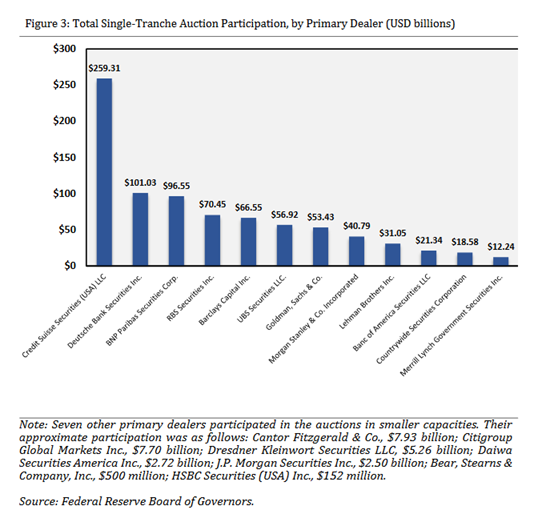
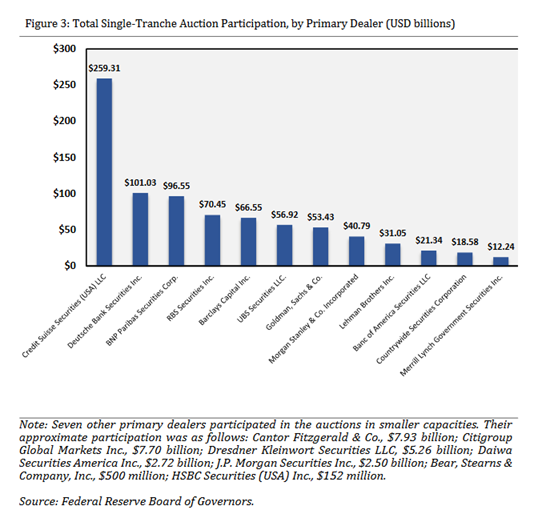
The Leviticus 25 Plan will grant direct liquidity transfers to qualifying U.S. citizens through a Fed-U.S.Treasury based Citizens Credit Facility – in the same way that it provided direct liquidity transfers to major Wall Street global financial institutions during the great financial crisis (2008-2010) and the Covid Criiss (2021-2022), that included none other than: Morgan Stanley, Citigroup, Bank of America, JP Morgan, Goldman Sachs, State Street, AIG, Merrill Lynch, Royal Bank of Scotland (RBS), Barclays, UBS, Deutsche Bank, BNP Paribas, and others…
The Leviticus 25 Plan is a dynamic economic initiative providing direct liquidity benefits for American families, while at the same time scaling back the role of government in managing and controlling the affairs of citizens. It is a comprehensive plan with long-term economic and social benefits for citizens and government.
The inspiration for this plan is based upon Biblical principles set forth in the Book of Leviticus, principles tendering direct economic liberties to the people.
The Leviticus 25 Plan – An Economic Acceleration Plan for America
America’s debt burden exceeds $38 trillion in 2025, standing at 125% of GDP.
Over the past five years, net interest payments on the national debt have nearly tripled. They are projected to double again by 2035 to reach $1.8 trillion per year.
With $18.7 trillion in debt, China ranks in second. In 2025, debt expanded by almost $2.2 trillion, driven by government stimulus and weaker land revenues given a struggling property market sector.
As we can see, Japan follows next with a $9.8 trillion debt pile, equal to 230% of GDP. Even though debt remains sky-high, the country’s new prime minister, Sanae Takaichi, is proposing $92.2 billion in stimulus spending and subsidies.
The UK and France round out the top largest debt burdens, both hovering near $4 trillion. France, in particular, has experienced significant political instability amid contentious budget cut proposals, cycling through five prime ministers over the past two years.
________________________________
According to the U.S. Government Accountability Office (GAO) February 2025 report, The Nation’s Fiscal Health, “The federal government is on an unsustainable fiscal path that poses serious economic, security, and social challenges if not addressed.”
“Publicly held debt is projected to grow more than twice as fast as the economy, reaching 200% of the size of the economy by 2047.”
Perpetually rising debt as a share of GDP is unsustainable. It has many direct and indirect implications for the economy, American households, and individuals. Risks include slower economic growth and increased chances of a fiscal crisis.
Debt Held by the Public Projected to Grow Faster Than GDP
The Government’s Borrowing Costs Are Increasing Dramatically
The government’s annual spending on net interest has more than tripled since 2017, when it was $263 billion. Spending on net interest in fiscal year 2024 exceeded spending on some of the largest categories of federal spending, including Medicare and national defense—and is projected to grow.
Annual Net Interest Spending as a Share of Gross Domestic Product, Actual and Projected
………………………….
There is precisely one comprehensive economic acceleration plan in America with the raw power to reign in our nation’s runaway debt, revitalize economic growth, and restore financial security for millions of hard-working, tax-paying families.
The Leviticus 25 Plan is a dynamic economic initiative providing direct liquidity benefits for American families, while at the same time scaling back the role of government in managing and controlling the affairs of citizens. It is a comprehensive plan with long-term economic and social benefits for citizens and government.
The inspiration for this plan is based upon Biblical principles set forth in the Book of Leviticus, principles tendering direct economic liberties to the people.
The Leviticus 25 Plan – An Economic Acceleration Plan for America